Free K-3 Hands-On Lesson Plan
Math Adventures: Everyday Numbers — printable PDF with 10 hands-on activities your kids will love.
Homeschool science experiments at home are one of the most powerful ways to bring textbook concepts to life without needing a laboratory, expensive equipment, or a science degree. With a few pantry staples and about thirty minutes, you can teach chemical reactions, physics principles, and biology basics right at your kitchen table. This guide walks you through the best homeschool science experiments at home, organized by age group and subject, so you can build a science routine that your kids actually look forward to.
Whether you are brand new to homeschooling or looking to add more hands-on learning to an established curriculum, this post covers everything from safety basics to grade-specific experiment ideas. According to the National Science Teaching Association, hands-on inquiry-based learning significantly improves retention compared to passive reading alone, which is exactly why experiments matter so much in a home learning environment.
By the end of this article, you will have a toolkit of tested experiment ideas, a supply list you can build gradually, and answers to the most common questions homeschool parents ask about teaching science at home.
Key Takeaways
- Homeschool science experiments at home require very little specialized equipment for most elementary and middle school topics.
- Safety habits, such as goggles and adult supervision, should be introduced early and reinforced every session.
- Experiments can be organized by age, from sensory exploration for preschoolers to independent research projects for high schoolers.
- A simple lab notebook turns casual experiments into documented, transcript-worthy science coursework.
- Pairing experiments with structured lesson plans helps ensure you are covering required science standards.
Why Homeschool Science Experiments at Home Matter
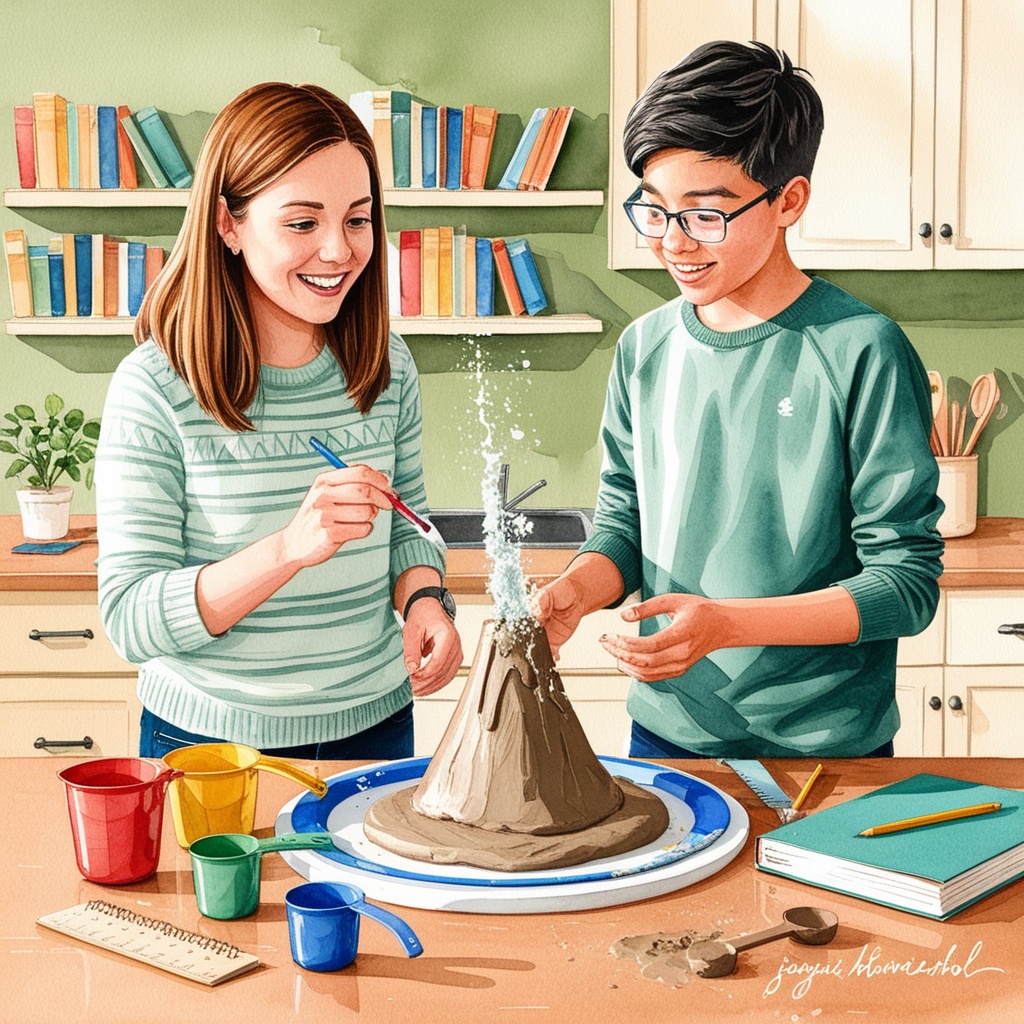
Science is a subject that is genuinely learned by doing, not just reading. When children mix baking soda and vinegar or watch a plant bend toward sunlight, they are practicing observation, prediction, and the scientific method simultaneously.
Homeschool science experiments at home also solve a common challenge for home educators: access to lab equipment. You do not need a school chemistry lab to teach real scientific concepts.
Building Critical Thinking Through Inquiry
Every experiment starts with a question. Encouraging your child to ask “what will happen if” before starting builds the habit of hypothesis formation, a foundational skill for scientific literacy.
This inquiry-based approach mirrors what the National Science Teaching Association recommends for effective science instruction at every grade level.
Making Abstract Concepts Concrete
Concepts like density, states of matter, or chemical reactions can feel abstract in a textbook. A hands-on experiment turns an abstract idea into something a child can see, touch, and remember.
- Visual learners benefit from watching reactions happen in real time.
- Kinesthetic learners benefit from measuring, mixing, and building.
- Auditory learners benefit from narrating predictions and explaining results aloud.

Building a Home Science Kit on a Budget
You do not need to spend hundreds of dollars to run effective homeschool science experiments at home. Most core supplies can be found at a grocery store or already sit in your kitchen cabinets.
Pantry and Household Staples
- Baking soda, vinegar, and dish soap
- Food coloring and cornstarch
- Balloons, straws, and rubber bands
- Measuring cups, spoons, and a kitchen scale
- Ziplock bags and clear plastic cups
Low-Cost Extras Worth Owning
A small investment in a few reusable tools pays off across dozens of experiments over the years.
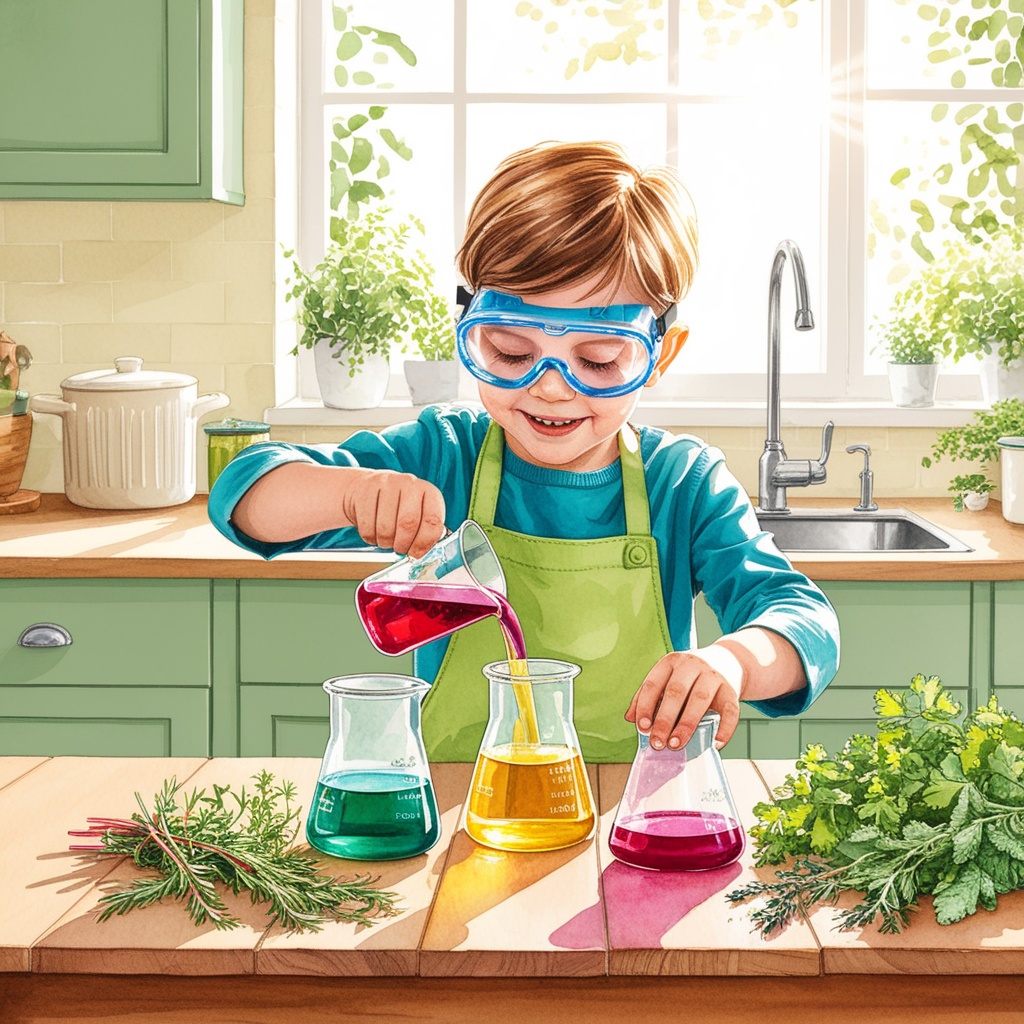
- Safety goggles for each child
- A basic magnifying glass or hand lens
- A digital thermometer
- A set of test tubes with a stand
- pH strips for chemistry units
When to Buy a Prepackaged Kit
Prepackaged science kits are useful for specialty units like circuits, robotics, or dissection, where sourcing individual parts is impractical. Save these purchases for topics that truly need them rather than buying a kit for every unit.
Safety Rules Every Homeschool Family Should Follow
Safety should be the very first lesson in any homeschool science curriculum, well before the first experiment begins. A few consistent habits prevent almost all common accidents.
Core Safety Habits
- Always have an adult present for experiments involving heat, chemicals, or sharp tools.
- Wear safety goggles any time liquids are mixed or heated.
- Tie back long hair and roll up sleeves before starting.
- Read the entire experiment instructions before beginning, not while mid-experiment.
- Keep a small first aid kit and know where it is stored.
Age-Appropriate Supervision Levels
Younger children need hands-on supervision for every step, while teenagers can often follow written instructions independently once safety habits are established. Organizations like the Home School Legal Defense Association encourage parents to document safety instruction as part of a well-rounded science curriculum record.
For more structured guidance on building routines like this, browse our getting started resources for new homeschool families.
Easy Homeschool Science Experiments for Preschool and Elementary
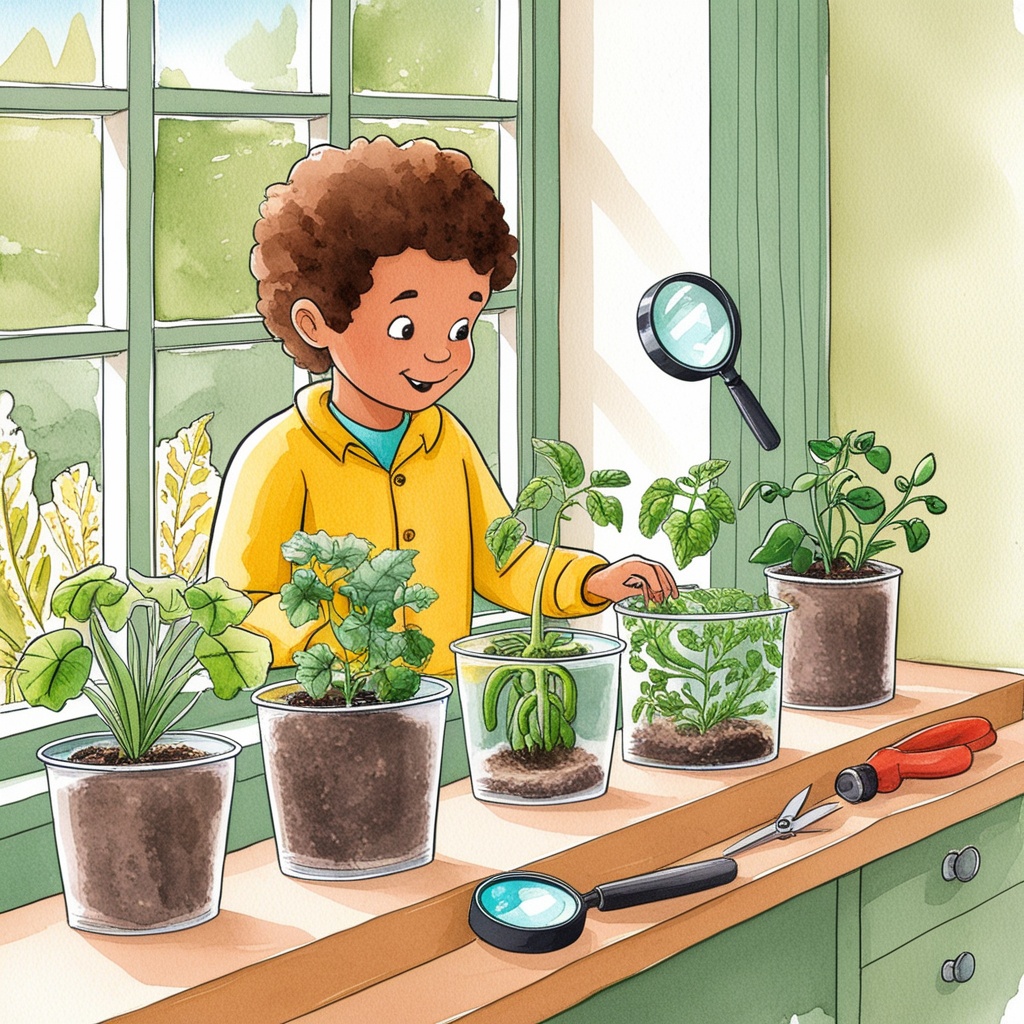
Younger learners benefit most from sensory-rich, short experiments that emphasize observation over precise measurement. These homeschool science experiments at home are designed to take fifteen to thirty minutes.
Classic Kitchen Chemistry
- Baking soda and vinegar volcano to teach chemical reactions
- Rainbow milk experiment using dish soap and food coloring to explore surface tension
- Growing rock candy crystals to teach saturation and states of matter
Nature and Biology Basics
- Sprouting bean seeds in a clear jar to observe root growth daily
- Building a simple leaf collection to study plant classification
- Creating a bird feeder and logging visitor species over two weeks
Physics Made Simple
- Building paper airplanes and measuring flight distance to explore aerodynamics
- Testing which objects float or sink to introduce density
- Making a simple balloon rocket on a string to demonstrate Newton’s third law
If you want structured lesson plans built around experiments like these, our homeschool lesson plan shop includes ready-to-use science units organized by grade level.
Engaging Middle School Science Experiments at Home
Middle schoolers are ready for more precise measurement, longer experiments, and an introduction to controlled variables. This is a great stage to start using a real lab notebook.
Chemistry and Physical Science
- Testing pH of household liquids using strips or homemade red cabbage indicator
- Building an electromagnet with wire, a nail, and a battery
- Exploring chemical vs. physical changes with melting, dissolving, and combustion demonstrations
Life Science Projects
- Dissecting a flower to identify reproductive parts
- Building a terrarium ecosystem and tracking changes over a month
- Testing the effect of different liquids on plant growth as a controlled experiment
Earth and Space Science
- Creating a model of the water cycle in a sealed bag taped to a window
- Building a simple barometer to track air pressure changes
- Modeling the phases of the moon using a lamp and a foam ball
According to Scholastic’s education resources, middle school is a critical window for building sustained scientific curiosity, making this the ideal time to introduce longer-term experiments that run over several days or weeks.
Advanced Homeschool Science Experiments for High School
High school science should move toward independent design, data analysis, and lab report writing. These homeschool science experiments at home can form the backbone of a transcript-ready lab science course.
Chemistry Lab Work
- Titration experiments using household acids and bases with pH indicators
- Measuring reaction rates by varying temperature or concentration
- Electrolysis of water using a 9-volt battery and pencil electrodes
Physics and Engineering Challenges
- Building and testing a simple pulley or lever system to calculate mechanical advantage
- Measuring acceleration due to gravity using a dropped object and a stopwatch app
- Designing and testing an egg-drop protection device to study force and impact
Biology and Environmental Science
- Culturing bacteria samples on homemade agar plates to study microbial growth
- Conducting a water quality test on local pond or tap water samples
- Running a genetics probability experiment using colored beads to model inheritance patterns
For families building a full high school transcript, our curriculum methods guides explain how to translate hands-on experiments into credit hours and lab science documentation.
Turning Experiments Into a Full Science Curriculum
Individual experiments are valuable, but pairing them with a structured scope and sequence ensures your child covers required content areas over the school year.
Mapping Experiments to Learning Standards
Many states reference the Next Generation Science Standards as a benchmark, even for homeschool families who are not required to follow them exactly. Reviewing these standards can help you confirm you are covering physical science, life science, and earth science each year in a balanced way.
Creating a Weekly Science Rhythm
- Choose one core topic per week, such as chemical reactions or plant biology.
- Pair a short reading or video introduction with one hands-on experiment.
- Have your child record predictions, observations, and conclusions.
- Review results together and connect them to the broader concept.
Our scheduling and planning resources offer templates for building a weekly rhythm that fits science alongside your other subjects.
Combining Experiments With Unit Studies
Unit studies work particularly well with science because they let you combine reading, writing, and hands-on experiments around a single theme, such as the human body, weather, or the solar system. This approach also naturally supports multiple ages learning together at different depths.
You can browse more theme-based ideas in our activities and ideas category for additional inspiration.
Documenting and Assessing Science Learning at Home
Documentation matters for two reasons: it reinforces learning through reflection, and it creates a record for transcripts, portfolios, or state reporting requirements.
Keeping a Science Lab Notebook
A simple notebook divided into hypothesis, materials, procedure, results, and conclusion sections works for any age. Younger children can dictate their observations while older students write independently.
Photo and Video Portfolios
Taking a quick photo of each experiment setup and result creates a visual portfolio that is especially useful for younger grades where written narration is still developing.
Grading and Assessment Options
- Use rubrics that assess process over just the final result.
- Ask your child to explain the underlying concept in their own words after each experiment.
- For high school, require a formal written lab report for at least half of all experiments.
If you are unsure how detailed your records need to be, our team is happy to help. You can always reach out through our contact page with specific questions about documentation requirements in your state.
Frequently Asked Questions
What supplies do I need to start homeschool science experiments at home?
Most beginner experiments only require pantry staples like baking soda, vinegar, food coloring, and basic kitchen tools. As your child advances, adding safety goggles, a thermometer, and pH strips will cover the majority of middle and high school experiments.
How often should we do science experiments in our homeschool routine?
One to two hands-on experiments per week is generally enough to reinforce a science unit without overwhelming your schedule. Younger children can benefit from shorter, more frequent sessions, while older students may prefer fewer but longer, more detailed labs.
Can homeschool science experiments count as lab credit for high school transcripts?
Yes, documented hands-on experiments with lab notebooks or written reports can satisfy lab science credit requirements in most states. Keeping detailed records of materials, procedures, and results is the key to making these experiments transcript-ready.
What are the safest homeschool science experiments for young children?
Simple experiments using food coloring, water, dish soap, and baking soda are among the safest options for preschool and early elementary students. Always supervise directly and introduce safety goggles early, even for low-risk experiments, to build good habits.
Do I need a science background to teach experiments at home?
No, most homeschool science experiments at home come with clear step-by-step instructions that do not require prior scientific training. Learning alongside your child by asking questions together is a valid and effective teaching approach.
How do I choose age-appropriate science experiments for multiple children at once?
Choose one central theme, such as chemical reactions, and adjust the complexity of the task for each child’s age. Younger children can focus on observation and prediction while older children handle measurement, variables, and written analysis of the same experiment.
Where can I find ready-made homeschool science lesson plans?
Many homeschool curriculum providers offer grade-specific science units that pair reading material with experiment instructions. Our own lesson plan shop includes several science units organized by grade level for quick implementation.
Homeschool Science Picks
As an Amazon Associate, HomeschoolingExperts earns from qualifying purchases. Some links in this article are affiliate links, meaning we may earn a small commission at no extra cost to you.
Conclusion
Homeschool science experiments at home do not require a dedicated lab, expensive equipment, or years of scientific training to be effective. With a stocked pantry, a few safety habits, and a simple lab notebook, you can build a science program that grows with your child from preschool sensory play all the way through high school lab reports.
Start small, choose one experiment from this guide that fits your child’s current grade level, and build consistency from there. Science becomes far more memorable when it is something your child does rather than something they only read about.
If you would like more support building out a full homeschool science curriculum, learn more about our approach on our about page or explore ready-made resources in our lesson plan shop.
Related Resources
- Homeschool Lesson Plans by Subject
- Grade Level Guides for Homeschooling
- Homeschool Curriculum Methods Explained

Loved this post? Grab the free resource above.
Math Adventures: Everyday Numbers — printable PDF with 10 hands-on activities your kids will love.