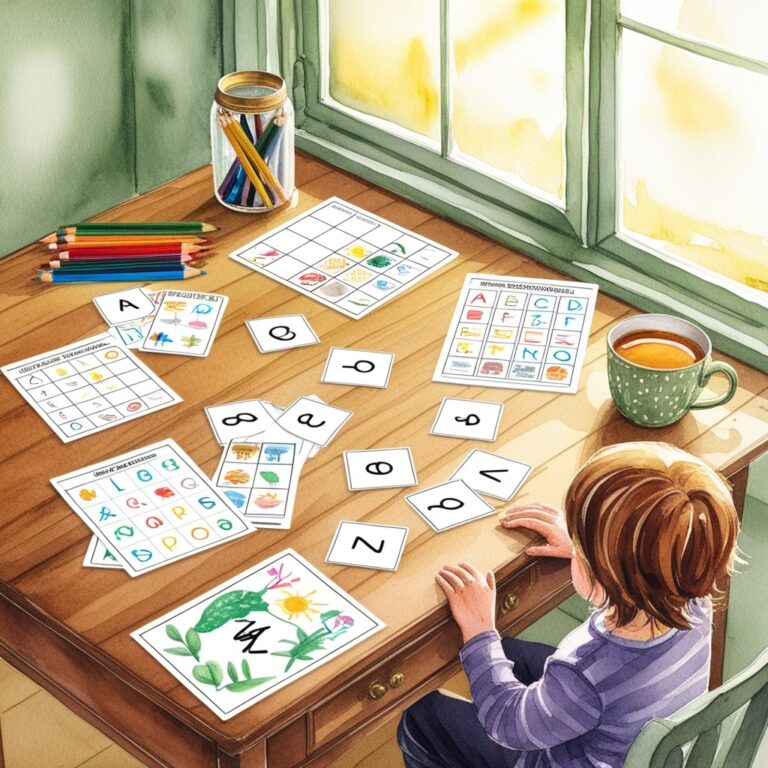
Free Sample Lesson Plan
Math Adventures: Everyday Numbers — drop your email and we'll send the printable PDF.
Creating effective 4th grade homeschool lesson plans all subjects requires careful planning, age-appropriate content, and engaging activities that meet your child’s developmental needs. Fourth grade represents a crucial transition year where students move from learning to read to reading to learn, making comprehensive lesson planning essential for academic success.
This comprehensive guide provides you with detailed strategies, subject-specific approaches, and practical resources to create well-rounded lesson plans that cover all core subjects for your fourth-grade homeschooler. Whether you’re new to homeschooling or looking to enhance your current curriculum, you’ll discover proven methods to ensure your child receives a quality education at home.
From language arts and mathematics to science and social studies, we’ll explore how to structure daily lessons, incorporate hands-on activities, and track progress effectively. You’ll also learn how to adapt lesson plans to your child’s unique learning style while meeting state educational standards and preparing them for future academic challenges.
Key Takeaways
- Fourth grade lesson plans should balance core subjects with hands-on learning experiences
- Effective planning includes daily, weekly, and monthly goals across all subject areas
- Integration of subjects creates more meaningful and memorable learning experiences
- Regular assessment and flexibility are essential for successful homeschool lesson planning
- State standards provide important guidelines while allowing for personalized approaches
Understanding Fourth Grade Learning Needs

Fourth grade students typically range from 9 to 10 years old and experience significant cognitive and emotional development during this academic year. Understanding these developmental milestones is crucial when creating 4th grade homeschool lesson plans all subjects that effectively meet your child’s educational needs.
Cognitive Development Characteristics
At this stage, children develop stronger analytical thinking skills and can handle more complex problem-solving tasks. They begin to think more abstractly and can understand cause-and-effect relationships more clearly than in earlier grades.
Fourth graders also show increased attention spans, typically able to focus on academic tasks for 20-30 minutes at a time. This extended focus allows for more in-depth exploration of subjects and longer project-based learning activities.
Academic Skill Expectations
According to the U.S. Department of Education standards, fourth grade students should demonstrate proficiency in several key areas. In reading, they should comprehend grade-level texts independently and analyze character development and plot structures.
Mathematical skills should include multi-digit multiplication and division, fraction concepts, and basic geometry. Students should also begin developing research skills and writing multi-paragraph essays with clear topic sentences and supporting details.
Learning Style Considerations
Fourth graders often benefit from multi-sensory learning approaches that engage visual, auditory, and kinesthetic learning preferences. Incorporating hands-on activities, visual aids, and movement into lesson plans helps accommodate different learning styles within your homeschool environment.
Many children at this age also thrive with structured routines while appreciating some choice in their learning activities. Balancing consistency with flexibility becomes an important aspect of effective lesson planning.
Language Arts Lesson Plans and Activities
Language arts forms the foundation of academic success across all subjects, making comprehensive planning essential for your fourth grade homeschool lesson plans. A well-structured language arts curriculum should integrate reading, writing, grammar, vocabulary, and speaking skills throughout daily activities.
Reading Comprehension Strategies
Fourth grade reading instruction should focus on developing critical thinking skills through literature analysis and informational text comprehension. Students should read books at their independent level while being challenged with slightly more difficult texts during guided reading sessions.
Implement daily reading activities that include:
- Independent reading time (20-30 minutes daily)
- Read-aloud sessions featuring chapter books and poetry
- Guided reading with comprehension questions
- Book discussions and literature circles
- Reading response journals and graphic organizers
Writing Development and Practice
Fourth grade writing instruction should emphasize the writing process: prewriting, drafting, revising, editing, and publishing. Students should practice various writing genres including narrative, informational, and opinion pieces.
Weekly writing activities should include:
- Daily journal writing or morning pages
- Structured paragraph writing with topic sentences
- Research projects with proper citation introduction
- Creative writing exercises and story prompts
- Letter writing and practical communication skills
Grammar and Vocabulary Integration
Rather than teaching grammar in isolation, integrate grammar instruction into reading and writing activities. Focus on sentence structure, parts of speech, and punctuation rules through editing exercises and writing workshops.
Vocabulary development should occur through context clues, word study, and regular exposure to rich literature. Implement weekly vocabulary lists tied to reading selections and subject-area content.
Mathematics Curriculum Planning
Fourth grade mathematics builds upon foundational skills while introducing more complex concepts that prepare students for advanced mathematical thinking. Your 4th grade homeschool lesson plans all subjects should include daily math instruction that balances conceptual understanding with procedural fluency.
Core Mathematical Concepts
The primary mathematical focus areas for fourth grade include multi-digit arithmetic, fraction concepts, and geometric thinking. Students should develop fluency with multiplication and division facts while understanding the underlying mathematical principles.
Key mathematical skills to address include:
- Multi-digit multiplication using various strategies
- Long division with remainders
- Equivalent fractions and fraction comparisons
- Decimal notation and place value understanding
- Area and perimeter calculations
- Data analysis and interpretation
Hands-On Mathematical Activities
Incorporate manipulatives and real-world applications to make abstract mathematical concepts more concrete and engaging. Use measuring activities, cooking projects, and building exercises to reinforce mathematical learning.
Effective hands-on activities include:
- Fraction pizzas and pie charts using real food
- Measurement scavenger hunts around the house
- Money math with real-world shopping scenarios
- Geometric shape construction with building materials
- Data collection and graphing family statistics
Problem-Solving Strategies
Develop your child’s mathematical reasoning by presenting multi-step word problems that require critical thinking and strategy selection. Encourage multiple solution methods and mathematical communication through problem explanation.
Teach problem-solving strategies such as drawing pictures, making tables, working backwards, and looking for patterns. Regular practice with these strategies builds mathematical confidence and analytical thinking skills.
Science Exploration and Discovery Lessons
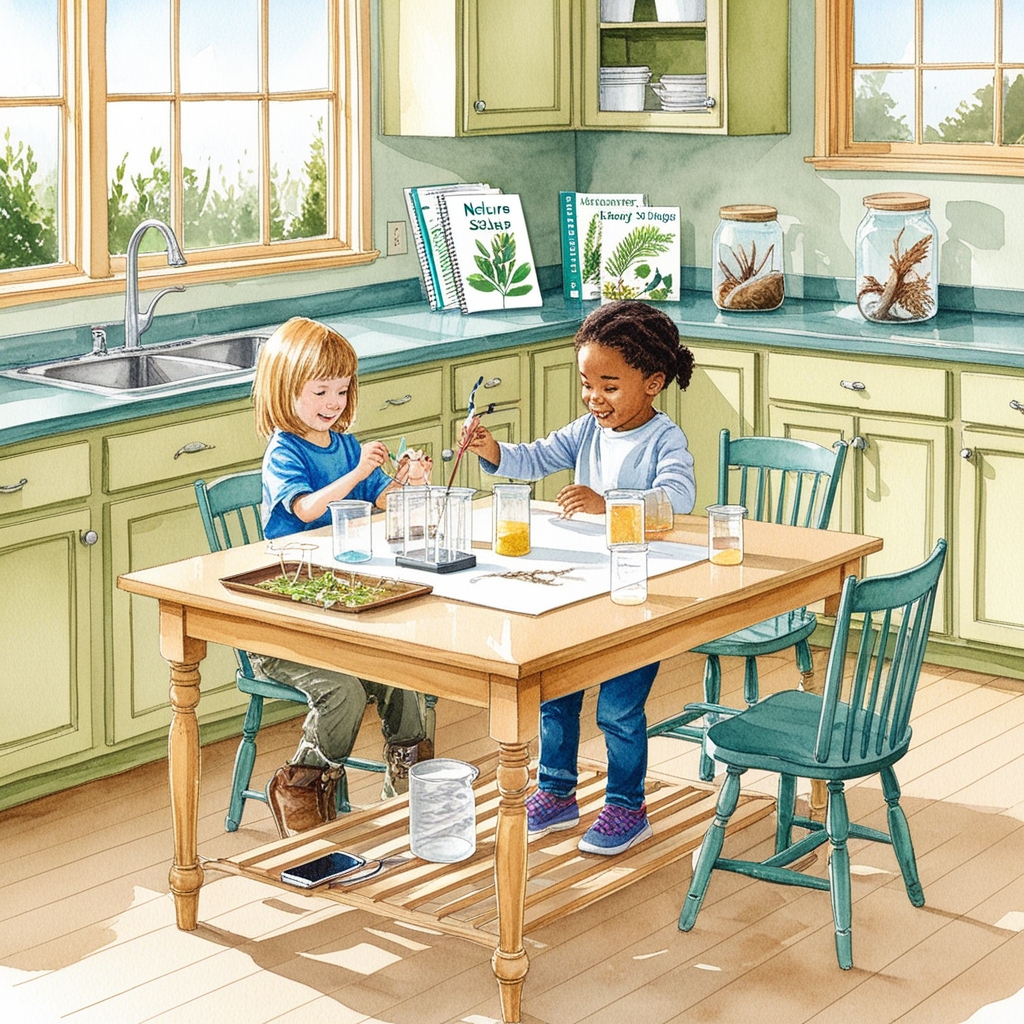
Fourth grade science education should emphasize inquiry-based learning and hands-on experimentation that develops scientific thinking skills. Integrating science into your comprehensive fourth grade homeschool curriculum creates opportunities for cross-curricular connections and real-world applications.
Physical Science Investigations
Fourth grade physical science topics typically include energy, motion, and matter properties. Design experiments that allow students to observe, hypothesize, and draw conclusions about physical phenomena in their environment.
Engaging physical science activities include:
- Simple machines exploration using household items
- Sound wave experiments with musical instruments
- Light and shadow investigations
- States of matter observations and transformations
- Magnetism and electricity basic experiments
Life Science and Biology
Life science studies should focus on plant and animal life cycles, habitats, and basic ecology concepts. Create opportunities for direct observation through nature studies, gardening projects, and animal behavior documentation.
Consider starting a small garden to observe plant growth cycles or maintaining a nature journal for seasonal observations. These long-term projects provide ongoing learning opportunities and develop scientific observation skills.
Earth and Space Science
Earth science topics for fourth grade include weather patterns, rock and mineral identification, and basic astronomy concepts. Connect these topics to your local environment and current events when possible.
Practical earth science activities might include weather tracking, rock collecting expeditions, and moon phase observations. These activities help students understand their place in the natural world while developing scientific literacy.
Social Studies and History Integration
Social studies education in fourth grade typically focuses on state history, geography skills, and civic responsibility. Creating engaging 4th grade homeschool lesson plans for social studies requires connecting historical events to contemporary life and developing critical thinking about society and culture.
State and Local History Studies
Most fourth grade social studies curricula emphasize state history, including indigenous peoples, early settlers, and significant historical events. Research your state’s specific educational requirements and incorporate local historical sites and museums into your lesson planning.
Effective approaches to state history include:
- Timeline creation with major state events
- Biography studies of significant state figures
- Map activities showing geographical features and cities
- Virtual or actual field trips to historical sites
- Family history connections to state development
Geography and Map Skills
Fourth graders should develop proficiency with map reading, coordinate systems, and geographical terminology. Integrate geography skills across subjects by incorporating maps into science and literature studies.
Regular geography practice should include identifying states and capitals, understanding latitude and longitude, and interpreting various map types including political, physical, and thematic maps.
Civic Education and Government
Introduce basic concepts about government structure, democratic principles, and civic responsibilities appropriate for fourth grade level understanding. Connect these concepts to current events and local government when possible.
Consider organizing mock elections, studying the Constitution in age-appropriate ways, and discussing how laws affect daily life. These activities help students understand their role as future citizens.
Creative Subjects and Enrichment Planning
Arts education and creative subjects play a crucial role in well-rounded 4th grade homeschool lesson plans all subjects by developing creativity, self-expression, and critical thinking skills. These subjects also provide excellent opportunities for cross-curricular integration and hands-on learning experiences.
Visual Arts Integration
Visual arts activities should connect to other subject areas while developing artistic skills and appreciation. Incorporate art history, cultural studies, and technique development into regular art lessons.
Consider these integrated art activities:
- Historical timeline illustrations
- Scientific observation drawings
- Geographic region art styles exploration
- Mathematical pattern and symmetry projects
- Literature-inspired creative projects
Music and Movement Education
Music education supports language development, mathematical understanding, and cultural awareness. Even without formal musical training, parents can incorporate music appreciation, rhythm activities, and simple instrument exploration into homeschool lessons.
Basic music activities might include listening to classical composers, exploring world music traditions, learning simple songs, and creating rhythm patterns that reinforce mathematical concepts.
Physical Education and Health
Physical education remains important for healthy development and can be easily incorporated into homeschool routines. Focus on developing gross motor skills, coordination, and healthy lifestyle habits.
Daily physical activity should include structured exercises, outdoor exploration, sports skill development, and health education topics appropriate for fourth grade students.
Daily and Weekly Lesson Plan Structure
Effective fourth grade homeschool lesson planning requires consistent structure while maintaining flexibility for individual learning needs and interests. Developing systematic approaches to daily and weekly planning helps ensure comprehensive coverage of all subjects while maintaining engaging learning experiences.
Daily Schedule Framework
A typical fourth grade homeschool day should include 4-5 hours of structured learning time, broken into manageable segments with breaks between subjects. Consider your child’s attention span and energy levels when scheduling more challenging subjects.
Sample daily schedule structure:
- Morning: Language arts (60-90 minutes)
- Mid-morning: Mathematics (45-60 minutes)
- Late morning: Science or social studies (30-45 minutes)
- Afternoon: Creative subjects and enrichment (30-60 minutes)
- End of day: Independent reading and review (20-30 minutes)
Weekly Planning Strategies
Weekly planning should balance new concept introduction with skill practice and review. Alternate between intensive learning days and lighter review days to prevent cognitive overload while ensuring adequate practice time.
Consider implementing theme weeks that integrate multiple subjects around central topics. This approach helps students make connections between different areas of learning while maintaining engagement through varied activities.
Monthly and Seasonal Planning
Long-term planning ensures comprehensive curriculum coverage while allowing for seasonal activities and special projects. Use monthly planning to set learning goals and track progress toward annual objectives.
Incorporate seasonal celebrations, field trips, and community events into your lesson planning. These real-world connections enhance learning while providing memorable educational experiences.
Assessment and Progress Tracking Methods
Regular assessment and progress monitoring ensure that your 4th grade homeschool lesson plans all subjects effectively meet your child’s educational needs while identifying areas that require additional attention or enrichment opportunities.
Formative Assessment Techniques
Formative assessment occurs during the learning process and helps guide instructional decisions. Use daily observations, quick checks for understanding, and informal questioning to gauge comprehension and adjust lessons accordingly.
Effective formative assessment methods include:
- Exit tickets with one question about the day’s learning
- Think-pair-share discussions during lessons
- Quick sketches or diagrams to show understanding
- Thumbs up/down comprehension checks
- Brief oral explanations of new concepts
Summative Assessment Options
Summative assessments evaluate learning at the end of instructional units and help determine mastery levels. These assessments can take various forms beyond traditional tests, including projects, presentations, and portfolios.
Consider using performance-based assessments that allow students to demonstrate learning through practical applications. These might include science fair projects, historical presentations, or mathematical problem-solving demonstrations.
Portfolio Development
Maintaining learning portfolios provides comprehensive documentation of your child’s academic progress while creating meaningful collections of their work. Include samples from all subject areas and regular reflection pieces about learning experiences.
Digital portfolios can include photos of hands-on projects, video recordings of presentations, and scanned copies of written work. This documentation proves valuable for future educational decisions and college applications.
Essential Resources and Planning Tools
Successfully implementing comprehensive fourth grade homeschool lesson plans requires access to quality educational resources, planning tools, and support materials that enhance learning while simplifying preparation time for parents.
Curriculum Resources and Materials
Quality curriculum resources provide structured scope and sequence while offering flexibility for individual adaptation. Research various curriculum approaches including traditional textbooks, unit studies, and online programs to find the best fit for your family’s needs.
Essential resource categories include:
- Core curriculum materials for each subject area
- Supplementary workbooks and practice materials
- Educational games and manipulatives
- Reference books and research materials
- Art supplies and science experiment materials
Digital Tools and Technology
Educational technology can enhance learning experiences while providing access to resources that might otherwise be unavailable. However, balance screen time with hands-on activities and real-world experiences.
Useful digital tools include educational websites, virtual field trips, online libraries, and interactive learning games. The Scholastic teaching resources offer excellent supplementary materials for various subjects.
Planning and Organization Systems
Effective planning systems help maintain organization while reducing daily stress. Whether you prefer digital planning tools or traditional paper planners, consistency in planning approaches supports successful homeschool implementation.
Visit our lesson plan shop for ready-made planning templates and organizational tools designed specifically for homeschooling families.
Community Resources and Support
Local community resources provide valuable learning opportunities and social connections for homeschooling families. Libraries, museums, community centers, and homeschool cooperatives offer classes, activities, and support networks.
Connect with other homeschooling families through local groups or online communities. Sharing resources and experiences helps reduce isolation while providing practical tips and encouragement for your homeschool journey.
Frequently Asked Questions
How many hours per day should I spend on 4th grade homeschool lessons?
Most fourth grade homeschoolers benefit from 4-5 hours of structured learning time daily, including breaks. This typically breaks down to 60-90 minutes for language arts, 45-60 minutes for math, 30-45 minutes each for science and social studies, and additional time for creative subjects and independent reading.
What are the most important subjects to focus on in 4th grade?
Language arts and mathematics form the foundation for future learning and should receive primary focus. However, science and social studies are also crucial for developing critical thinking skills and cultural literacy. A balanced approach covering all core subjects works best for most students.
How do I know if my 4th grader is meeting grade-level standards?
Regular assessment through standardized tests, portfolio reviews, and comparison with state standards helps gauge progress. Many states provide grade-level expectations online, and annual testing can provide objective measures of academic achievement compared to traditionally schooled peers.
Can I use free resources for 4th grade lesson planning?
Yes, many excellent free resources exist including library materials, educational websites, and government resources. However, investing in some quality curriculum materials often saves time and provides structured scope and sequence that ensures comprehensive coverage of essential skills.
How do I handle multiple children at different grade levels?
Multi-level teaching requires careful planning but is definitely manageable. Use unit studies that can be adapted for different ages, combine children for subjects like science and social studies, and utilize independent work time for individualized instruction in core subjects like math and reading.
What if my child struggles with certain subjects?
Struggling in specific areas is normal and addressable through modified approaches. Consider different learning styles, break concepts into smaller steps, use hands-on activities, or seek additional resources. Sometimes slowing down the pace or finding alternative teaching methods makes all the difference.
How do I prepare my 4th grader for standardized tests?
Focus on solid foundational skills rather than test-specific preparation. Regular reading, writing practice, mathematical problem-solving, and critical thinking development naturally prepare students for standardized assessments. Some brief familiarization with test formats can be helpful but shouldn’t dominate instruction.
Grades 4-5 Curriculum Picks
As an Amazon Associate, HomeschoolingExperts earns from qualifying purchases. Some links in this article are affiliate links, meaning we may earn a small commission at no extra cost to you.
Conclusion
Creating comprehensive 4th grade homeschool lesson plans all subjects requires thoughtful planning, quality resources, and consistent implementation, but the rewards of personalized education make the effort worthwhile. By understanding your child’s developmental needs, structuring lessons across all core subjects, and maintaining flexibility in your approach, you can provide an excellent educational experience at home.
Remember that successful homeschooling doesn’t require perfection but rather consistent effort and willingness to adapt as needed. Focus on building strong foundational skills while nurturing your child’s natural curiosity and love of learning. Regular assessment and adjustment of your lesson plans ensure continued progress and academic success.
The key to sustainable homeschooling lies in finding the right balance between structure and flexibility, academic rigor and enjoyment, and individual needs and educational standards. With proper planning and dedication, your fourth grader can thrive academically while developing independence, creativity, and a lifelong love of learning.
Start implementing these strategies today, and don’t hesitate to reach out for support when needed. The homeschooling community offers tremendous resources and encouragement for families committed to providing quality education at home.
Related Resources
For additional support in your homeschooling journey, explore these helpful resources:
- Complete lesson plan guides and templates for various grade levels and subjects
- Scheduling and planning strategies to help organize your homeschool day effectively
- Grade-level specific guidance for understanding developmental expectations and academic goals
If you have specific questions about implementing these lesson planning strategies, feel free to contact our educational experts for personalized guidance and support.

Loved this post? Grab the free resource above.
Math Adventures: Everyday Numbers — drop your email and we'll send the printable PDF.