

Free Homeschool Quick-Start Checklist
Step-by-step compliance checklist for new homeschool families — covers notice of intent, record keeping, and testing.
Understanding homeschool laws by state 2026 is crucial for families considering or currently engaged in home education. Each state maintains its own unique set of regulations, requirements, and procedures that homeschooling families must follow to remain compliant with local education laws. These laws can vary dramatically from state to state, ranging from minimal oversight to comprehensive reporting requirements.
This comprehensive guide examines the current landscape of homeschooling regulations across all 50 states, providing families with the essential information needed to navigate their state’s specific requirements. We’ll explore notification procedures, curriculum standards, testing requirements, record-keeping obligations, and recent legislative changes that may impact your homeschooling journey.
Whether you’re new to homeschooling or looking to relocate to a different state, having accurate, up-to-date information about state homeschool laws ensures your family can focus on what matters most: providing an excellent education for your children while maintaining full legal compliance.
Key Takeaways
- Homeschool laws vary significantly by state, with some requiring minimal oversight and others mandating comprehensive reporting
- Most states require some form of notification or registration when beginning homeschooling
- Record-keeping requirements differ widely, from basic attendance records to detailed portfolios
- Testing and assessment mandates range from none to annual standardized testing
- Recent legislative trends show increasing support for homeschool freedom across many states
- Understanding your state’s specific requirements prevents legal complications and ensures educational continuity
Overview of Homeschool Law Categories

Homeschool laws by state can be broadly categorized into four main regulatory approaches, each reflecting different philosophies about educational oversight and parental rights. Understanding these categories helps families quickly identify what level of compliance their state requires.
High Regulation States
High regulation states maintain strict oversight of homeschooling families through comprehensive requirements. These states typically mandate detailed curriculum approval, regular testing, professional evaluations, and extensive record-keeping.
States in this category often require:
- Advance approval of curriculum and educational plans
- Annual standardized testing or professional evaluations
- Detailed attendance and progress records
- Regular reporting to state or local education authorities
- Specific teacher qualification requirements for parents
Moderate Regulation States
Moderate regulation states strike a balance between oversight and parental freedom. These states typically require notification of intent to homeschool and some form of annual assessment or testing, but allow more flexibility in curriculum choices and teaching methods.
Common requirements include:
- Annual notification or registration with education authorities
- Basic subject requirements (reading, writing, mathematics, etc.)
- Periodic testing or portfolio reviews
- Minimum instructional hour requirements
- Basic record-keeping for attendance and progress
Low Regulation States
Low regulation states provide significant freedom to homeschooling families while maintaining minimal oversight requirements. These states typically require only basic notification and record-keeping, with few restrictions on curriculum or teaching methods.
Typical requirements involve:
- Simple notification of homeschooling intent
- Basic attendance records
- Minimal subject requirements
- Optional or infrequent testing requirements
No Regulation States
A small number of states maintain no specific homeschool regulations beyond basic compulsory attendance laws. These states treat homeschooling as a private educational choice with minimal government oversight.
According to the Home School Legal Defense Association, these states typically require no notification, testing, or curriculum approval, giving families complete educational autonomy.
State Notification and Registration Requirements
Most states require some form of notification when families begin homeschooling, though the specific procedures and timing vary considerably. Understanding your state’s notification requirements ensures you start your homeschool journey on solid legal ground.
Annual Notification States
Many states require families to submit annual notifications of their intent to homeschool. These notifications typically include basic information about the student, planned curriculum, and educational objectives.
Annual notification typically requires:
- Student’s name, age, and grade level
- Parent or guardian contact information
- Planned curriculum or educational approach
- Expected school calendar or schedule
- Submission by specified deadlines (often July or August)
One-Time Registration States
Some states require only a single registration when beginning homeschooling, with no annual renewal requirements. This approach reduces administrative burden while maintaining basic oversight.
No Notification Required
Several states require no formal notification of homeschooling intent. Families in these states can begin homeschooling without contacting education authorities, though they must still comply with compulsory attendance laws.
States with no notification requirements include Alaska, Connecticut, Idaho, Illinois, Iowa, Michigan, Missouri, New Jersey, Oklahoma, and Texas. However, families should verify current requirements as laws can change.
Withdrawal from Public School
Regardless of state homeschool notification requirements, families transitioning from public or private schools must properly withdraw their children. This process typically involves:
- Written notification to the current school
- Request for student records and transcripts
- Completion of any required withdrawal forms
- Understanding of re-enrollment procedures if needed
For families just beginning their homeschool journey, our getting started resources provide comprehensive guidance on initial steps and legal compliance.
Curriculum and Subject Requirements by State
State curriculum requirements for homeschoolers range from broad subject categories to specific course mandates. Understanding these requirements helps families plan comprehensive educational programs that meet legal standards while serving their children’s unique needs.
Core Subject Requirements
Most states that specify curriculum requirements focus on core academic subjects. The most commonly required subjects across states include:
- Language Arts: Reading, writing, grammar, literature, and communication skills
- Mathematics: Arithmetic, algebra, geometry, and practical math applications
- Science: Physical science, biology, chemistry, physics, and earth sciences
- Social Studies: History, geography, civics, government, and cultural studies
- Health and Safety: Personal health, nutrition, safety practices, and wellness
Additional Subject Mandates
Beyond core subjects, many states require instruction in specific areas reflecting local values and priorities. These additional requirements often include:
- State and local history
- Constitution and government studies
- Physical education and fitness
- Fine arts (music, art, drama)
- Character education or ethics
- Foreign language (typically for high school)
Curriculum Approval Processes
Some states require advance approval of homeschool curricula, while others allow families complete freedom in educational material selection. States with approval requirements typically accept:
- Published curriculum packages from recognized providers
- Individual courses from multiple sources
- Parent-designed curricula meeting state standards
- Online educational programs and virtual schools
- Combination approaches using various resources
Instructional Time Requirements
Many states specify minimum instructional hours or days for homeschooled students. These requirements typically mirror public school standards:
- Elementary grades: 600-900 hours annually
- Middle grades: 900-1000 hours annually
- High school grades: 1000+ hours annually
- Daily minimums: 3-6 hours of instruction per day
- Annual minimums: 180 days of instruction per year
Families seeking curriculum guidance can explore our comprehensive curriculum and methods resources for detailed reviews and recommendations.
Testing and Assessment Mandates
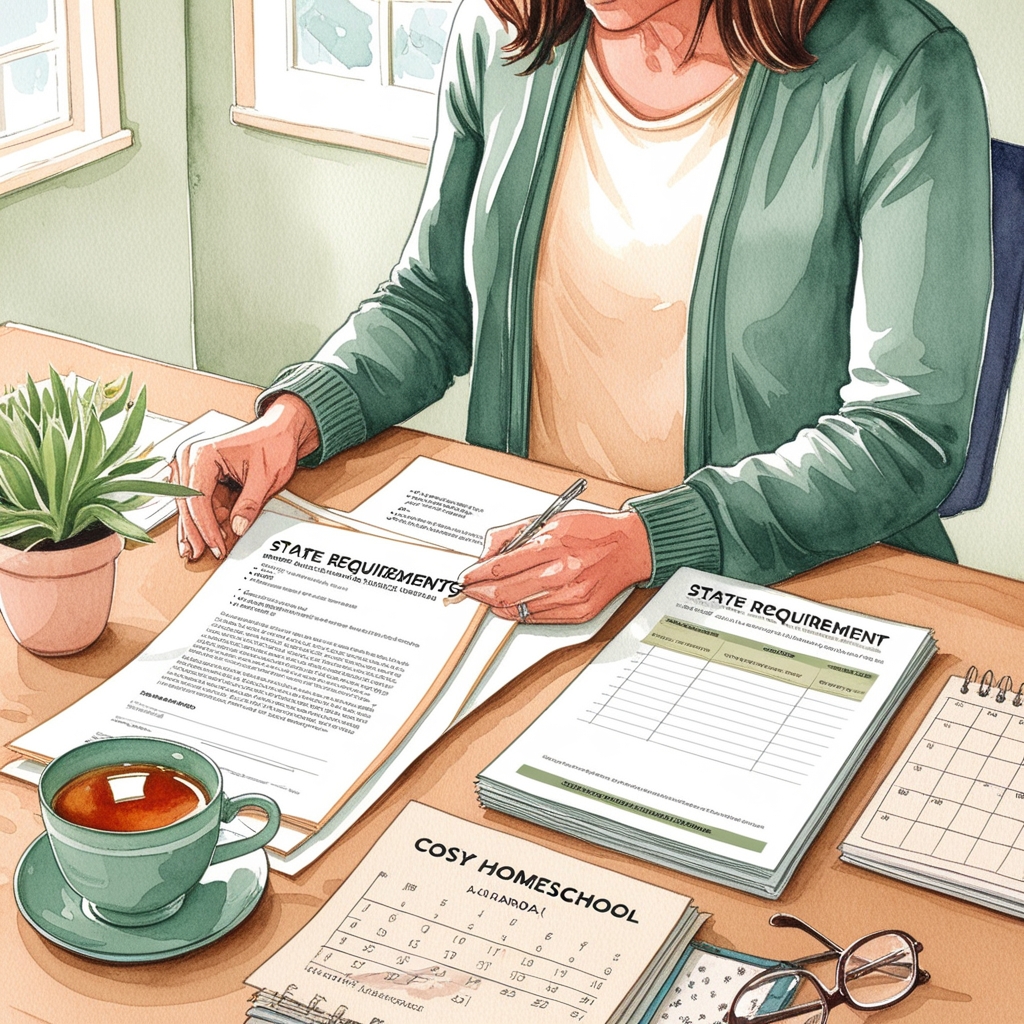
Assessment requirements represent one of the most variable aspects of homeschool laws by state. Some states mandate annual standardized testing, while others require no formal assessments. Understanding your state’s testing requirements helps families prepare appropriately and maintain compliance.
Standardized Testing Requirements
States requiring standardized testing typically specify acceptable tests, testing schedules, and score reporting procedures. Commonly accepted standardized tests include:
- Iowa Test of Basic Skills (ITBS)
- Stanford Achievement Test
- California Achievement Test
- Comprehensive Test of Basic Skills (CTBS)
- TerraNova Assessment Series
- State-specific standardized tests
Alternative Assessment Options
Many states offer alternative assessment methods for families who prefer not to use standardized tests. These alternatives often include:
- Portfolio Reviews: Compilation of student work samples evaluated by qualified professionals
- Professional Evaluations: Assessment by certified teachers or educational consultants
- Progress Reports: Detailed documentation of student advancement and achievement
- Parent Assessments: Formal evaluation conducted by the teaching parent
Testing Frequency and Timing
States with testing requirements typically mandate assessments on specific schedules:
- Annual Testing: Most common requirement, usually conducted in spring
- Biennial Testing: Every other year, often in specific grade levels
- Grade-Specific Testing: Required only at certain grade levels (e.g., 3rd, 5th, 8th)
- High School Testing: Exit exams or college readiness assessments
Score Reporting and Remediation
States requiring testing typically have specific procedures for score reporting and addressing low performance:
- Submission of test scores to education authorities
- Minimum acceptable score thresholds
- Remediation plans for students scoring below standards
- Additional oversight for consistently low-performing students
The U.S. Department of Education provides resources on educational assessment standards that can help families understand testing requirements and prepare students effectively.
Record-Keeping and Documentation Requirements
Proper record-keeping forms the foundation of homeschool legal compliance. While specific requirements vary by state, maintaining comprehensive educational records protects families legally and supports student advancement through grade levels and into higher education.
Essential Records for All Families
Regardless of state requirements, all homeschooling families should maintain certain basic records:
- Attendance Records: Daily or weekly documentation of instructional time
- Curriculum Records: List of textbooks, materials, and resources used
- Academic Progress: Grades, evaluations, and advancement documentation
- Portfolio Samples: Examples of student work across subjects and grade levels
- Standardized Test Scores: Results from any required or voluntary assessments
- High School Transcripts: Detailed course and credit documentation for grades 9-12
State-Specific Documentation
Many states require specific documentation beyond basic educational records:
- Annual progress reports or evaluations
- Professional assessment documentation
- Curriculum approval certificates
- Teacher qualification documentation
- Immunization and health records
- Notification and registration confirmations
Digital vs. Physical Record-Keeping
Modern homeschooling families can choose between traditional paper records and digital documentation systems. Digital record-keeping offers several advantages:
- Easy backup and duplication
- Searchable and organized storage
- Automatic calculation of grades and credits
- Integration with online curricula and assessments
- Simplified sharing with colleges and employers
Record Retention Requirements
Most education experts recommend retaining homeschool records for extended periods:
- Elementary records: 3-5 years after completion
- Middle school records: Until high school graduation
- High school records: Permanently
- College admission documents: Throughout college attendance
For comprehensive record-keeping tools and templates, families can explore our scheduling and planning resources designed to simplify documentation and compliance.
Parent Teacher Qualification Requirements
Parent teacher qualification requirements vary significantly among states, reflecting different philosophies about who is qualified to educate children at home. Understanding these requirements helps families determine if additional preparation or credentials are necessary.
No Qualification Requirements
Many states place no specific qualification requirements on homeschooling parents, recognizing the inherent right of parents to direct their children’s education. These states typically assume that parental love and commitment provide adequate motivation for effective teaching.
High School Diploma or Equivalent
Some states require homeschooling parents to possess a high school diploma or equivalent credential. This requirement ensures basic educational competency while remaining accessible to most families.
College Degree Requirements
A few states mandate that homeschooling parents hold college degrees, typically requiring:
- Bachelor’s degree from an accredited institution
- Specific degree requirements for certain subjects
- Alternative qualification pathways for parents without degrees
- Exemptions for families using approved curricula or programs
Teaching Certificate Requirements
Very few states require homeschooling parents to hold teaching certificates, though some provide this as an alternative qualification pathway. States with teaching certificate options typically offer multiple compliance routes.
Continuing Education and Training
Some states encourage or require ongoing education for homeschooling parents through:
- Annual conference attendance
- Professional development workshops
- Online training courses
- Support group participation
- Educational resource utilization
Subject-Specific Qualifications
Certain states impose additional requirements for specific subjects, particularly at the high school level:
- Science laboratory courses
- Advanced mathematics
- Foreign language instruction
- Career and technical education
Parents seeking to enhance their teaching skills can benefit from professional development opportunities and educational resources available through established homeschooling organizations and educational institutions.
Recent Legislative Changes and Trends
The landscape of homeschool laws by state continues evolving as legislatures respond to growing homeschool populations and changing educational needs. Recent trends show increasing support for homeschool freedom, though some states have introduced new requirements or clarifications.
Expanding Educational Freedom
Many states have recently passed legislation expanding homeschool freedoms and reducing regulatory burdens. These changes reflect growing recognition of homeschooling effectiveness and parental educational rights.
Recent expansions include:
- Reduced notification requirements
- Elimination of curriculum approval mandates
- Expanded assessment options
- Increased access to public school resources
- Enhanced dual enrollment opportunities
Technology Integration Provisions
States increasingly recognize online and digital learning as legitimate educational approaches, updating laws to accommodate:
- Virtual curriculum programs
- Online assessment options
- Digital record-keeping systems
- Remote learning technologies
- Hybrid educational models
College and Career Readiness Focus
Recent legislative trends emphasize preparing homeschooled students for post-secondary success through:
- Standardized transcript requirements
- College admission pathway clarifications
- Career and technical education access
- Dual enrollment program expansion
- Workforce preparation initiatives
Special Needs Accommodation
States increasingly address special needs homeschooling through updated legislation covering:
- Special education service access
- Individualized education plan (IEP) implementation
- Therapy and support service availability
- Assessment accommodation procedures
- Transition planning requirements
COVID-19 Impact and Responses
The COVID-19 pandemic significantly impacted homeschool legislation as states adapted to increased home education interest. Many states implemented temporary or permanent changes including:
- Streamlined registration processes
- Flexible attendance requirements
- Remote assessment options
- Enhanced online resource access
- Simplified transition procedures
According to recent data, homeschool enrollment increased dramatically during the pandemic, prompting many states to reconsider their regulatory approaches and support systems.
Staying Compliant: Best Practices for Families
Maintaining compliance with state homeschool laws protects families from legal complications while ensuring educational continuity. Following established best practices helps families navigate requirements confidently and focus on providing excellent education.
Know Your State’s Current Laws
Staying informed about current regulations forms the foundation of compliance:
- Review state education department websites regularly
- Join local homeschool support groups and organizations
- Subscribe to legislative update services
- Attend homeschool conferences and legal workshops
- Consult with experienced homeschool families
Establish Systematic Record-Keeping
Comprehensive record-keeping systems prevent compliance issues and support student advancement:
- Create organized filing systems for all educational documents
- Maintain regular backup copies of important records
- Document daily attendance and instructional activities
- Keep detailed curriculum and resource inventories
- Save examples of student work across all subjects
Meet All Deadlines and Requirements
Timely compliance with state requirements demonstrates responsible homeschooling:
- Submit notifications and registrations by specified deadlines
- Complete required testing within mandated timeframes
- File annual reports or evaluations promptly
- Respond quickly to any official correspondence
- Update information when family circumstances change
Build Professional Relationships
Developing positive relationships with education officials supports long-term success:
- Communicate professionally with school district personnel
- Participate constructively in required meetings or evaluations
- Seek clarification when requirements are unclear
- Maintain cooperative attitudes during official interactions
- Share positive homeschool outcomes when appropriate
Plan for Transitions and Changes
Preparing for potential changes ensures continued compliance:
- Research requirements before relocating to new states
- Understand procedures for re-entering traditional schools
- Maintain transferable records and documentation
- Plan for college admission requirements early
- Consider career pathway documentation needs
For additional support and resources, families can access our comprehensive lesson plan shop featuring materials designed to meet various state requirements and educational standards.
Frequently Asked Questions
Do I need to notify my state before starting homeschooling?
Most states require some form of notification, but requirements vary significantly. Some states require annual notifications, others need only one-time registration, and several states require no notification at all. Check your specific state requirements through your state education department or local homeschool organizations to ensure proper compliance.
What happens if I don’t follow my state’s homeschool laws?
Failure to comply with state homeschool laws can result in truancy charges, legal complications, and potential intervention by child protective services. However, most issues can be resolved through proper documentation and communication with education authorities. The key is understanding and following your state’s specific requirements from the beginning.
Can homeschool laws change, and how do I stay updated?
Yes, homeschool laws can change through legislative action. Stay updated by joining state and local homeschool organizations, subscribing to legislative alerts, following your state education department’s communications, and attending homeschool conferences where legal updates are typically discussed.
Do I need a teaching degree to homeschool my children?
Most states do not require teaching degrees for homeschooling parents. Requirements range from no qualifications to high school diplomas, with very few states requiring college degrees. Some states offer multiple pathways to meet qualification requirements, including using approved curricula or programs.
Are homeschooled students required to take standardized tests?
Testing requirements vary by state. Some states mandate annual standardized testing, others require testing only at specific grade levels, and many states offer alternative assessment options like portfolio reviews or professional evaluations. Several states require no testing at all.
What records should I keep for homeschooling?
Essential records include attendance documentation, curriculum lists, examples of student work, assessment results, and any state-required reports. High school families should maintain detailed transcripts with course descriptions and credit documentation. Keep elementary and middle school records for several years, and high school records permanently.
Can we move to another state while homeschooling?
Yes, but you’ll need to research and comply with your new state’s homeschool laws, which may differ significantly from your current state. Plan the transition carefully, ensuring you meet notification requirements and understand any new documentation or assessment mandates in your destination state.
📚 Recommended Homeschool Resources
As an Amazon Associate, I earn from qualifying purchases. Some links in this article are affiliate links, meaning I may earn a small commission at no extra cost to you.
Conclusion
Understanding homeschool laws by state 2026 empowers families to make informed decisions about their children’s education while maintaining full legal compliance. The diversity of state requirements reflects different approaches to educational oversight, but the common thread remains parental commitment to providing excellent education at home.
Success in homeschooling requires more than just understanding legal requirements—it demands dedication to creating rich learning environments that serve each child’s unique needs. By staying informed about state laws, maintaining proper documentation, and connecting with supportive homeschool communities, families can navigate legal requirements confidently while focusing on educational excellence.
The homeschool movement continues growing stronger as more families discover the benefits of personalized, family-centered education. Whether your state maintains minimal oversight or comprehensive requirements, the key to success lies in preparation, organization, and commitment to your children’s educational journey.
Remember that laws can change, and staying connected with local homeschool organizations provides ongoing support and updates. Your investment in understanding and following state requirements protects your family’s educational freedom and ensures your children receive the quality education they deserve.
Ready to begin your homeschool journey or enhance your current program? Contact our team for personalized guidance and support tailored to your family’s unique needs and state requirements.
Related Resources
Explore these additional resources to support your homeschooling success:
- Grade-Level Guides – Comprehensive educational planning resources for every grade level
- Activities and Ideas – Creative learning activities to enhance your homeschool curriculum
- About HomeschoolingExperts.org – Learn more about our mission to support homeschooling families
Related Guides & Resources

Loved this post? Grab the free resource above.
Step-by-step compliance checklist for new homeschool families — covers notice of intent, record keeping, and testing.