Free K-3 Hands-On Lesson Plan
Math Adventures: Everyday Numbers — printable PDF with 10 hands-on activities your kids will love.
Homeschool math games and activities can transform the most dreaded subject in your homeschool into the one your kids ask to do first. If math time currently involves tears, stalling tactics, or glazed-over eyes, you are not alone. Research from the National Center for Education Statistics shows that math anxiety affects a significant percentage of school-age children, and repetitive worksheet drills are often part of the problem.
This guide is built for homeschooling parents who want practical, tested ways to make math tangible, fun, and effective. We will cover games by age group, low-prep activity ideas, hands-on manipulatives, printable resources, and how to weave games into your weekly schedule without losing academic rigor.
Whether you are teaching a kindergartner to count or helping a teenager conquer algebra, homeschool math games and activities can meet your child exactly where they are. Let’s dig into what actually works.
Key Takeaways
- Homeschool math games and activities build number sense faster than worksheets alone by engaging multiple senses and reducing anxiety.
- Age-appropriate games exist for every stage, from counting toddlers to teens tackling calculus.
- Everyday household items like dice, cards, and dominoes can replace expensive curriculum add-ons.
- Ten minutes of purposeful math play daily can reinforce concepts more effectively than an hour of passive drilling.
- Consistency matters more than complexity; simple, repeatable games build lasting fluency.
Why Homeschool Math Games Work Better Than Worksheets Alone
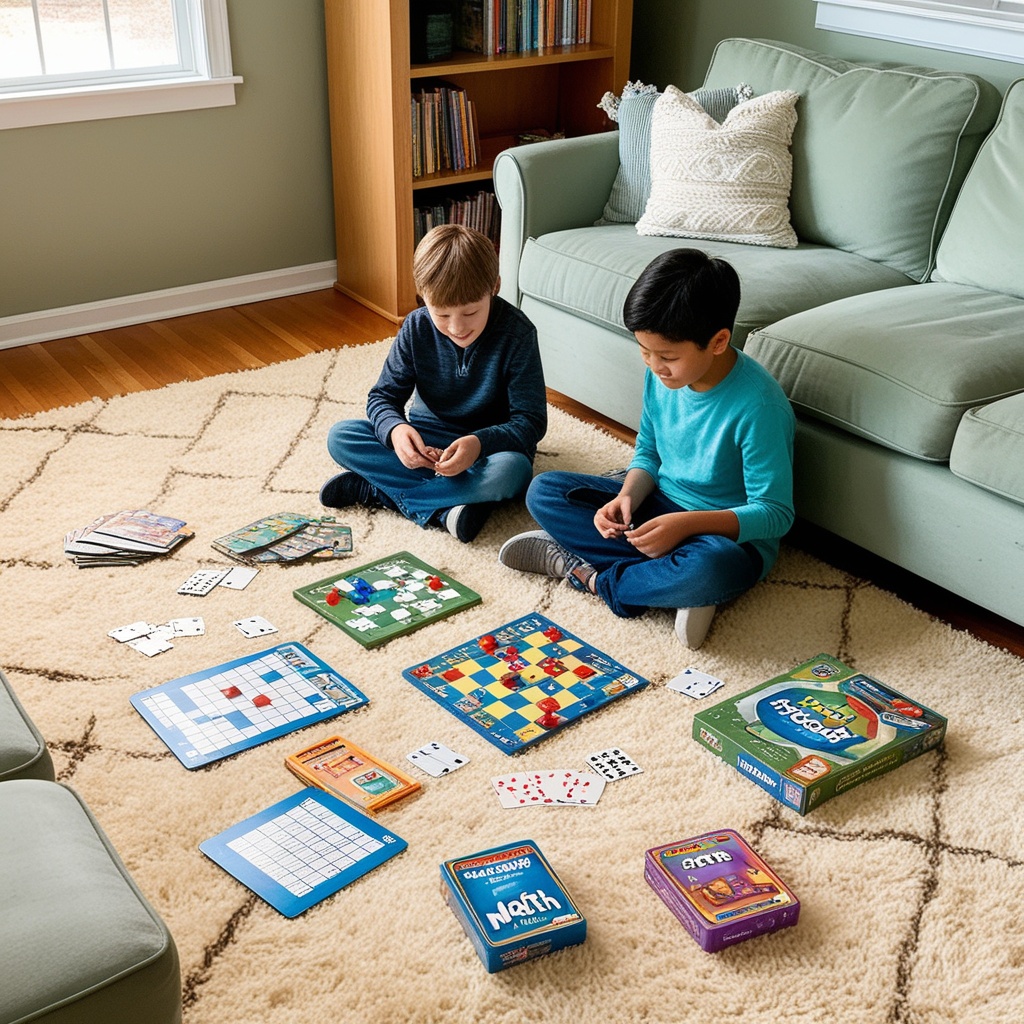
Math games activate a different part of the brain than rote memorization. When children play, they engage in what educators call “productive struggle,” working through a problem because they want to win, not because a page demands it.
Scholastic notes that play-based learning increases retention and motivation in young learners, particularly for abstract subjects like mathematics. Games also give parents a low-pressure way to observe where a child is strong and where they need more support.
The Science Behind Playful Math Learning
Cognitive research consistently shows that hands-on, game-based practice strengthens neural pathways associated with number sense. Children who manipulate physical objects, roll dice, or move game pieces build a mental model of quantity that a printed worksheet cannot replicate.
This is especially true for kinesthetic learners, who make up a large share of the homeschool population. Movement and touch anchor abstract numbers into something real and memorable.
Reducing Math Anxiety Through Play
Math anxiety can start as early as first grade and often follows children into adulthood if left unaddressed. Turning practice into a game removes the fear of being wrong in a way that feels safe and low-stakes.
When a child misses a turn in a board game, it feels like part of the fun. When they miss a problem on a worksheet, it can feel like failure. That emotional difference matters enormously for long-term confidence.
Best Math Games for Early Elementary (Ages 5-7)
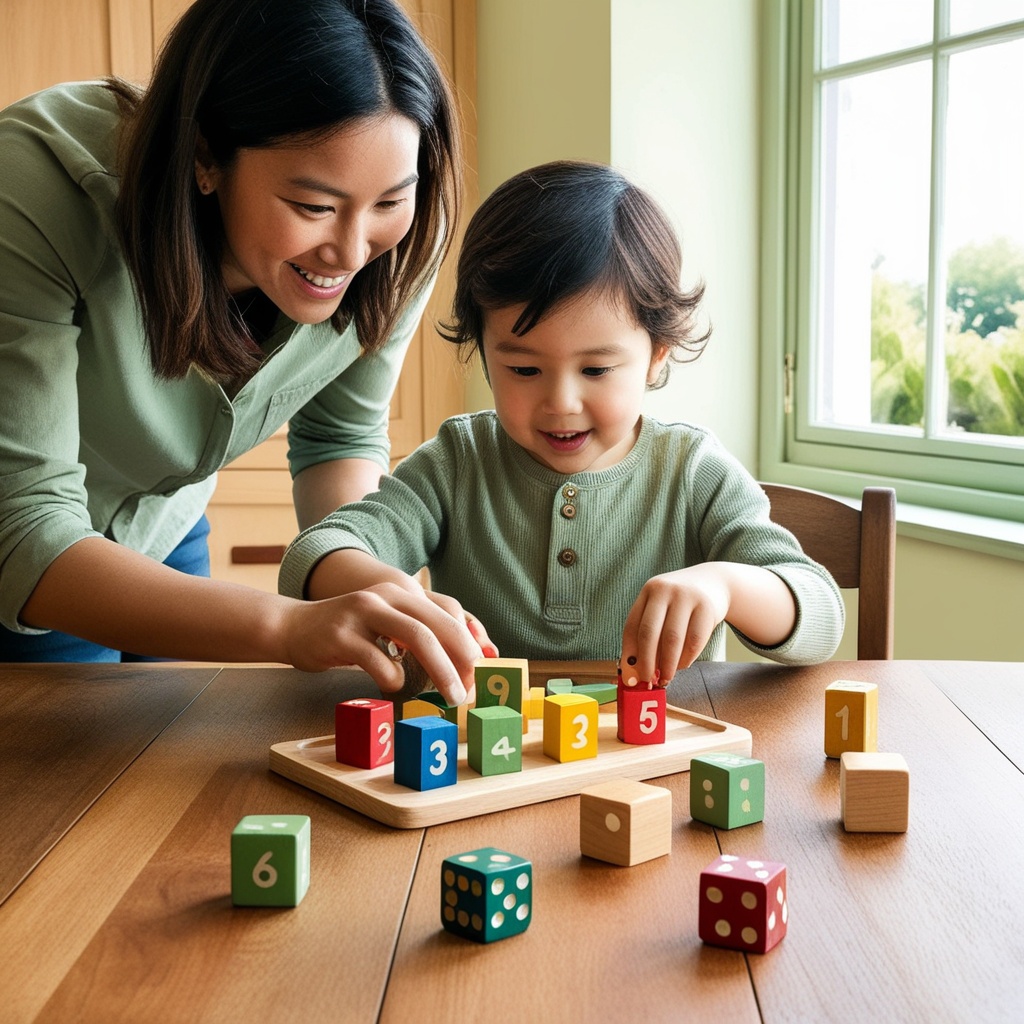
Early elementary is the ideal window to build number sense, counting fluency, and basic operations through play. At this age, homeschool math games and activities should be short, colorful, and hands-on.
Counting and Number Recognition Games
- Number hunt: Hide laminated number cards around the house and have your child find and sequence them.
- Dice roll and count: Roll two dice and have your child count the total using small objects like buttons or beans.
- Hopscotch math: Write numbers in hopscotch squares and call out addition problems for your child to hop to the answer.
Simple Addition and Subtraction Activities
- Egg carton math: Write numbers in each egg cup and toss two beans to add the numbers they land in.
- Ten frame fill-up: Use a printed ten frame and counters to visualize addition and subtraction up to ten.
- War with a twist: Play the classic card game War, but instead of comparing single cards, flip two and add them together; the higher sum wins.

Engaging Math Activities for Upper Elementary (Ages 8-10)
By upper elementary, children are ready for multiplication, fractions, and early problem-solving strategies. This is a great stage to introduce competitive and cooperative homeschool math games that build fluency under light time pressure.
Multiplication Fact Fluency Games
- Multiplication bingo: Create bingo cards with products and call out multiplication facts.
- Around the world: A classic flashcard game where players compete to answer facts fastest and move around a circle of players.
- Dice product race: Roll two dice and multiply the numbers; first to reach a target score wins.
Fractions and Decimals Made Fun
- Pizza fraction match: Use paper pizza slices to build and compare fractions visually.
- Fraction war: Similar to the addition version of War, but players compare fraction cards to determine the larger value.
- Decimal grid coloring: Shade sections of a hundred grid to represent decimals and percentages side by side.
These activities pair well with structured curriculum, and if you want ready-made resources, our lesson plan shop offers printable math game packs organized by grade level.
Middle School Math Games That Build Real Skills
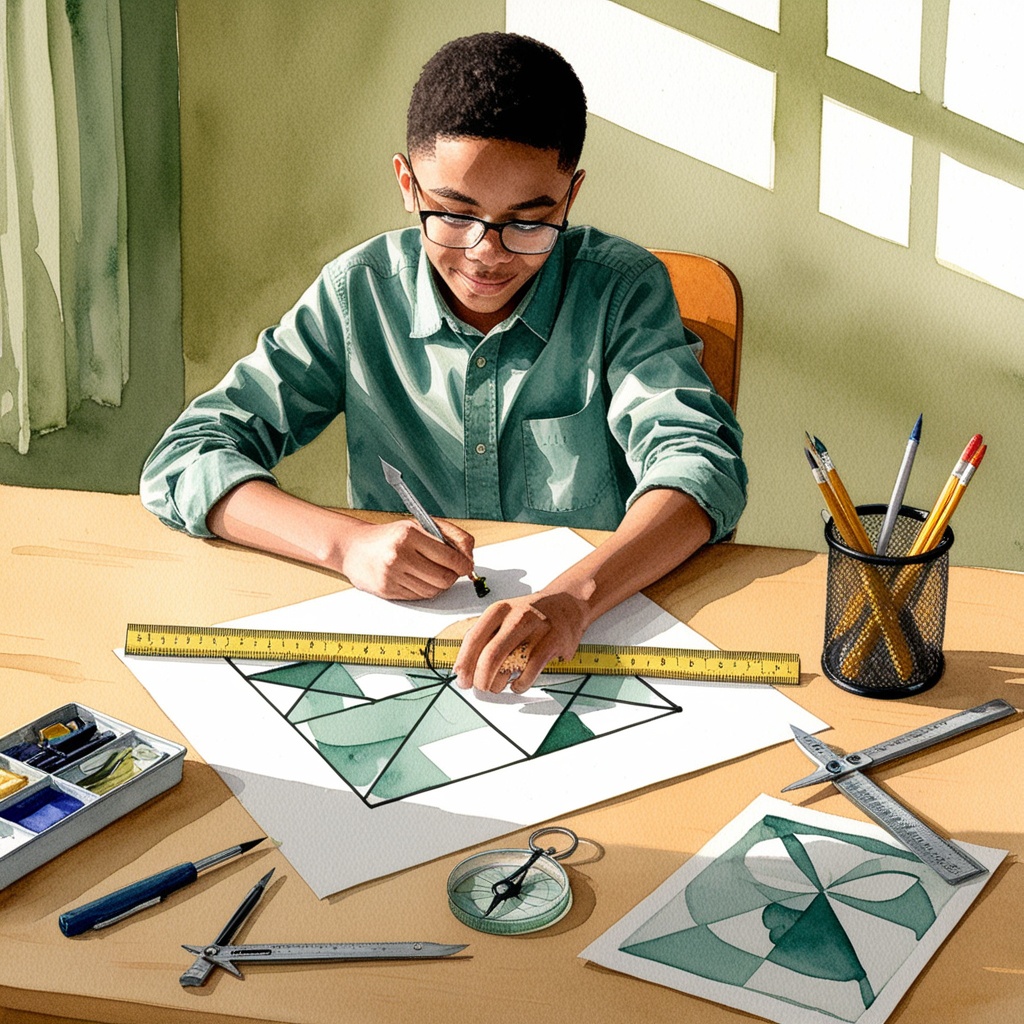
Middle school is where many homeschool families see motivation dip, especially as math shifts toward pre-algebra and abstract reasoning. Homeschool math games and activities at this stage should feel less like babyish play and more like genuine strategy and challenge.
Pre-Algebra and Order of Operations Games
- Equation puzzles: Give students a target number and a set of digits, then challenge them to reach it using order of operations.
- 24 game: Use four numbers on a card and combine them with basic operations to reach exactly 24.
- Integer number line races: Use a physical number line on the floor and have students act out addition and subtraction of positive and negative integers.
Geometry and Measurement Challenges
- Tangram design contests: Have students recreate shapes or invent new ones using a tangram set, then calculate the area of each piece.
- Scale model building: Ask students to design a scale drawing of their bedroom using ratios and measurement tools.
- Geometry scavenger hunt: Send students around the house or yard to find real-world examples of angles, symmetry, and polygons.
High School Math Activities for Algebra and Beyond
High schoolers need less flashcard-style repetition and more application-based challenges. Homeschool math games and activities for teens should connect abstract concepts to real-world decision-making.
Algebra and Function Games
- Graphing battleship: Play battleship using coordinate points to reinforce graphing and function notation.
- Equation escape room: Design or purchase a printable escape room puzzle where each solved equation unlocks the next clue.
- Slope scavenger hunt: Identify real-world slopes around your home, such as ramps or stairs, and calculate them.
Real-World Math Simulations
- Budgeting simulation: Give students a hypothetical salary and monthly expenses to plan using percentages and basic algebra.
- Stock market tracking: Have teens track a small, imaginary portfolio for several weeks and calculate gains, losses, and percentage change.
- Probability and statistics with card games: Use poker or a simplified card game to calculate probability of specific hands or outcomes.
For families following a structured scope and sequence, our grade level guides can help you align these activities with expected high school math benchmarks.
Hands-On Manipulatives Every Homeschool Should Have
Manipulatives are the backbone of many effective homeschool math games and activities, especially for visual and kinesthetic learners. You do not need a large budget to build a solid collection.
Essential Low-Cost Manipulatives
- Dice in various shapes, including standard six-sided, ten-sided, and twenty-sided
- A deck of playing cards
- Base ten blocks or homemade equivalents using craft sticks bundled in tens
- Counting bears, buttons, or dried beans
- A geoboard with rubber bands for geometry exploration
Building Your Own Manipulatives at Home
Many effective tools cost nothing beyond household supplies. Egg cartons, bottle caps, paper plates cut into fraction wedges, and painter’s tape number lines on the floor all work beautifully.
Homemade manipulatives also model resourcefulness for children and reinforce that math tools are everywhere, not just in a store-bought kit.
No-Prep and Low-Prep Math Games for Busy Days
Every homeschool parent has days with no time or energy for elaborate setups. Fortunately, some of the best homeschool math games and activities require almost nothing beyond paper, dice, or a deck of cards.
Games You Can Play With Just Dice or Cards
- Yahtzee for addition and pattern recognition
- Skip-Bo for sequencing and number order
- Uno for basic counting and simple strategy
- Farkle for probability and mental math under pressure
Verbal and Mental Math Games for the Car
- Buzz: Count aloud together and say “buzz” instead of any multiple of a chosen number.
- License plate math: Turn numbers on passing license plates into quick equations.
- Mental math ping pong: Take turns adding or subtracting from a running total out loud.
These low-prep options are perfect for co-ops, road trips, or simply reinforcing skills without adding to your planning load. If you are new to homeschooling and looking for more ideas like these, our getting started resources cover foundational strategies for building a flexible routine.
How to Fit Math Games Into Your Homeschool Schedule
Consistency is more important than duration when it comes to homeschool math games and activities. Ten focused minutes daily often outperforms one long, exhausting session per week.
Weekly Structure Ideas
- Monday and Wednesday: Curriculum-based lessons and new concept introduction
- Tuesday and Thursday: Games that reinforce the week’s concept
- Friday: Free-choice math game day or a review challenge
This rhythm keeps new instruction and playful review balanced without overwhelming your week. Families following different educational philosophies can adapt this easily; our curriculum methods guide explains how games fit into approaches like Charlotte Mason, classical, and unit studies.
Using Games as Formative Assessment
Games double as a gentle diagnostic tool. Watching how quickly and confidently your child solves problems during play often reveals more than a formal quiz.
If you notice consistent hesitation on a specific fact family or operation, that is your cue to slow down and revisit the concept before moving forward. The U.S. Department of Education encourages formative, ongoing assessment over high-stakes testing, particularly in early grades, and games are an ideal vehicle for that approach.
Printable and Digital Math Game Resources
You do not need to build every game from scratch. A growing library of high-quality printable and digital resources can save you hours of prep time.
What to Look for in Quality Math Game Printables
- Clear alignment to grade-level standards
- Answer keys included for independent checking
- Reusable formats, such as laminated boards or dry-erase compatible sheets
- Variety across operations, not just addition and subtraction
Where to Find Reliable Math Activity Resources
Organizations like the Home School Legal Defense Association (HSLDA) maintain curated lists of vetted educational resources, which can be a helpful starting point when evaluating new tools. Scholastic’s education resources are another trusted source for game-based learning materials across grade levels.
For a curated, homeschool-specific option, browse our activities and ideas category, or explore ready-to-use printable game packs in our lesson plan shop.
Frequently Asked Questions
What are the best homeschool math games for beginners?
Simple dice games, card games like War, and counting activities using household objects are ideal for beginners. They require little setup and build number sense through repeated, low-pressure practice.
How often should we play math games in our homeschool?
Aim for short, consistent sessions of ten to fifteen minutes at least three to four times per week. Regular, brief practice tends to build stronger retention than infrequent, lengthy sessions.
Can math games replace a formal curriculum?
Math games work best as a supplement rather than a full replacement for structured curriculum. They reinforce concepts and build fluency, but a sequential curriculum ensures no gaps in skill progression.
Are digital math games as effective as hands-on activities?
Digital games can be effective for fact fluency and immediate feedback, but hands-on activities build deeper conceptual understanding, especially for younger learners. A mix of both tends to work best.
What household items make good math manipulatives?
Dice, playing cards, buttons, dried beans, egg cartons, and painter’s tape all work well as free or low-cost manipulatives. Many effective math tools already exist somewhere in your home.
How do I know if a math game is appropriate for my child’s grade level?
Check whether the game targets skills your child is currently learning, such as addition facts, fractions, or algebraic expressions. Our grade level guides can help you match activities to expected benchmarks for each age.
What if my child still resists math even with games?
Persistent resistance may signal an underlying gap or anxiety that needs direct attention rather than more games. Consider reaching out through our contact page for personalized guidance on adjusting your approach.
Homeschool Math Picks
As an Amazon Associate, HomeschoolingExperts earns from qualifying purchases. Some links in this article are affiliate links, meaning we may earn a small commission at no extra cost to you.
Conclusion
Homeschool math games and activities are one of the most effective tools you have for building confident, capable mathematicians at home. From simple dice games for beginning counters to strategy-based challenges for algebra students, there is a playful option for every age and skill level.
Start small. Pick one or two games from this guide, add them to your week, and watch how your child’s attitude toward math begins to shift.
If you want more structured support, explore our full library of grade-specific lesson plans and printable activities in the lesson plan shop, or learn more about our approach on the about page. We are always happy to help you build a math routine that actually works for your family.
Related Resources
- Homeschool Lesson Plans by Subject and Grade
- Scheduling and Planning Strategies for Homeschool Families
- More Hands-On Activities and Learning Ideas

Loved this post? Grab the free resource above.
Math Adventures: Everyday Numbers — printable PDF with 10 hands-on activities your kids will love.