
Free Printable Homeschool Year Planner
Plan your whole school year on one page — weekly, monthly, and yearly templates included.
Creating an effective homeschool schedule for multiple kids requires careful planning, flexibility, and strategic organization that accommodates different ages, learning styles, and academic needs. Managing multiple children’s education simultaneously can feel overwhelming, but with the right scheduling framework, you can create a harmonious learning environment where each child thrives while maintaining your sanity as a homeschooling parent.
The key to successful multi-child homeschooling lies in finding the perfect balance between group activities and individualized instruction, while incorporating natural learning rhythms and family dynamics. This comprehensive guide will walk you through proven strategies, practical scheduling templates, and expert tips that have helped thousands of homeschooling families create sustainable routines that work for everyone.
Whether you’re juggling toddlers and teenagers or managing multiple elementary-aged children, you’ll discover how to streamline your homeschool day, maximize learning opportunities, and reduce the stress that often comes with educating multiple children at home.
Key Takeaways
- Block scheduling allows you to teach multiple grade levels efficiently while maintaining individual attention
- Loop schedules provide flexibility for families with varying daily routines and unexpected interruptions
- Independent work stations enable older children to learn autonomously while you focus on younger siblings
- Family-style learning combines children of different ages for subjects like history, science, and literature
- Morning time routines create shared learning experiences that bond the family together
- Flexible scheduling reduces stress and accommodates real-life family dynamics
Understanding Multi-Child Homeschool Dynamics
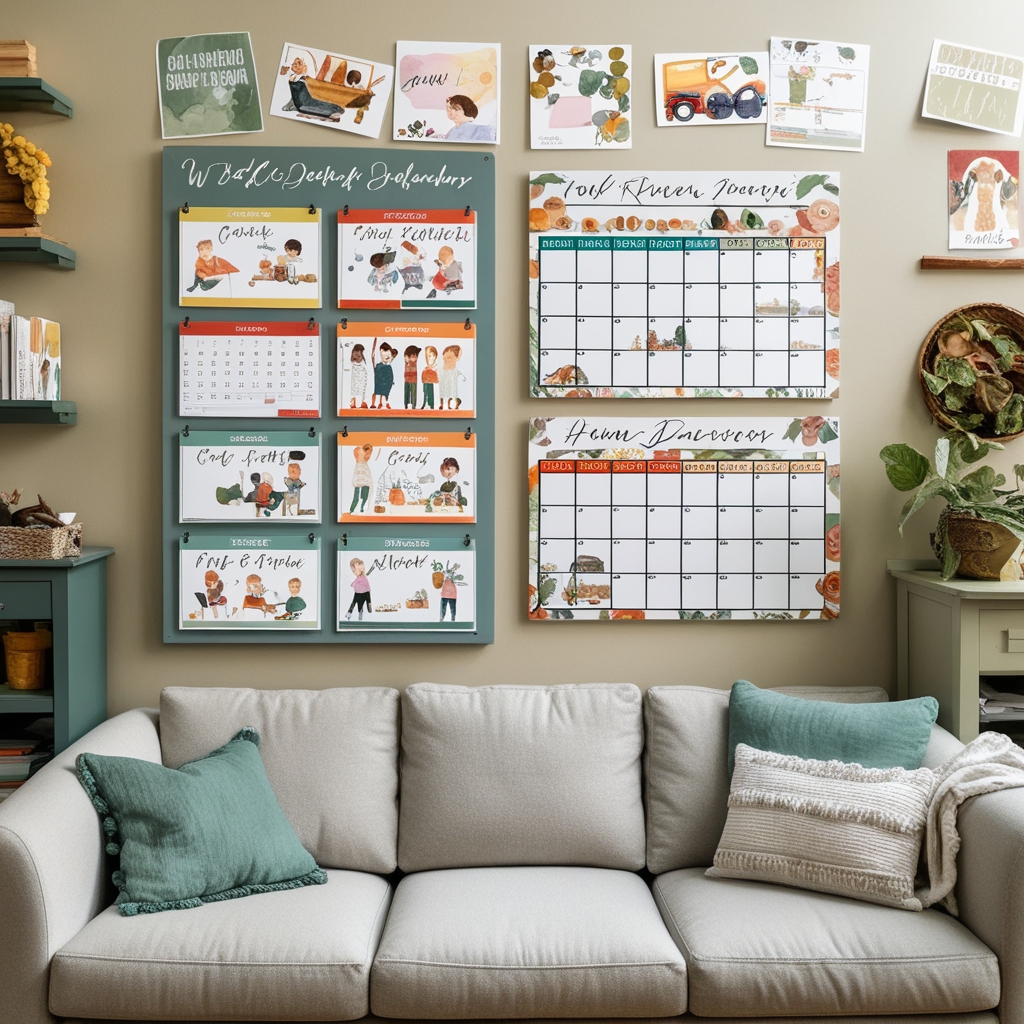
Successfully implementing a homeschool schedule for multiple kids begins with understanding the unique dynamics that emerge when educating several children simultaneously. Each child brings their own learning style, attention span, and academic needs to your homeschool environment.
Research from the U.S. Department of Education indicates that personalized learning approaches significantly improve educational outcomes. However, balancing personalization with group efficiency requires strategic planning and realistic expectations.
Identifying Individual Learning Needs
Before creating any schedule, assess each child’s unique characteristics:
- Learning pace: Some children need more time to process information, while others grasp concepts quickly
- Attention spans: Younger children typically focus for 10-15 minutes, while older children can sustain attention for 30-45 minutes
- Peak energy times: Notice when each child is most alert and receptive to learning
- Independence levels: Determine which children can work autonomously and which need constant supervision
- Subject preferences: Understanding what motivates each child helps in scheduling challenging subjects during optimal times
Recognizing Family Rhythm Patterns
Every family has natural rhythms that affect homeschool success. Consider these factors when designing your multi-child schedule:
Morning routines set the tone for the entire day. Some families thrive with early starts, while others function better with relaxed mornings. Identify your family’s natural energy patterns and build your academic schedule around these rhythms rather than fighting against them.
Meal times, nap schedules for younger children, and extracurricular activities create natural breaks in your day. These transitions can serve as helpful boundaries between different learning blocks or subjects.
Essential Scheduling Strategies for Multiple Kids
Effective multi-child homeschooling relies on proven scheduling strategies that maximize efficiency while maintaining educational quality. The most successful homeschooling families use a combination of these approaches, adapting them to fit their unique circumstances.
Block Scheduling Method
Block scheduling involves dedicating specific time periods to different subjects or children. This approach works particularly well for families with significant age gaps or when teaching multiple grade levels simultaneously.
A typical block schedule might include:
- Morning Block (8:00-10:00 AM): Focus on core subjects like math and language arts for older children while younger ones engage in quiet activities
- Mid-Morning Block (10:00-11:30 AM): Work intensively with younger children on their foundational skills
- Late Morning Block (11:30 AM-12:30 PM): Family learning time for subjects that can be adapted across grade levels
This method allows you to give each child or age group your undivided attention while others work independently or engage in appropriate activities.
Loop Scheduling for Flexibility
Loop scheduling offers incredible flexibility for busy families managing multiple children. Instead of rigid time slots, you create a list of subjects or activities that you cycle through in order, spending whatever time feels appropriate for each.
For example, your loop might include: Math → Reading → Science → Art → History → Physical Education. You simply move through the list, checking off completed subjects and starting where you left off the next day.
This approach accommodates interruptions, varying attention spans, and the natural ebb and flow of family life while ensuring all subjects receive attention over time.
Staggered Start Times
Staggered start times work exceptionally well when you have children who require different amounts of sleep or have varying morning routines. Begin with your earliest riser, adding other children to the schedule as they become available.
This strategy prevents the chaos of trying to start everyone simultaneously and allows for more individualized morning attention. It also accommodates families with babies or toddlers who might disrupt a synchronized start time.
Managing Different Age Gaps and Grade Levels
One of the most challenging aspects of creating a homeschool schedule for multiple kids involves managing significant age differences and varying grade levels. However, with strategic planning, age gaps can actually become advantages in your homeschool environment.
Small Age Gaps (1-3 Years Apart)
Children with small age gaps often benefit from combined learning experiences. You can teach similar concepts at slightly different levels, allowing the older child to reinforce their learning by helping the younger sibling.
Effective strategies include:
- Teaching the same subject simultaneously with differentiated materials
- Using multi-level curricula designed for combined teaching
- Creating buddy systems where older children mentor younger ones
- Alternating between grade-appropriate and combined activities
Medium Age Gaps (4-6 Years Apart)
Medium age gaps require more strategic scheduling but offer opportunities for peer teaching and leadership development. The older child can often work independently while you focus on the younger child’s needs.
Consider implementing:
- Independent work stations for the older child
- Scheduled one-on-one time with each child
- Family subjects that can be adapted across age levels
- Rotating intensive focus periods for each child
Large Age Gaps (7+ Years Apart)
Large age gaps often mean completely different educational needs and schedules. However, this can create opportunities for the older child to develop teaching skills while the younger child benefits from additional mentorship.
Successful approaches include:
- Completely separate academic schedules with minimal overlap
- Utilizing the older child as a teaching assistant
- Creating independent study programs for mature learners
- Focusing intensive teaching time on the child who needs it most
Daily Schedule Templates That Actually Work

Having concrete schedule templates provides structure while allowing for customization based on your family’s specific needs. These proven templates have been successfully implemented by homeschooling families and can be adapted for various family sizes and age combinations.
The Traditional Time-Block Template
This structured approach works well for families who thrive on routine and predictability:
8:00-8:30 AM: Morning routine and breakfast
8:30-9:00 AM: Family morning time (devotions, calendar, current events)
9:00-10:00 AM: Math for all children (differentiated by level)
10:00-10:15 AM: Break and snack
10:15-11:15 AM: Language arts (reading, writing, grammar)
11:15 AM-12:00 PM: Science or history (family-style learning)
12:00-1:00 PM: Lunch and free play
1:00-2:00 PM: Quiet time/independent work
2:00-3:00 PM: Art, music, or physical education
This template provides clear expectations while building in necessary breaks and transitions between activities.
The Flexible Loop Template
Perfect for families with unpredictable schedules or children with varying attention spans:
Daily Loop List:
- Morning routine and family time
- Math practice (15-45 minutes depending on child)
- Reading time (individual or together)
- Writing/handwriting practice
- Science or history exploration
- Creative time (art, music, building)
- Physical activity
- Life skills/chores
Move through the loop at your own pace, checking off completed items and starting where you left off each day. This approach accommodates interruptions while ensuring all subjects receive attention.
The Split-Day Template
Ideal for families with significant age gaps or when managing babies and toddlers alongside school-aged children:
Morning Focus (8:00 AM-12:00 PM): Intensive academics for older children while younger ones have structured play or nap time
Afternoon Focus (1:00-4:00 PM): Hands-on learning for younger children while older ones pursue independent projects or extracurricular activities
This template maximizes focused learning time for each age group while preventing the chaos of trying to teach everyone simultaneously.
Creating Independent Learning Systems
Developing independent learning capabilities in your children is crucial for managing a successful homeschool schedule for multiple kids. Independent learners can progress academically while you focus attention on children who need more direct instruction.
Setting Up Learning Stations
Learning stations provide structured environments where children can work autonomously on specific subjects or skills. Effective stations include:
- Reading nook: Comfortable seating with age-appropriate books and reading logs
- Math center: Manipulatives, worksheets, and self-checking materials
- Writing station: Various paper types, writing prompts, and editing checklists
- Science corner: Simple experiments, observation journals, and reference materials
- Art area: Supplies for creative expression and following artistic tutorials
Rotate children through stations or allow them to choose based on their current needs and interests. Clear instructions and expectations help children work productively without constant supervision.
Implementing Self-Directed Learning Tools
Modern educational technology offers numerous tools for independent learning. Consider incorporating:
- Educational apps and websites with built-in progress tracking
- Audio books and educational podcasts for auditory learners
- Video tutorials for visual learners who benefit from demonstration
- Self-checking workbooks and materials
- Educational games that reinforce academic concepts
The key is selecting high-quality resources that align with your educational goals while providing engaging, independent learning experiences.
Building Independence Gradually
Independence develops over time through consistent practice and gradually increasing expectations. Start with short, simple tasks and slowly build complexity as children demonstrate readiness.
Begin with 10-15 minute independent work periods for younger children, extending time as they develop focus and self-direction. Older children can handle 30-60 minute independent work sessions with appropriate materials and clear objectives.
Maximizing Family Learning Time
Family learning time represents one of the greatest advantages of homeschooling multiple children. These shared experiences create bonds while efficiently covering subjects that can be adapted across different age levels and learning abilities.
Morning Time Traditions
Morning time brings the family together for shared learning experiences that set a positive tone for the day. This tradition, popularized by Charlotte Mason’s educational philosophy, typically includes:
- Poetry recitation and memory work
- Music appreciation and singing
- Picture study and art appreciation
- Character building and life lessons
- Current events discussion
- Calendar work and weather observation
Keep morning time engaging by limiting sessions to 15-30 minutes and rotating through different activities. This prevents younger children from becoming restless while providing enriching experiences for older siblings.
Unit Studies for Multi-Level Learning
Unit studies allow you to explore topics in depth while accommodating different learning levels within the same subject. For example, a unit on ancient Egypt might include:
- Preschoolers: Simple crafts, picture books, and sensory activities
- Elementary: Research projects, timeline creation, and hands-on experiments
- Middle/High School: In-depth research, essay writing, and critical analysis
This approach maximizes your preparation time while ensuring each child engages with the material at an appropriate level. You can find excellent unit study resources through our lesson plan shop, which offers materials designed specifically for multi-level teaching.
Read-Aloud Sessions
Reading aloud to multiple children simultaneously provides numerous educational benefits while creating cherished family memories. Choose books slightly above your youngest listener’s reading level to challenge everyone appropriately.
Effective read-aloud sessions include discussion questions, vocabulary exploration, and follow-up activities that can be differentiated by age. This shared literary experience builds listening skills, expands vocabulary, and introduces complex themes across age groups.
Troubleshooting Common Multi-Child Challenges
Even the most carefully planned homeschool schedule for multiple kids will encounter obstacles. Anticipating common challenges and having solutions ready helps maintain momentum and reduces frustration for the entire family.
Managing Interruptions and Sibling Conflicts
Interruptions are inevitable when homeschooling multiple children. Develop strategies to minimize disruptions:
- Create “Do Not Disturb” signals when working one-on-one with a child
- Establish quiet activities for children waiting their turn
- Teach children to write down questions instead of interrupting immediately
- Designate specific times for asking questions or getting help
- Use timers to help children understand when they’ll receive attention
Sibling conflicts during school time require clear boundaries and consequences. Establish rules about respectful behavior during learning time and consistently enforce them to maintain a productive environment.
Addressing Different Learning Paces
Children naturally learn at different speeds, which can create scheduling challenges. Some children race through assignments while others need extended time for the same concepts.
Solutions include:
- Providing extension activities for fast finishers
- Breaking large assignments into smaller chunks for slower learners
- Using mastery-based progression rather than time-based advancement
- Offering choices in how children demonstrate their learning
- Celebrating individual progress rather than comparing children
Handling Resistance and Motivation Issues
Some children may resist certain subjects or show declining motivation over time. Address these challenges by:
- Identifying the root cause of resistance (too difficult, too easy, learning style mismatch)
- Incorporating children’s interests into academic subjects
- Providing choices in learning methods or materials
- Setting achievable short-term goals with meaningful rewards
- Taking breaks from problematic subjects and returning with fresh approaches
Remember that motivation naturally fluctuates, and temporary resistance doesn’t indicate failure in your homeschool approach.
Seasonal Schedule Adjustments and Flexibility
Successful homeschooling families understand that schedules must evolve throughout the year to accommodate changing family needs, developmental growth, and external circumstances. Building flexibility into your planning prevents rigidity from derailing your educational goals.
Adapting to Developmental Changes
Children’s needs change significantly throughout the school year as they mature and develop new capabilities. A schedule that works perfectly in September may need adjustments by January as attention spans increase, academic skills develop, and independence grows.
Regular schedule evaluations help identify needed changes:
- Monthly family meetings to discuss what’s working and what isn’t
- Quarterly schedule reviews with major adjustments as needed
- Flexibility to make immediate changes when current approaches aren’t effective
- Seasonal breaks to reassess and refresh your approach
Accommodating Life Changes
Family life brings unexpected changes that require schedule modifications. New babies, job changes, moves, illnesses, and other life events necessitate educational adjustments.
Prepare for life changes by:
- Creating simplified “survival mode” schedules for difficult periods
- Identifying essential vs. optional educational components
- Building support networks with other homeschooling families
- Maintaining realistic expectations during transitional periods
- Remembering that education continues even when formal schooling is disrupted
Seasonal Learning Opportunities
Different seasons offer unique learning opportunities that can enhance your multi-child homeschool experience. Incorporate seasonal elements that engage all age levels:
Fall: Nature studies, harvest festivals, historical connections to agricultural societies
Winter: Science experiments with weather and temperature, cultural studies of winter celebrations, indoor creative projects
Spring: Gardening and plant life cycles, renewal themes in literature, outdoor exploration and field trips
Summer: Relaxed learning schedules, travel education, community involvement and service projects
For additional ideas on seasonal planning and curriculum organization, explore our scheduling and planning resources which offer detailed guidance for year-round educational planning.
Frequently Asked Questions
How do I teach different grade levels simultaneously without anyone falling behind?
Use a combination of family-style learning for subjects like history and science, while maintaining individual instruction for core skills like math and reading. Implement independent work stations for older children while you focus on younger ones, and consider multi-level curricula designed for combined teaching. Regular assessment ensures no child falls behind their appropriate learning level.
What’s the ideal schedule length for homeschooling multiple children?
Most successful multi-child homeschool schedules run 4-6 hours daily, including breaks and transitions. Younger children (ages 4-7) typically need 2-3 hours of structured learning, while older children (ages 8-12) can handle 4-5 hours. High school students may require 5-6 hours. Adjust based on your children’s attention spans and your family’s energy levels.
How can I prevent my older children from being bored while I work with younger ones?
Create engaging independent work stations, provide challenging extension activities, and assign older children as teaching helpers for appropriate tasks. Establish clear expectations for independent work time and rotate your focused attention throughout the day. Consider online educational programs or educational documentaries for older children during intensive work with younger siblings.
Should I use the same curriculum for all my children or different ones for each?
This depends on your children’s ages and learning styles. For children close in age (1-3 years apart), multi-level curricula work well. Larger age gaps often require different curricula for core subjects but can share family-style subjects. Choose based on your teaching comfort level, available time, and each child’s individual needs rather than convenience alone.
How do I handle interruptions and behavior issues during school time?
Establish clear rules and consequences for school time behavior before problems arise. Create “Do Not Disturb” signals, teach children to wait appropriately, and provide quiet activities for children not receiving direct instruction. Address behavioral issues immediately and consistently. Consider whether interruptions indicate schedule problems that need adjustment rather than just behavioral issues.
What if my homeschool schedule isn’t working after trying it for several weeks?
Schedule adjustments are normal and necessary in multi-child homeschooling. Identify specific problems (timing, subject order, attention spans, etc.) and make targeted changes rather than overhauling everything. Sometimes minor tweaks like changing subject order or adjusting break times solve major issues. Don’t hesitate to try completely different approaches if needed – flexibility is one of homeschooling’s greatest advantages.
How can I ensure each child gets individual attention in a multi-child homeschool?
Schedule specific one-on-one time with each child daily, even if just 10-15 minutes for younger children or 20-30 minutes for older ones. Use independent work time to focus intensively on children who need extra help. Consider individual learning goals and celebrate each child’s unique progress. Quality attention matters more than quantity – focused, uninterrupted time is more valuable than scattered attention throughout the day.
Planners Homeschool Moms Swear By
As an Amazon Associate, HomeschoolingExperts earns from qualifying purchases. Some links in this article are affiliate links, meaning we may earn a small commission at no extra cost to you.
Conclusion
Creating an effective homeschool schedule for multiple kids requires patience, flexibility, and strategic planning, but the rewards of successfully educating multiple children at home are immeasurable. The key lies in understanding that there’s no one-size-fits-all solution – the best schedule is the one that works for your unique family dynamics, learning styles, and life circumstances.
Remember that successful multi-child homeschooling combines structure with flexibility, individual attention with family learning time, and realistic expectations with educational excellence. Start with a basic framework, make adjustments as needed, and don’t be afraid to completely change approaches if something isn’t working.
The journey of homeschooling multiple children offers incredible opportunities for sibling bonding, peer teaching, and family unity that traditional schooling often cannot provide. Embrace the challenges as learning opportunities and celebrate the small victories along the way.
Ready to implement these strategies in your homeschool? Start by choosing one scheduling approach that resonates with your family’s needs and commit to trying it for at least two weeks before making major adjustments. Remember, the goal isn’t perfection – it’s progress and continuous improvement in creating the best educational environment for all your children.
Related Resources
For additional support in your homeschooling journey, explore these valuable resources:
- Curriculum and Methods – Discover teaching approaches that work well for multiple children and various learning styles
- Getting Started with Homeschooling – Essential guidance for families beginning their homeschool journey with multiple children
- Contact our experts for personalized advice on creating schedules that work for your specific family situation

Loved this post? Grab the free resource above.
Plan your whole school year on one page — weekly, monthly, and yearly templates included.