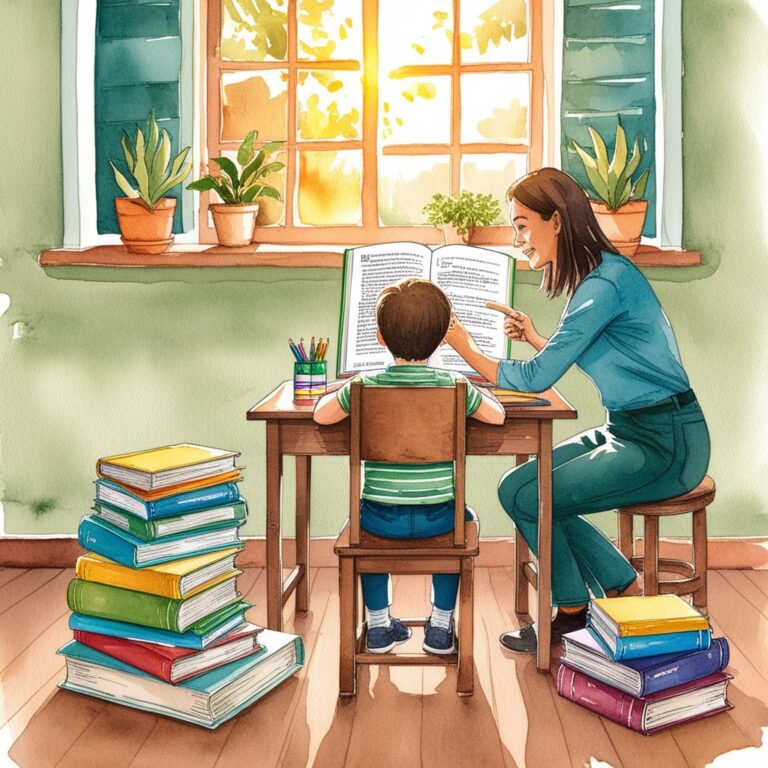
Free Curriculum Comparison Guide
Compare Charlotte Mason, Classical, Montessori, Waldorf, and more in one printable side-by-side guide.
Choosing a secular homeschool curriculum is one of the most common challenges facing families who want a faith-neutral, academically rigorous education at home. If you have spent any time searching for homeschool materials, you have likely noticed that a large percentage of popular curricula are faith-based, which can leave secular families unsure where to start. The good news is that secular homeschool curriculum options have grown significantly over the past decade, giving parents more flexibility than ever to build a program rooted in evidence-based teaching methods rather than religious doctrine.
This guide walks you through everything you need to know about secular homeschooling, from defining what “secular” actually means in an educational context to comparing the best curriculum providers available today. We will cover core subjects, teaching philosophies, budgeting, and how to customize a plan for your child’s grade level and learning style. Whether you are new to homeschooling or switching away from a faith-based program, this article is designed to give you a clear, actionable roadmap.
As a resource dedicated to helping families navigate every stage of home education, HomeschoolingExperts.org has reviewed dozens of curriculum options and spoken with homeschooling parents across the country to compile this comprehensive overview. Our goal is to make your search for the right secular homeschool curriculum faster, easier, and more confident.
Key Takeaways
- Secular homeschool curriculum focuses on academic content without religious instruction, making it suitable for families of all beliefs or none.
- Popular secular options include Oak Meadow, Bookshark’s secular track, Beast Academy, and Time4Learning.
- You can mix and match curricula across subjects, known as an eclectic approach, to fit your child’s needs.
- Budget-friendly and free secular resources exist, including public library programs and open educational resources.
- State homeschool laws vary, so checking your local requirements is an essential first step.
What Is a Secular Homeschool Curriculum?
A secular homeschool curriculum is a set of educational materials and lesson plans that teach academic subjects without incorporating religious content or a faith-based worldview. This means math is taught as math, science is taught according to mainstream scientific consensus, and history is presented without doctrinal interpretation.
Secular does not mean anti-religious. Instead, it means neutral. Families of any faith, or no faith at all, can use secular materials and simply supplement with their own religious instruction separately if desired.
Secular vs. Faith-Based Curriculum
The primary difference lies in content framing. A faith-based science curriculum, for example, might teach creationism alongside or instead of evolution. A secular science curriculum will align with standard scientific research, similar to what is taught in public schools.
According to the National Center for Education Statistics, homeschooling has grown substantially over the past several years, and a growing share of that population identifies as non-religious or prefers neutral academic content (National Center for Education Statistics).
Common Misconceptions
- Secular curriculum is not “anti-faith” or hostile to religion.
- Secular does not mean lower academic standards; many secular programs are more rigorous than traditional textbooks.
- Secular families can still be involved in co-ops and community groups with mixed belief systems.

Why Families Choose Secular Homeschool Curriculum
Parents choose secular homeschool curriculum for a variety of reasons, ranging from personal beliefs to a desire for academic content that mirrors public school standards. Understanding these motivations can help you decide if this path is right for your family.
Academic Neutrality
Many parents want their children to learn evolution, geology, and cosmology without alternative religious explanations woven into the material. Secular curriculum keeps science, history, and literature focused on established academic consensus.
Inclusivity for Diverse Families
Secular curriculum works well for interfaith families, agnostic or atheist households, and families who simply prefer to handle religious education separately at home or through their community of faith.
Preparing for College and Standardized Testing
Because secular curricula often align closely with public school scope and sequence, some parents find the transition to college admissions testing and traditional coursework smoother. This is particularly relevant given that homeschoolers now make up roughly 3 to 6 percent of the school-age population in the United States, according to various state department of education estimates.
Top Secular Homeschool Curriculum Options by Subject
One of the biggest advantages of secular homeschooling today is the sheer number of high-quality curriculum providers available. Below is a breakdown by subject area to help you compare options.
Math
- Beast Academy: rigorous, comic-book style math for elementary grades.
- Singapore Math: strong conceptual approach popular with secular and religious families alike.
- Art of Problem Solving: advanced math for middle and high school students.
Language Arts
- Bookshark (secular track): literature-based reading and writing program.
- Brave Writer: flexible, discussion-based writing curriculum.
- Institute for Excellence in Writing: structured writing instruction with secular options.
Science
- Real Science Odyssey: hands-on, secular science units by grade level.
- Mystery Science: video-based lessons aligned with Next Generation Science Standards.
- Oak Meadow: nature-based, secular science curriculum for younger grades.
History and Social Studies
- Story of the World (used selectively, as some editions include religious framing): widely used narrative history.
- Oak Meadow: secular world history and geography units.
- BookShark History: secular literature-based history studies.
For families who want ready-made lesson plans across subjects, our homeschool lesson plan shop offers secular-friendly resources you can drop directly into your weekly schedule.
Comparing Teaching Methods for Secular Homeschooling

Secular homeschool curriculum is not just about content, it also involves choosing a teaching philosophy that fits your child’s learning style and your family’s lifestyle.
Classical Method
The classical method organizes learning around the grammar, logic, and rhetoric stages, and many secular classical resources now exist that strip out religious references while keeping the rigorous structure intact.
Charlotte Mason Method
Originally developed with a Christian foundation, the Charlotte Mason method has been adapted by secular families who value living books, nature study, and narration without the religious components.
Unschooling and Interest-Led Learning
This child-led approach naturally fits secular homeschooling since it relies on the student’s curiosity rather than any predetermined worldview.
Traditional or School-at-Home
This method mimics a public school schedule and structure, often using textbooks and workbooks that closely resemble what is used in traditional classrooms.
To explore these philosophies in more depth, visit our curriculum methods category for detailed breakdowns of each approach.
Building a Secular Homeschool Curriculum by Grade Level
Your secular homeschool curriculum should evolve as your child grows. Here is a general framework to guide your planning.
Early Elementary (Kindergarten to Grade 2)
- Focus on phonics, early reading, and basic math facts.
- Incorporate hands-on science exploration and nature walks.
- Keep lessons short, typically 15 to 30 minutes per subject.
Upper Elementary (Grades 3 to 5)
- Introduce structured writing and grammar instruction.
- Begin formal history studies with secular timelines and literature.
- Add science experiments that reinforce the scientific method.
Middle School (Grades 6 to 8)
- Increase independent reading and research projects.
- Introduce pre-algebra and algebra depending on readiness.
- Start discussing high school planning and potential career interests.
High School (Grades 9 to 12)
- Focus on college-preparatory coursework, including lab sciences and advanced math.
- Track credits carefully for transcripts, as recommended by the Home School Legal Defense Association.
- Consider dual enrollment or AP courses for competitive college applications.
For grade-specific recommendations, our grade level guides offer detailed subject checklists for every age.
Budgeting for a Secular Homeschool Curriculum
Cost is a major factor when choosing a secular homeschool curriculum, and fortunately there are options at every price point.
Free and Low-Cost Resources
- Public library programs, which often include free access to educational databases and reading challenges.
- Khan Academy, which offers free math, science, and humanities instruction.
- Open educational resources shared by state departments of education.
Mid-Range Curriculum
Programs like Time4Learning or BookShark typically range from a few hundred dollars per year, depending on grade level and subjects included.
Premium or All-in-One Programs
Comprehensive secular programs like Oak Meadow can cost more but include full lesson plans, materials lists, and sometimes teacher support, which can save significant planning time.
For additional cost-saving strategies, check out our scheduling and planning resources, which include tips for stretching your curriculum budget across the school year.
Common Mistakes to Avoid When Choosing Curriculum
Even experienced homeschool parents can fall into a few common traps when selecting a secular homeschool curriculum. Avoiding these mistakes early can save you both time and money.
Buying a Full Year Before Testing It
Always request sample lessons or trial periods before committing to a full-year purchase, since not every curriculum fits every learning style.
Assuming All “Secular” Labels Are Accurate
Some curricula marketed as neutral still contain subtle religious framing, so it is worth previewing sample chapters carefully before purchasing.
Overloading the Schedule
New homeschool parents sometimes try to replicate a full public school day, which can lead to burnout. Homeschooling is often more time-efficient due to one-on-one instruction.
Ignoring State Requirements
Every state has different homeschool reporting and testing requirements, so confirm your obligations before finalizing your curriculum plan.
How to Customize Your Secular Homeschool Plan
No single secular homeschool curriculum will be a perfect fit for every child, which is why many families build an eclectic, customized plan.
Mix and Match by Subject Strength
You might choose a rigorous math program while opting for a more relaxed, literature-based approach to history and language arts.
Use Supplemental Activities
Field trips, documentaries, and educational apps can reinforce core lessons without adding academic pressure. For creative extension ideas, browse our activities and ideas category.
Reassess Each Semester
Set aside time every semester to evaluate what is working and what needs adjustment. Homeschooling is meant to be flexible, and your curriculum should adapt as your child grows.
Get Support When Needed
If you are feeling overwhelmed by curriculum choices, our team is available through our contact page to help point you toward resources suited to your family’s needs. You can also learn more about our mission and experience on our about page.
Frequently Asked Questions
What does secular homeschool curriculum mean?
Secular homeschool curriculum refers to educational materials that teach academic subjects without religious content or doctrine. It presents topics like science and history based on mainstream academic consensus rather than a specific faith perspective.
Is secular homeschooling legal in every state?
Yes, secular homeschooling is legal in all fifty states, though each state has its own registration, testing, and reporting requirements. It is recommended to check your state’s department of education website or organizations like the Home School Legal Defense Association for specifics.
What is the best secular homeschool curriculum for beginners?
Time4Learning and Bookshark’s secular track are popular starting points because they offer structured, all-in-one lesson plans with minimal setup. Both are designed to be user-friendly for parents new to homeschooling.
Can I combine secular curriculum with religious instruction at home?
Absolutely. Many families use a secular academic curriculum during school hours and incorporate religious education separately through their family or place of worship. This approach keeps academic subjects neutral while still honoring personal faith practices.
How much does a secular homeschool curriculum typically cost?
Costs vary widely, from free resources like Khan Academy to premium all-in-one programs that can cost several hundred dollars per year. Budget-conscious families can mix free resources with a few paid core subject curricula to control costs.
Do colleges accept secular homeschool transcripts?
Yes, colleges regularly accept homeschool transcripts, including those based on secular curriculum, as long as records are well documented. Keeping detailed transcripts, course descriptions, and standardized test scores strengthens college applications significantly.
What if my child struggles with a secular curriculum I chose?
It is common to switch curricula, especially in the first year or two of homeschooling. Reassess subject by subject rather than overhauling everything at once, and consider trial lessons before purchasing a full replacement.
All-in-One Curriculum Picks
As an Amazon Associate, HomeschoolingExperts earns from qualifying purchases. Some links in this article are affiliate links, meaning we may earn a small commission at no extra cost to you.
Conclusion
Choosing the right secular homeschool curriculum does not have to be overwhelming once you understand your options and how they fit your child’s learning style, grade level, and budget. From rigorous math programs to literature-rich history studies, today’s secular homeschool market offers more choice and quality than ever before.
Remember that your curriculum can and should evolve over time. Start with a plan that feels manageable, evaluate regularly, and do not be afraid to adjust as your family’s needs change.
If you are ready to build a personalized plan, explore our lesson plan shop for secular-friendly resources, or reach out through our contact page for personalized guidance on your homeschooling journey.
Related Resources
- Getting Started with Homeschooling
- Homeschool Lesson Plans by Subject
- Comparing Homeschool Curriculum Methods
Loved this post? Grab the free resource above.
Compare Charlotte Mason, Classical, Montessori, Waldorf, and more in one printable side-by-side guide.