Free Curriculum Comparison Guide
Compare Charlotte Mason, Classical, Montessori, Waldorf, and more in one printable side-by-side guide.
Project-based homeschooling is an educational approach where children learn core academic skills by completing in-depth, real-world projects instead of working through isolated textbook chapters. Rather than memorizing facts for a Friday quiz, a student studying ancient Egypt might build a scale model pyramid, research construction techniques, write a research report, and present their findings to family members. This method blends multiple subjects into one meaningful experience, making learning stick.
If you have ever watched your child light up over a hands-on activity but glaze over during worksheet time, you already understand the appeal of project-based homeschooling. This guide walks you through exactly what it is, why it works, and how to implement it in your own homeschool starting this week.
We will cover practical project ideas, scheduling strategies, assessment methods, and the common pitfalls that trip up beginners. By the end, you will have a clear roadmap for bringing project-based learning into your home, regardless of your children’s ages or your homeschooling experience level.
Key Takeaways
- Project-based homeschooling teaches multiple subjects simultaneously through one central, hands-on project.
- Research from the Buck Institute for Education shows project-based learning improves retention and critical thinking compared to traditional lecture-based instruction.
- You do not need to abandon your curriculum entirely; project-based learning can supplement or replace individual units.
- Successful projects follow a clear structure: question, research, creation, and presentation.
- Grading and record-keeping are still possible using rubrics, portfolios, and reflection journals.
What Is Project-Based Homeschooling
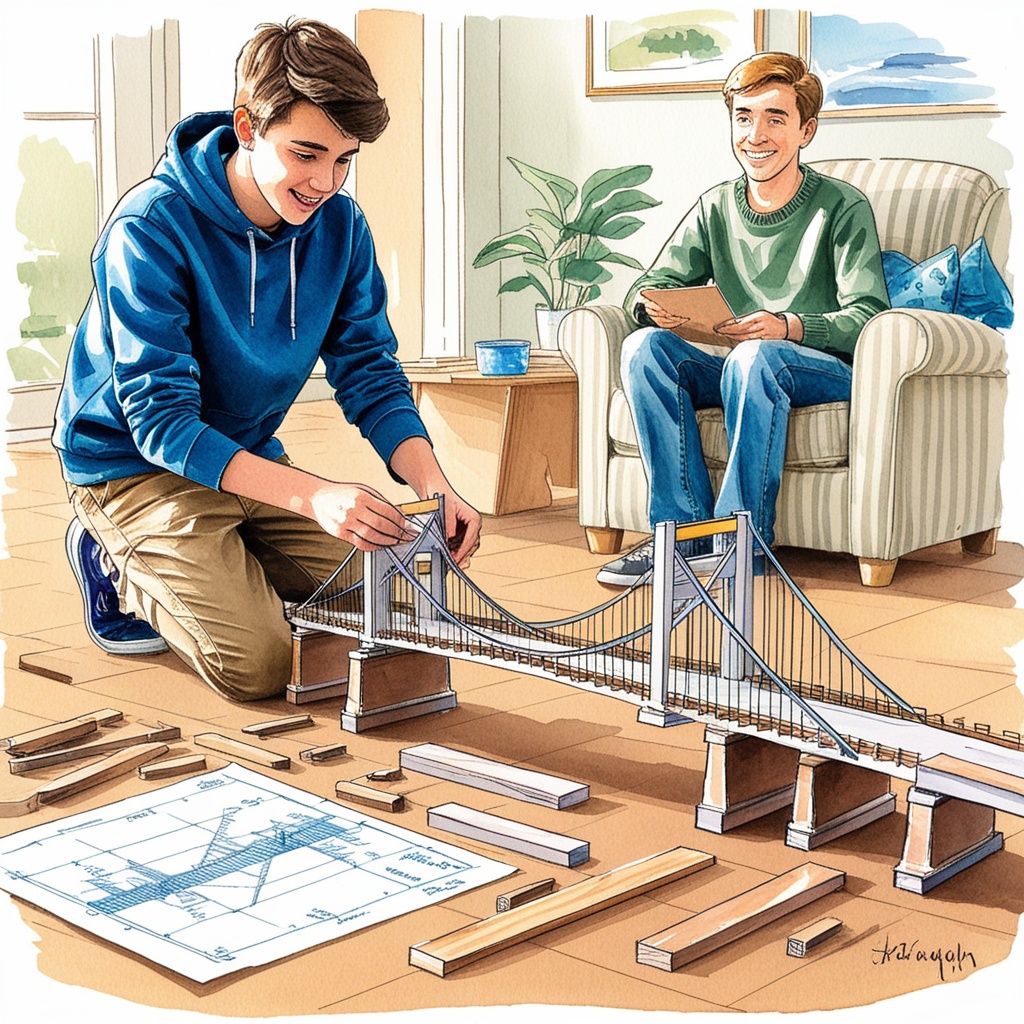
Project-based homeschooling flips the traditional script of separate subjects and separate lesson times. Instead, one meaningful project becomes the vehicle for learning math, science, writing, history, and art all at once.
The Buck Institute for Education, a leading authority on project-based learning, defines it as a teaching method in which students gain knowledge and skills by working for an extended period to investigate and respond to an authentic, engaging question or problem. This same framework transfers beautifully to home education.
How It Differs From Traditional Homeschooling
Traditional homeschooling often moves subject by subject through a fixed curriculum. Project-based homeschooling instead centers learning around a driving question, such as “How did ancient civilizations build without modern tools?”
Skills are absorbed as a byproduct of solving real problems rather than being taught in isolation. This mirrors how professionals actually learn and apply knowledge in the workplace.
How It Differs From Unschooling
Unlike unschooling, which follows a child’s spontaneous interests with little structure, project-based homeschooling still has defined learning goals, timelines, and deliverables. Parents guide the process while children drive the direction within set boundaries.
[Image Placeholder]
Why Choose Project-Based Homeschooling
Families switch to project-based homeschooling for many reasons, but the results tend to speak for themselves. Children retain more, engage more deeply, and often develop skills that traditional testing does not measure.
Research-Backed Benefits
Studies compiled by Edutopia, an education research organization founded by George Lucas, indicate that students in project-based classrooms outperform peers in traditional settings on standardized tests measuring critical thinking and problem-solving. This carries over directly to the homeschool environment, where parents can tailor projects even more precisely to their child’s needs.
Benefits for Homeschooling Families Specifically
- Combines multiple subjects into fewer daily transitions, saving planning time
- Naturally accommodates multiple ages working on the same theme at different depths
- Builds portfolio-worthy work samples for record-keeping or transcripts
- Increases motivation because children see a tangible end product
- Develops real-world skills like research, time management, and presentation
Skills That Go Beyond Academics
Project-based homeschooling builds executive function skills such as planning, prioritizing, and self-monitoring. These are the same skills employers and colleges increasingly value, according to guidance published by the U.S. Department of Education.
Core Elements of a Successful Homeschool Project
Not every hands-on activity qualifies as a true project-based learning experience. A few structural elements separate a meaningful project from a one-off craft.
A Driving Question
Every strong project starts with an open-ended question that cannot be answered with a simple yes or no. Examples include “What makes a bridge strong enough to hold weight?” or “How does weather affect what people grow and eat?”
Research and Investigation
Children need time to gather information from books, documentaries, interviews, or primary sources. This phase naturally builds reading comprehension and research skills.
Creation of a Tangible Product
The project should result in something real: a model, a written report, a video, a piece of art, or a working prototype. This tangible product is what makes the learning visible and memorable.
Presentation or Sharing
Presenting findings to a parent, sibling, or small group builds communication skills and gives the project a sense of purpose beyond just finishing an assignment.
Reflection
A short reflection period, where the child discusses what worked and what they would change, cements the learning and builds metacognitive skills.
[Image Placeholder]
How to Start Project-Based Homeschooling Step by Step
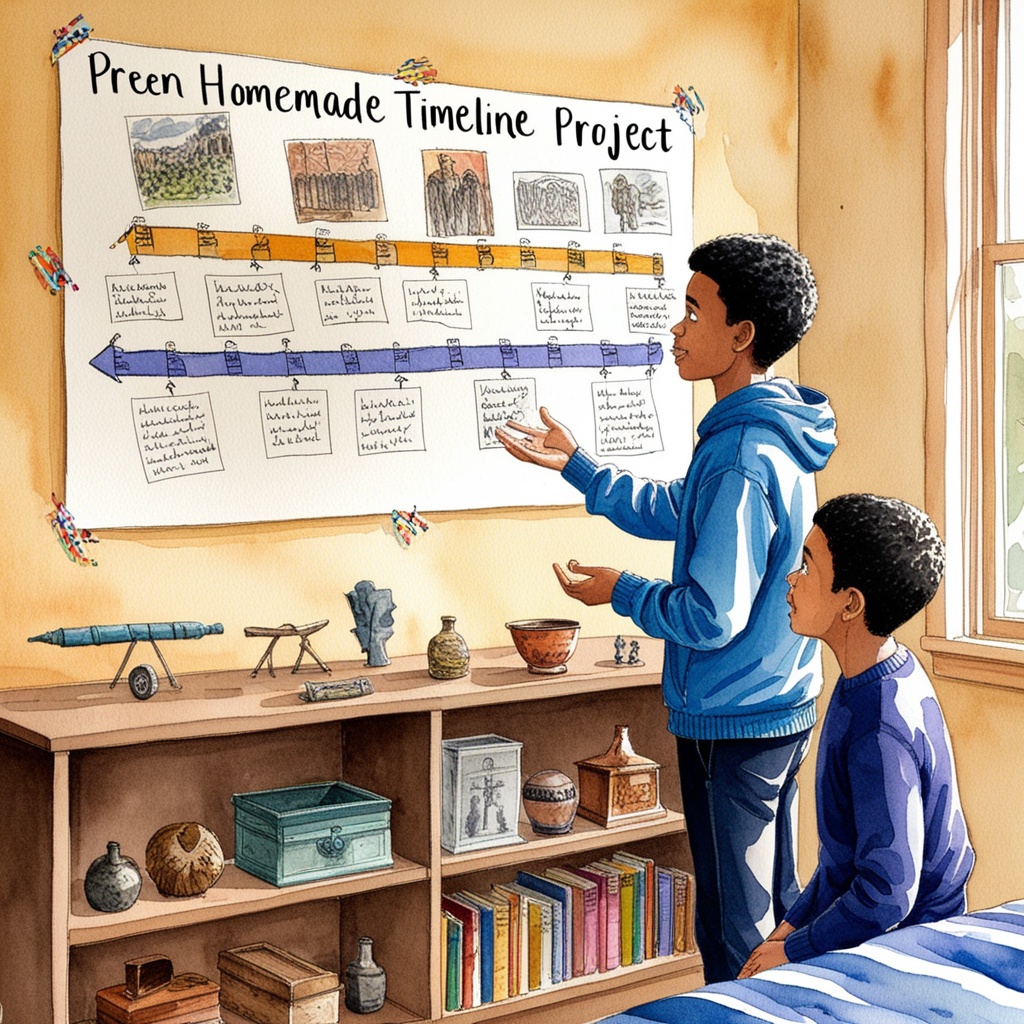
Transitioning into project-based homeschooling does not require an overnight overhaul. Start small, then expand as you and your children gain confidence.
Step 1: Choose a Topic of Genuine Interest
Ask your child what they are curious about. Interest-driven topics dramatically increase engagement and follow-through.
Step 2: Write a Driving Question Together
Turn the topic into an open-ended question. For example, “dinosaurs” becomes “Why did some dinosaurs survive longer than others?”
Step 3: Map Out Subjects You Can Cover
List the subjects the project can naturally touch: science, writing, math, art, and history. This helps you see how much of your regular curriculum the project can replace.
Step 4: Set a Timeline and Milestones
Most homeschool projects work well over one to three weeks. Break the process into research days, building days, and presentation day.
Step 5: Gather Resources
Library books, documentaries, museum visits, and online resources like Scholastic’s educational library can provide rich, age-appropriate content for research.
Step 6: Let Your Child Present and Reflect
End every project with a short presentation and a written or verbal reflection. This closes the loop and provides a natural record-keeping opportunity.
If you want ready-made structures to simplify this process, our lesson plan shop offers project-based templates you can adapt to any subject or age group.
Project Ideas by Subject and Age Group
One of the best parts of project-based homeschooling is its flexibility across ages and subjects. Below are starter ideas organized by grade band.
Early Elementary (Ages 5 to 8)
- Build a habitat diorama for a chosen animal and explain its adaptations
- Grow a small garden and track plant growth in a math and science journal
- Create a simple family cookbook, practicing measurement and sequencing
Upper Elementary (Ages 9 to 11)
- Design and test a paper airplane engineering challenge, recording data on distance and design changes
- Research a country and create a travel brochure covering geography, culture, and economy
- Build a working model of a simple machine, such as a pulley or lever system
Middle School (Ages 12 to 14)
- Write, film, and edit a short documentary on a local historical landmark
- Design a small business plan, including budgeting and a marketing pitch
- Conduct a science fair-style experiment testing water quality from different local sources
High School (Ages 15 to 18)
- Complete a community service project paired with a formal impact report
- Build a personal finance plan including a mock budget, investment research, and taxes
- Create a portfolio website showcasing a semester-long independent research project
For more structured options by age, browse our grade level guides for additional project inspiration tailored to specific developmental stages.
[Image Placeholder]
Assessing Learning in a Project-Based Homeschool
One common concern parents have about project-based homeschooling is how to grade or document progress without traditional tests. Fortunately, several assessment tools work well.
Use Simple Rubrics
A basic rubric evaluating research quality, creativity, effort, and presentation gives structure to your feedback without requiring complex grading systems.
Keep a Portfolio
Photograph finished projects, save written work, and store presentation notes in a physical or digital portfolio. This becomes valuable documentation for state reporting requirements or future transcripts.
Incorporate Self-Assessment
Ask children to rate their own effort and understanding on a simple scale, then discuss the results together. This builds ownership over their learning.
Track Skills, Not Just Content
Note the specific skills demonstrated during each project, such as research, data analysis, or public speaking. Over time, this skill log doubles as a rich record for transcripts or portfolios, especially useful for families navigating homeschool documentation requirements outlined by organizations like the Home School Legal Defense Association.
Scheduling Project-Based Homeschooling Around Your Week
A frequent question from families new to this method is how to fit project-based homeschooling into an already busy week. The good news is that it is highly adaptable to different schedules.
The Dedicated Project Day Model
Set aside one full day per week for deep project work while keeping other days for core skills like math and reading practice.
The Morning Basics, Afternoon Projects Model
Cover foundational skills each morning, then dedicate afternoons to project research, building, or presentation work.
The Full Immersion Model
For a set period, such as two to three weeks, the project becomes the primary curriculum, with math being the main subject taught separately alongside it.
Sample Weekly Breakdown
- Monday: Introduce driving question and begin research
- Tuesday: Continue research and outline the project plan
- Wednesday: Begin building or drafting the project
- Thursday: Finish creation and prepare presentation materials
- Friday: Present findings and complete reflection
For more scheduling frameworks, visit our scheduling and planning resources to find a rhythm that fits your family’s needs.
Common Challenges and How to Solve Them
Like any teaching method, project-based homeschooling comes with a learning curve. Knowing the common pitfalls ahead of time helps you avoid frustration.
Challenge: Projects Take Longer Than Expected
Solution: Build buffer days into your timeline and remind yourself that depth matters more than speed. A project stretching an extra week still delivers rich learning.
Challenge: Difficulty Covering Math Skills
Solution: Most families continue a separate, sequential math curriculum alongside project-based learning, since math often benefits from more structured, incremental practice.
Challenge: Multiple Ages, One Topic
Solution: Keep the driving question the same for all children but adjust the depth of research and complexity of the final product based on age.
Challenge: Feeling Unsure About Grading
Solution: Lean on rubrics and portfolios rather than trying to assign traditional letter grades to every step of the process.
Challenge: Running Out of Project Ideas
Solution: Keep a running list of your child’s questions and curiosities throughout the month, then choose one to build into a project when the time comes. Our activities and ideas category is also a helpful resource when inspiration runs low.
Blending Project-Based Learning With Other Homeschool Methods
Project-based homeschooling does not have to stand alone. Many families successfully blend it with other well-known approaches.
Combining With Classical Education
Use classical literature or history readings as the springboard for a project, such as building a model Roman aqueduct after studying ancient Rome.
Combining With Charlotte Mason
Nature journaling and living books pair naturally with project-based nature studies, such as documenting a local ecosystem over a full season.
Combining With Traditional Curriculum
Use your existing curriculum for core skills like math and grammar, then layer in one project-based unit per month for science or history. This hybrid approach eases the transition for families who are not ready to fully commit.
To explore how project-based learning fits alongside other approaches, our curriculum methods category offers detailed comparisons of popular homeschooling philosophies.
Frequently Asked Questions
What age is best to start project-based homeschooling?
Project-based homeschooling works for nearly any age, though it is especially effective from kindergarten through high school. Younger children benefit from simpler, shorter projects, while older students can handle multi-week, in-depth investigations.
Does project-based homeschooling meet state education requirements?
In most states, yes, as long as core subjects are documented and covered over the school year. Check your specific state requirements through resources like the Home School Legal Defense Association to confirm compliance for your area.
How long should a homeschool project last?
Most successful projects run between one and three weeks. Shorter projects work well for younger children, while older students can sustain longer, more complex investigations.
Can project-based homeschooling replace a full curriculum?
It can, especially for subjects like science and history, but most families still use a structured curriculum for sequential subjects like math and phonics alongside project-based units.
How do I grade a project-based homeschool assignment?
Use a simple rubric evaluating research quality, effort, creativity, and presentation skills rather than traditional test-based grading. Portfolios of finished work also serve as strong documentation.
What if my child loses interest halfway through a project?
This is common and usually signals that the project scope was too large or the topic needs adjusting. Break the project into smaller milestones with visible progress markers to help maintain motivation.
Is project-based homeschooling good for multiple children at different grade levels?
Yes, it is one of the most efficient methods for multi-age homeschooling. Children can explore the same driving question at different depths, making it easier to teach several grade levels at once.
Unschooling & Project-Based Picks
As an Amazon Associate, HomeschoolingExperts earns from qualifying purchases. Some links in this article are affiliate links, meaning we may earn a small commission at no extra cost to you.
Conclusion
Project-based homeschooling transforms learning from a series of disconnected assignments into meaningful, memorable experiences that stick with children long after the project is finished. By centering education around real questions, hands-on creation, and genuine presentation, this method builds both academic skills and the kind of confidence that comes from completing real work.
Whether you fully adopt project-based homeschooling or blend it into your current curriculum one unit at a time, the key is to start small and stay consistent. Choose one topic your child is genuinely curious about, follow the simple structure outlined above, and watch engagement grow from there.
If you are ready to bring project-based learning into your homeschool this month, explore our printable lesson plans and project templates designed to take the guesswork out of getting started. You can also learn more about our teaching philosophy on our about page, or reach out through our contact page with specific questions about your homeschool journey.
Related Resources
Loved this post? Grab the free resource above.
Compare Charlotte Mason, Classical, Montessori, Waldorf, and more in one printable side-by-side guide.