Free Sample Lesson Plan
Math Adventures: Everyday Numbers — drop your email and we'll send the printable PDF.
Creating engaging homeschool art lesson plans for kids can transform your educational experience from mundane to magical, fostering creativity while building essential skills across multiple subjects. Whether you’re a seasoned homeschooling parent or just beginning your journey, structured art education provides countless opportunities to enhance learning through hands-on creative expression.
Art education isn’t just about creating beautiful masterpieces—it’s a powerful tool that develops fine motor skills, critical thinking abilities, and emotional intelligence in children of all ages. Research from the National Art Education Association shows that students who participate in regular art instruction score higher on standardized tests and demonstrate improved problem-solving capabilities compared to their peers without arts education.
This comprehensive guide will walk you through everything you need to know about implementing effective art lesson plans in your homeschool curriculum, from age-appropriate activities and supply management to assessment strategies and integration with core subjects.
Key Takeaways
- Art lesson plans should be adapted to your child’s developmental stage and interests
- Integration with core subjects like math, science, and history enhances learning outcomes
- Basic art supplies can create countless creative opportunities without breaking the budget
- Regular art instruction improves fine motor skills, creativity, and academic performance
- Documentation and assessment help track progress and celebrate achievements
Benefits of Art Education in Homeschooling
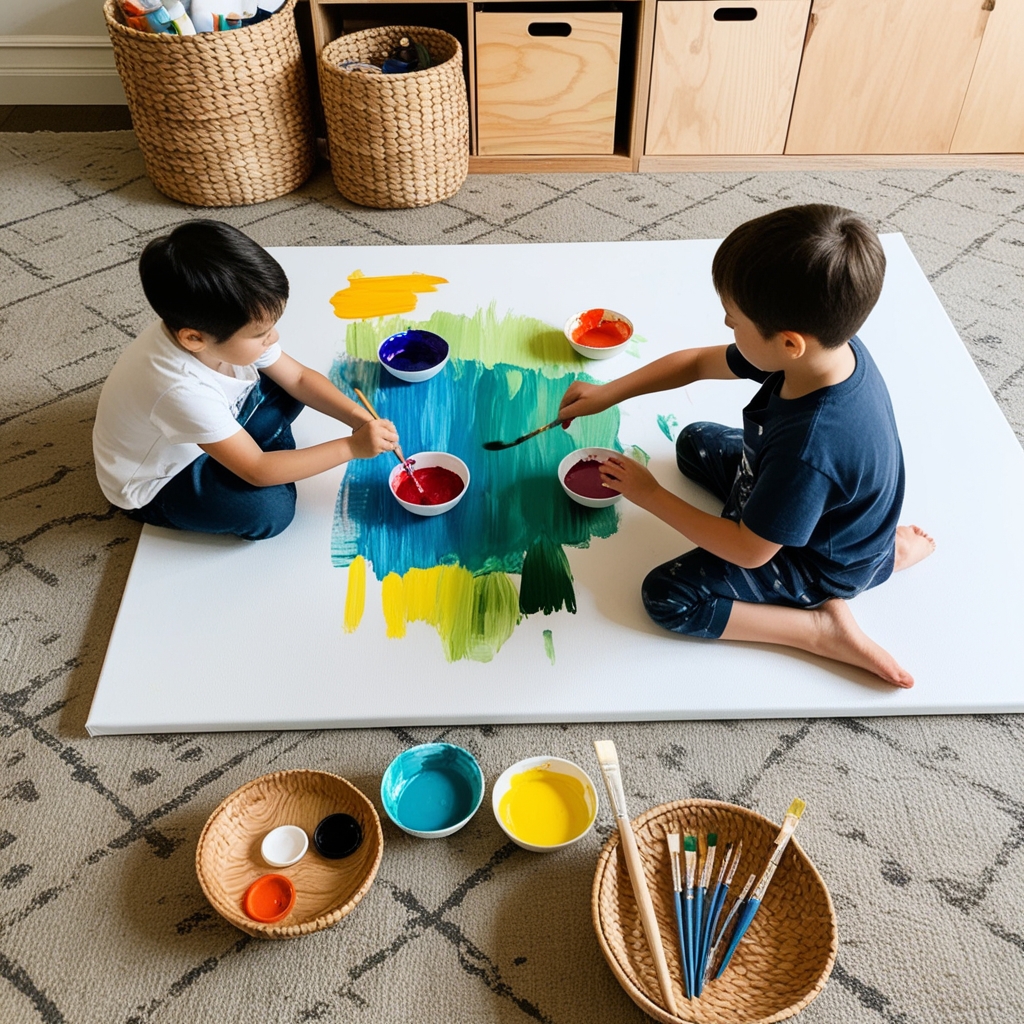
Art education serves as a cornerstone of well-rounded homeschool instruction, offering benefits that extend far beyond creative expression. When you incorporate structured art activities into your homeschool routine, you’re providing your children with tools for cognitive development, emotional regulation, and academic enhancement.
Cognitive Development Through Creative Expression
Research conducted by the Arts Education Partnership demonstrates that children who engage in regular art activities show improved spatial reasoning skills, which directly correlate with mathematics achievement. Drawing, painting, and sculpting require children to visualize objects in three-dimensional space, strengthening neural pathways essential for geometry and engineering concepts.
Art activities also enhance memory retention through multi-sensory learning experiences. When children create visual representations of historical events or scientific concepts, they’re more likely to remember and understand complex information compared to traditional textbook-based learning alone.
Fine Motor Skill Development
Manipulating paintbrushes, cutting with scissors, and working with clay naturally develops the fine motor skills necessary for writing and other academic tasks. Occupational therapists frequently recommend art activities as therapeutic interventions for children struggling with handwriting or coordination challenges.
Progressive skill-building through art projects helps children develop hand-eye coordination, bilateral coordination, and finger strength. These foundational skills support academic success across all subjects requiring written work or detailed manipulation of materials.
Emotional Intelligence and Self-Expression
Art provides a safe outlet for emotional expression, particularly valuable for children who struggle to verbalize their feelings. Through color choices, subject matter, and artistic techniques, children communicate their inner experiences while developing emotional vocabulary and self-awareness.
Creating art also builds confidence and self-esteem as children see tangible evidence of their capabilities and growth over time. This positive reinforcement cycle encourages risk-taking and resilience in other academic areas.
Age-Appropriate Homeschool Art Lesson Plans for Kids
Successful art education requires matching activities to your child’s developmental stage and interests. Understanding age-appropriate expectations ensures frustration-free learning experiences that build confidence while challenging growing abilities.
Early Elementary (Ages 5-8): Foundation Building
Young learners benefit from art activities that emphasize exploration and process over product. Focus on basic color theory, simple shapes, and sensory experiences that build foundational skills without overwhelming developing fine motor abilities.
Sample Week-Long Lesson Plan: Primary Colors Adventure
- Day 1: Red exploration – finger painting, red object hunt, strawberry printing
- Day 2: Blue discovery – watercolor washes, blue collage, sky observation drawings
- Day 3: Yellow celebration – crayon resist techniques, sunflower studies, yellow texture rubbings
- Day 4: Color mixing magic – creating orange, green, and purple through hands-on experiments
- Day 5: Rainbow creation – combining all learned colors in a collaborative mural project
These lessons typically require 20-30 minutes of focused activity time, with flexibility for children who want to continue exploring. Emphasize the joy of creation rather than specific outcomes, allowing natural artistic development to unfold.
Upper Elementary (Ages 9-12): Skill Development
Older elementary students can handle more complex techniques and longer project timelines. Introduce formal art concepts like perspective, shading, and composition while maintaining emphasis on creative exploration and personal expression.
Sample Two-Week Unit: Landscape Drawing and Painting
- Week 1: Observational drawing skills, basic perspective, horizon lines, foreground/background concepts
- Week 2: Watercolor techniques, color mixing for natural scenes, final landscape painting creation
Projects at this level can extend 45-60 minutes per session, with some activities spanning multiple days. Students begin developing personal artistic preferences and can engage in more detailed discussions about artistic choices and techniques.
Middle School (Ages 13-15): Artistic Identity Formation
Adolescent learners are ready for more sophisticated artistic challenges and can begin exploring various artistic movements and cultural traditions. Encourage personal style development while introducing art history and criticism skills.
Focus on portfolio development, allowing students to choose projects that align with their interests while meeting curriculum objectives. Introduce digital art tools and multimedia approaches that resonate with tech-savvy adolescents.
Essential Art Supplies for Every Homeschool
Building a well-stocked art supply collection doesn’t require a massive budget or professional-grade materials. Strategic purchasing and creative resourcefulness can provide everything needed for comprehensive homeschool art lesson plans for kids across all age levels.
Basic Supply Foundation
Start with versatile materials that support multiple project types and age ranges. Quality matters more than quantity—investing in a few excellent supplies produces better results than purchasing numerous cheap alternatives that frustrate young artists.
Essential Drawing Materials:
- Variety pack of drawing pencils (2H, HB, 2B, 4B)
- Kneaded erasers and white vinyl erasers
- Drawing paper in multiple sizes (9×12 and 12×18 recommended)
- Colored pencils – 24-count set minimum
- Fine-tip and broad-tip markers
- Oil pastels or soft chalk pastels
Painting Essentials:
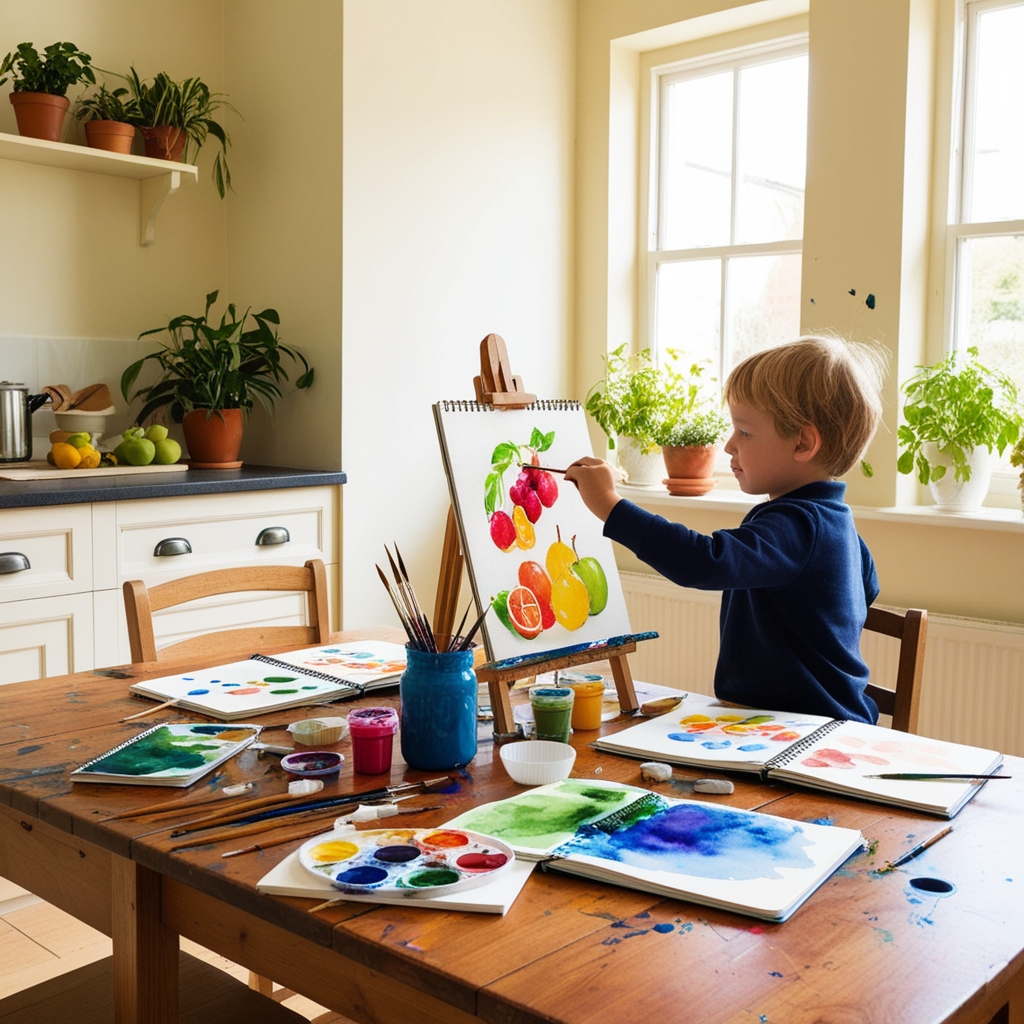
- Watercolor paint set with mixing tray
- Tempera or acrylic paints in primary colors plus black and white
- Variety of brush sizes (small detail, medium flat, large wash brush)
- Watercolor paper and canvas boards
- Palette knives for mixing and texture creation
- Water containers and paper towels
Specialized Materials for Advanced Projects
As your homeschool art program develops, gradually add materials that support specific techniques and interests. Consider your children’s preferences and curriculum goals when expanding your supply collection.
Clay and sculpture materials open three-dimensional creative possibilities, while printmaking supplies like foam plates and brayers introduce graphic arts concepts. Fabric markers, embroidery supplies, and weaving materials support textile arts exploration.
Budget-Friendly Supply Strategies
Maximize your art supply budget through strategic shopping and creative substitutions. Purchase basic supplies in bulk during back-to-school sales, and supplement with household items that serve double duty as art materials.
Egg cartons become paint palettes, old magazines provide collage materials, and natural objects like leaves and flowers create beautiful printing stamps. Many professional art techniques can be explored using everyday materials with impressive results.
Integrating Art with Core Subjects
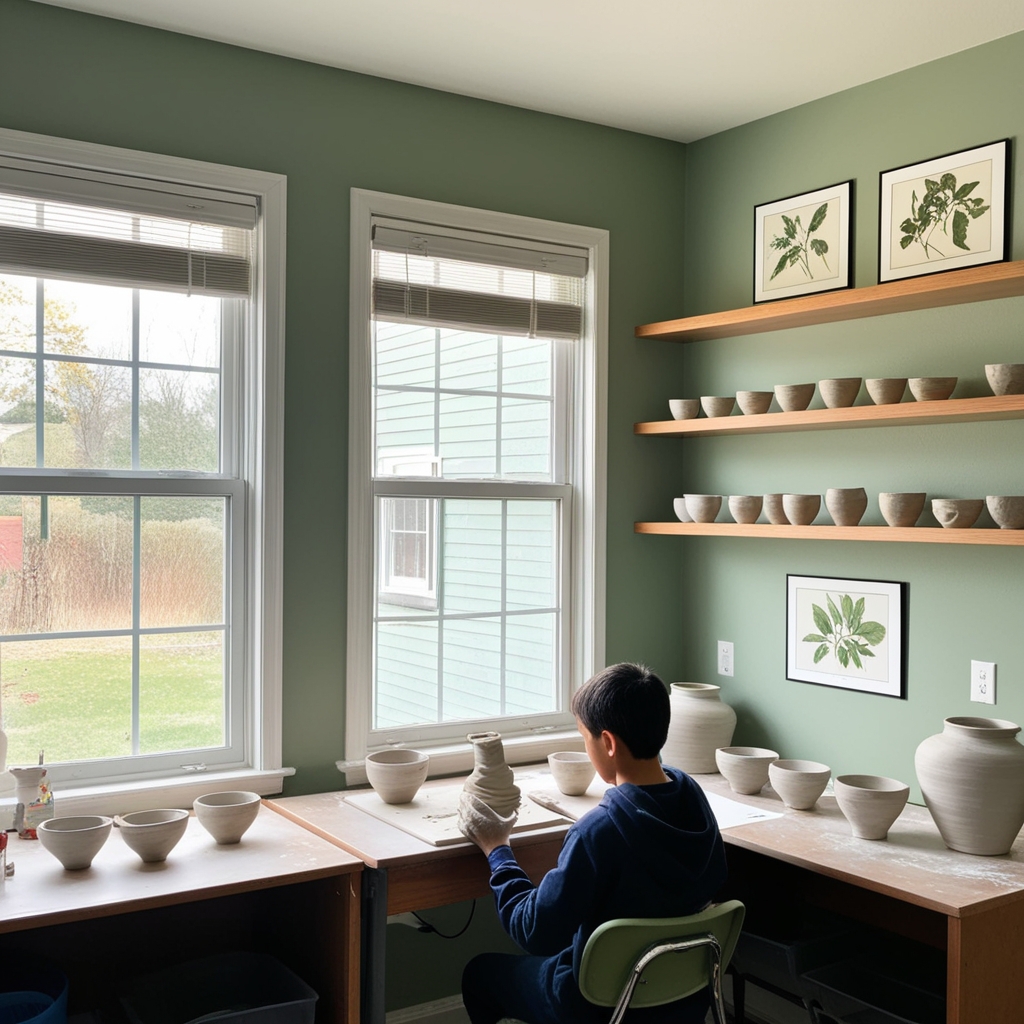
The most effective homeschool art lesson plans seamlessly blend creative activities with mathematics, science, language arts, and social studies instruction. This integrated approach reinforces learning across disciplines while demonstrating real-world connections between artistic and academic concepts.
Mathematics Through Artistic Expression
Geometric art projects make abstract mathematical concepts tangible and engaging. Students explore symmetry through mandala creation, investigate patterns through tessellation design, and understand fractions through color mixing ratios.
Measurement skills develop naturally through art projects requiring precise dimensions, while graphing activities become more meaningful when students chart color preferences or analyze artwork compositions. The Common Core State Standards specifically recognize arts integration as an effective strategy for mathematics instruction.
Example Integration Activity: Fibonacci Spirals in Nature Art
Students study the mathematical sequence, identify examples in natural forms like pinecones and sunflowers, then create artwork incorporating these spiral patterns. This project combines number theory, observation skills, and artistic composition in one engaging lesson.
Science Concepts Through Visual Learning
Scientific illustration teaches observation skills while reinforcing content knowledge. Students draw botanical specimens while studying plant biology, create geological cross-sections during earth science units, and illustrate chemical reactions through colorful diagrams.
Art projects also provide opportunities for hands-on experimentation with scientific principles. Color mixing demonstrates chemical interactions, sculpture projects explore physics concepts like balance and gravity, and photography lessons incorporate optics and light theory.
Language Arts Enhancement Through Visual Storytelling
Illustration projects support reading comprehension and creative writing development. Students create character designs while reading novels, design book covers that reflect story themes, and develop comic strips that demonstrate understanding of plot structure and dialogue.
Visual vocabulary development occurs naturally as students learn artistic terminology while expanding their descriptive language skills. Art criticism activities build analytical thinking and persuasive writing abilities through structured evaluation and discussion of artistic works.
Seasonal and Themed Art Projects
Seasonal art projects provide natural rhythm to your homeschool year while connecting creative activities to observable changes in the natural world. These themed approaches help maintain student engagement and create meaningful connections between art instruction and lived experiences.
Fall Harvest Celebrations
Autumn offers rich opportunities for nature-based art projects using readily available materials. Leaf printing, acorn painting, and harvest still-life compositions celebrate the season while developing observational drawing skills and color theory understanding.
Thanksgiving-themed projects can incorporate historical research and cultural studies, with students creating artwork inspired by different cultural traditions around gratitude and harvest celebrations. These projects naturally integrate social studies content while developing artistic skills.
Winter Wonder and Holiday Traditions
Winter art projects explore cool color palettes, geometric snowflake designs, and cultural holiday traditions from around the world. Students investigate symmetry through paper snowflake creation, explore printmaking through holiday card design, and study cultural art forms through seasonal decoration projects.
Light-themed projects become particularly meaningful during shorter winter days, with students creating luminaries, exploring shadow and reflection, and investigating how different cultures celebrate light during dark winter months.
Spring Renewal and Growth
Spring art projects celebrate new growth and renewal while providing opportunities for outdoor observation and nature study. Botanical illustration, garden planning drawings, and flower pressing activities combine scientific observation with artistic skill development.
Students can maintain nature journals throughout the spring season, documenting changes in their local environment through sketches, color studies, and written observations. These ongoing projects develop both artistic skills and scientific thinking habits.
Creating Your Own Art Curriculum
Developing personalized homeschool art lesson plans for kids allows you to address your children’s specific interests, learning styles, and developmental needs while maintaining educational rigor and scope. A well-structured curriculum balances skill development with creative exploration across multiple artistic mediums and cultural perspectives.
Curriculum Planning Framework
Effective art curriculum development begins with clear learning objectives that align with your overall educational goals. Consider both artistic skill development and broader educational outcomes like critical thinking, cultural awareness, and personal expression when establishing your program framework.
Plan your curriculum in quarterly or semester blocks, allowing sufficient time for skill development while maintaining variety and interest. Each unit should include skill-building exercises, creative exploration time, and culminating projects that demonstrate learning progress.
Sample Annual Curriculum Outline:
- Fall Quarter: Drawing fundamentals and observational skills
- Winter Quarter: Color theory and painting techniques
- Spring Quarter: Three-dimensional art and sculpture
- Summer Quarter: Mixed media and experimental techniques
Incorporating Art History and Cultural Studies
Expose students to diverse artistic traditions and historical periods through structured art history integration. Rather than separate art history lessons, weave cultural and historical context into hands-on projects that allow students to experience different artistic techniques and styles.
Study cave paintings while creating natural pigments, explore Egyptian art through hieroglyphic design projects, and investigate Renaissance techniques through observational drawing exercises. This approach makes art history relevant and memorable while developing cultural awareness and historical thinking skills.
Adapting for Multiple Ages
Multi-level homeschool families can use thematic approaches that allow different age groups to explore the same concepts at appropriate complexity levels. Younger children might explore primary colors through finger painting while older siblings investigate color theory through formal color wheel construction and advanced mixing techniques.
Project scaffolding allows all family members to participate in shared artistic experiences while meeting individual developmental needs. This approach builds family connections while ensuring appropriate challenge levels for each child.
Assessment and Documentation Strategies
Meaningful assessment in homeschool art education focuses on growth documentation rather than comparison to external standards. Effective evaluation strategies help students recognize their progress while providing valuable feedback for curriculum adjustments and future planning.
Portfolio Development and Maintenance
Student portfolios serve as powerful tools for tracking artistic development over time. Include examples from different mediums, techniques, and time periods to create comprehensive documentation of learning progress and skill development.
Encourage students to participate in portfolio selection, helping them develop self-evaluation skills and artistic judgment. Include artist statements or reflection writings that document thinking processes, challenges overcome, and personal satisfaction with completed works.
Digital portfolios offer advantages for storage and sharing, while physical portfolios provide tactile connection to artwork. Many families maintain both formats, with digital copies preserving memories while physical portfolios showcase special pieces.
Self-Assessment and Reflection Tools
Teach students to evaluate their own work through structured reflection activities and self-assessment rubrics. Simple questions like “What did you learn?” “What was challenging?” and “What would you do differently?” help develop metacognitive skills while building artistic confidence.
Regular reflection activities help students recognize their growth and identify areas for continued development. These skills transfer to other academic areas and support lifelong learning habits.
Celebrating Achievement and Progress
Recognition and celebration motivate continued artistic exploration while building confidence and family connections. Create regular opportunities to share and celebrate artistic achievements through family art shows, community displays, or digital sharing with extended family.
Focus celebrations on effort, growth, and creative problem-solving rather than just final products. This approach encourages risk-taking and experimentation while building intrinsic motivation for continued artistic development.
Troubleshooting Common Art Education Challenges
Even well-planned art programs encounter obstacles that can derail learning momentum. Understanding common challenges and proven solutions helps maintain positive learning experiences while addressing individual needs and circumstances effectively.
Managing Mess and Materials
Art activities inherently involve some level of mess, which can create stress for parents and limit creative exploration. Establish clear procedures for setup, work time, and cleanup that involve students in responsibility while maintaining reasonable household standards.
Designate specific art spaces with appropriate protection for surfaces and surroundings. Even small spaces can accommodate art activities with proper planning and organization. Consider outdoor spaces for particularly messy projects or activities involving spray techniques.
Teach cleanup as part of the artistic process rather than an afterthought. Students who understand proper material care and workspace maintenance develop responsibility while preserving supplies for future use.
Addressing Perfectionism and Frustration
Many children struggle with perfectionist tendencies that inhibit creative exploration and risk-taking. Emphasize process over product, celebrating experimentation and problem-solving rather than just polished final pieces.
Model your own artistic exploration and mistake-making, demonstrating that learning involves trial and error. Share examples of famous artists’ sketches, studies, and “failed” experiments to normalize the learning process.
Provide multiple opportunities for success within single projects, breaking complex tasks into manageable steps that build confidence while developing skills progressively.
Motivating Reluctant Artists
Some children resist art activities due to previous negative experiences, developmental challenges, or personal preferences. Discover individual interests and learning styles, adapting art instruction to incorporate preferred subjects or approaches.
Offer choices in materials, subjects, and techniques whenever possible, allowing students to direct their learning while meeting curriculum objectives. Sometimes a simple change in medium or approach can transform a reluctant participant into an enthusiastic creator.
Connect art activities to other interests like sports, animals, or technology to increase engagement and relevance. The goal is building positive associations with creative expression rather than forcing participation in predetermined activities.
Frequently Asked Questions
How much time should I dedicate to art instruction each week?
Most homeschool families find success with 2-3 hours of structured art instruction per week, broken into manageable sessions. This might include two 45-minute sessions or three 30-minute sessions, depending on your children’s ages and attention spans. Additional informal creative time can supplement structured lessons.
Do I need artistic skills to teach my children art effectively?
No artistic background is required to facilitate meaningful art education for your children. Focus on providing materials, encouragement, and learning opportunities rather than technical instruction. Many excellent resources, including online tutorials and structured lesson plans, can guide both you and your students through skill development together.
What’s the best way to store and organize children’s artwork?
Create a systematic approach using large portfolios, flat storage boxes, or digital scanning for long-term preservation. Involve children in selecting pieces for permanent keeping while recycling or repurposing others. Consider creating annual art books or displays that celebrate the year’s creative achievements.
How can I adapt art lessons for children with special needs?
Modify materials, techniques, and expectations based on individual abilities and challenges. Larger brushes, adaptive tools, and alternative materials can make art accessible for children with motor skill difficulties. Focus on sensory experiences and personal expression rather than specific skill mastery when appropriate.
Should I require art lessons if my child shows no interest in creative activities?
Art education provides benefits beyond creative expression, including fine motor development, problem-solving skills, and cultural literacy. Try different approaches, materials, and connections to other interests before abandoning art instruction entirely. Sometimes reluctance stems from previous negative experiences rather than genuine disinterest.
How do I balance skill instruction with creative freedom?
Alternate between technique-focused lessons that build specific skills and open-ended creative projects that allow personal expression. Many successful lessons include a brief skill-building component followed by creative application time. This approach develops competence while maintaining artistic joy and exploration.
What are the most important art supplies for beginning homeschool families?
Start with basic drawing materials (pencils, erasers, paper), watercolor paints, brushes, and colored pencils or crayons. Add materials gradually based on your children’s interests and curriculum needs. Quality matters more than quantity—a few excellent supplies produce better results than many cheap alternatives.
Top-Rated Lesson Plan Books
As an Amazon Associate, HomeschoolingExperts earns from qualifying purchases. Some links in this article are affiliate links, meaning we may earn a small commission at no extra cost to you.
Conclusion
Implementing comprehensive homeschool art lesson plans for kids enriches your educational program while developing essential skills that support learning across all academic areas. From fine motor development in early learners to critical thinking skills in adolescents, art education provides unique benefits that traditional academic instruction cannot replicate.
Remember that successful art instruction focuses on process and growth rather than perfect products. Your role as facilitator involves providing materials, encouragement, and learning opportunities while allowing your children’s natural creativity and artistic development to unfold. Every child possesses creative potential that flourishes with proper support and structured exploration opportunities.
Start with simple projects using basic materials, gradually expanding your program based on your family’s interests and needs. The most important element is consistent engagement with creative activities that challenge, inspire, and celebrate your children’s unique artistic voices.
Ready to transform your homeschool experience through art education? Begin planning your first unit today, and watch as creativity enhances learning, builds confidence, and creates lasting family memories through shared artistic exploration.
Related Resources
Expand your homeschool art education with these additional resources from HomeschoolingExperts.org:
- Browse our comprehensive collection of downloadable lesson plans and educational resources designed specifically for homeschool families
- Discover more creative hands-on activities and educational ideas to enhance your curriculum across all subject areas
- Learn effective scheduling and planning strategies to incorporate art instruction seamlessly into your homeschool routine
Loved this post? Grab the free resource above.
Math Adventures: Everyday Numbers — drop your email and we'll send the printable PDF.