Free Sample Lesson Plan
Math Adventures: Everyday Numbers — drop your email and we'll send the printable PDF.
Creating effective homeschool geography lesson plans is essential for helping your children develop a deep understanding of our world and their place in it. Geography education goes far beyond memorizing state capitals and country names – it encompasses cultural awareness, environmental understanding, and critical thinking skills that will serve students throughout their lives.
Whether you’re a seasoned homeschooling parent or just beginning your educational journey, developing comprehensive geography curricula can feel overwhelming. The good news is that geography naturally lends itself to hands-on, engaging activities that make learning both fun and memorable for students of all ages.
This comprehensive guide will walk you through everything you need to know about creating dynamic homeschool geography lesson plans, from foundational concepts and age-appropriate activities to assessment strategies and resource recommendations. You’ll discover practical tips for making geography come alive in your homeschool, regardless of your budget or teaching experience.
Key Takeaways
- Effective geography lesson plans integrate multiple learning styles and hands-on activities
- Age-appropriate progression from local to global geography concepts builds stronger understanding
- Technology tools and digital resources can enhance traditional geography instruction
- Regular assessment and documentation help track student progress and meet state requirements
- Cross-curricular connections make geography more engaging and meaningful
Building Strong Geography Foundations
Successful homeschool geography lesson plans begin with understanding the five fundamental themes of geography established by the National Council for Geographic Education. These themes provide a framework for organizing your curriculum and ensuring comprehensive coverage of essential concepts.
The Five Themes of Geography
Location forms the foundation of all geographic study. Students need to understand both absolute location (specific coordinates or addresses) and relative location (where something is in relation to other places). Start with familiar locations like your home, neighborhood, and city before expanding to state, national, and global contexts.
Place encompasses the physical and human characteristics that make each location unique. Physical characteristics include landforms, climate, and natural resources, while human characteristics involve population, culture, and built environments. This theme helps students understand what makes different regions distinctive.
Human-Environment Interaction explores how people adapt to, modify, and depend on their environment. This theme is particularly relevant in today’s world as students examine topics like climate change, natural disasters, and sustainable development practices.
Movement examines how people, goods, and ideas travel from place to place. In our interconnected world, understanding migration patterns, trade relationships, and communication networks is more important than ever.
Region helps students organize and understand the world by grouping areas with similar characteristics. Regions can be defined by physical features, cultural traits, economic activities, or political boundaries.
Scope and Sequence Planning
Effective geography education follows a logical progression from familiar to unfamiliar concepts. Most educational experts recommend starting with the student’s immediate environment and gradually expanding outward. This approach, known as the “expanding horizons” model, helps students build connections between new information and their existing knowledge.
For elementary students, begin with their home, school, and neighborhood before exploring their city, state, and country. Middle school students can handle more complex regional and global concepts, while high school students are ready for advanced topics like geopolitics, economic geography, and environmental science.
Essential Components of Effective Geography Lesson Plans
Well-structured geography lesson plans include specific elements that ensure comprehensive learning and engagement. Each lesson should build upon previous knowledge while introducing new concepts in an accessible way.
Learning Objectives and Standards Alignment
Clear, measurable learning objectives guide both instruction and assessment. Your objectives should specify what students will know, understand, and be able to do by the end of the lesson. Many homeschooling families find it helpful to align their geography curriculum with state standards or national frameworks like those provided by the National Geographic Society.
Effective objectives use action verbs and specify the level of understanding expected. For example: “Students will be able to identify and explain three ways that climate affects human settlement patterns in different regions.”
Engaging Opening Activities
Hook students’ interest from the beginning with compelling questions, intriguing images, or brief videos. A strong opening activity activates prior knowledge and creates curiosity about the lesson topic. Consider starting with questions like “Why do you think most major cities are built near water?” or showing contrasting images of different landscapes.
Direct Instruction and Guided Practice
The main instructional portion should present new information clearly and systematically. Use multiple teaching methods to accommodate different learning styles – visual aids for visual learners, discussions for auditory learners, and manipulatives for kinesthetic learners.
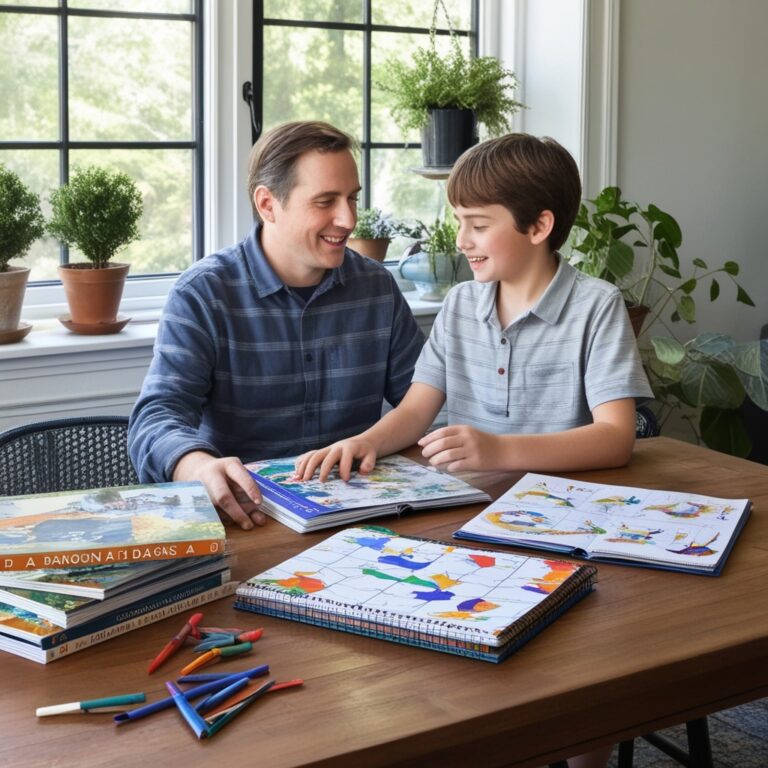
Guided practice allows students to apply new knowledge with your support. This might involve working together to analyze a map, discussing a case study, or completing a graphic organizer as a family.
Independent Practice and Assessment
Students need opportunities to demonstrate their understanding independently. This could involve creating their own maps, writing about geographic concepts, or completing research projects. Regular formative assessment helps you adjust instruction as needed.
Age-Appropriate Geography Activities and Approaches
Successful homeschool geography lesson plans must be tailored to your child’s developmental stage and learning preferences. What works for a kindergartner will be too simple for a middle schooler, while high school level content may overwhelm younger students.
Elementary Geography Activities (K-5)
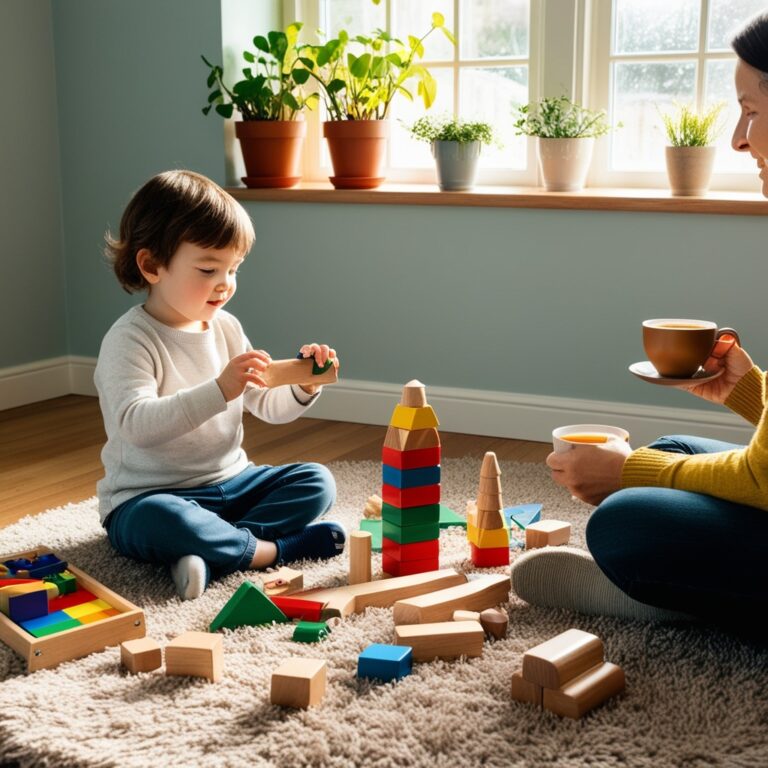
Young children learn best through concrete, hands-on experiences. Focus on basic map skills, local geography, and simple cultural comparisons. Start with your child’s bedroom and expand to your house, neighborhood, and community.
Create simple maps together using household items or sidewalk chalk. Have students draw maps of their bedroom, backyard, or route to the library. These activities build spatial thinking skills and introduce basic mapping concepts like symbols and scale.
Explore different cultures through food, music, and stories. Cook meals from different countries, listen to traditional music, and read folktales from around the world. These activities help children understand that people live differently in various places while building cultural awareness and respect.
Middle School Geography Approaches (6-8)
Middle school students can handle more abstract concepts and complex relationships. Introduce physical geography concepts like plate tectonics, weather patterns, and ecosystem relationships. Students at this level can also explore human geography topics like urbanization, economic systems, and cultural diffusion.
Project-based learning works particularly well for this age group. Have students research and present on different countries, create travel brochures for various regions, or design solutions to geographic problems like water scarcity or natural disaster preparedness.
Use current events to make geography relevant and engaging. Discuss how geographic factors influence news stories and world events. This approach helps students see geography as a living, dynamic subject rather than a collection of facts to memorize.
High School Geography Curriculum (9-12)
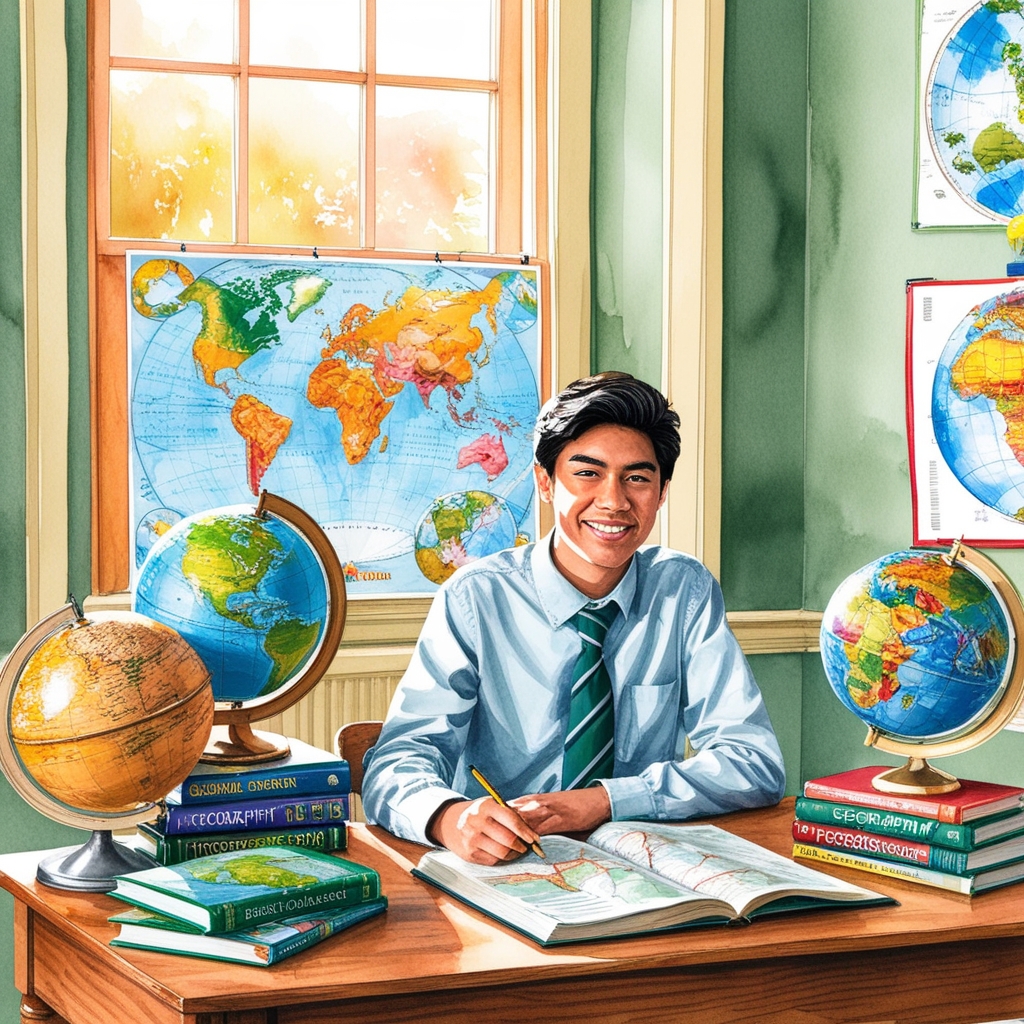
High school geography can be as rigorous as any college-level course. Advanced students can tackle complex topics like geopolitics, economic development theories, and environmental sustainability. Many families choose to pursue Advanced Placement Human Geography, which provides college credit opportunities.
Encourage independent research and critical thinking. Students might investigate topics like migration patterns, resource distribution, or the geographic factors behind historical events. These investigations develop research skills while deepening geographic understanding.
Consider incorporating Geographic Information Systems (GIS) technology, which is increasingly used in many career fields. Free online tools allow students to analyze spatial data and create professional-quality maps.
Hands-On Geography Learning Strategies
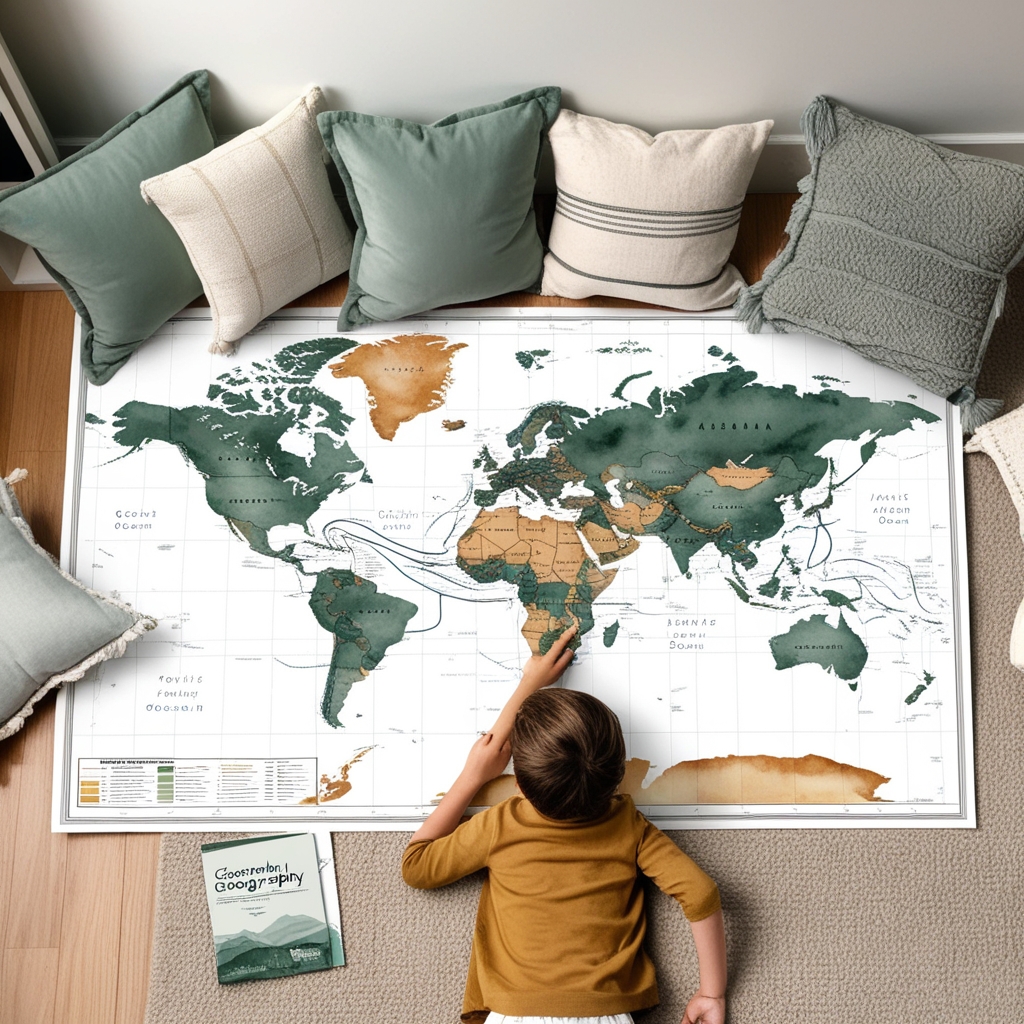
Geography naturally lends itself to experiential learning that engages multiple senses and learning styles. These hands-on approaches make abstract concepts concrete and memorable for students of all ages.
Map Making and Spatial Activities
Creating maps is one of the most effective ways to develop spatial thinking skills. Start with simple floor plans and progress to more complex topographic and thematic maps. Students can use traditional materials like paper and colored pencils or explore digital mapping tools.
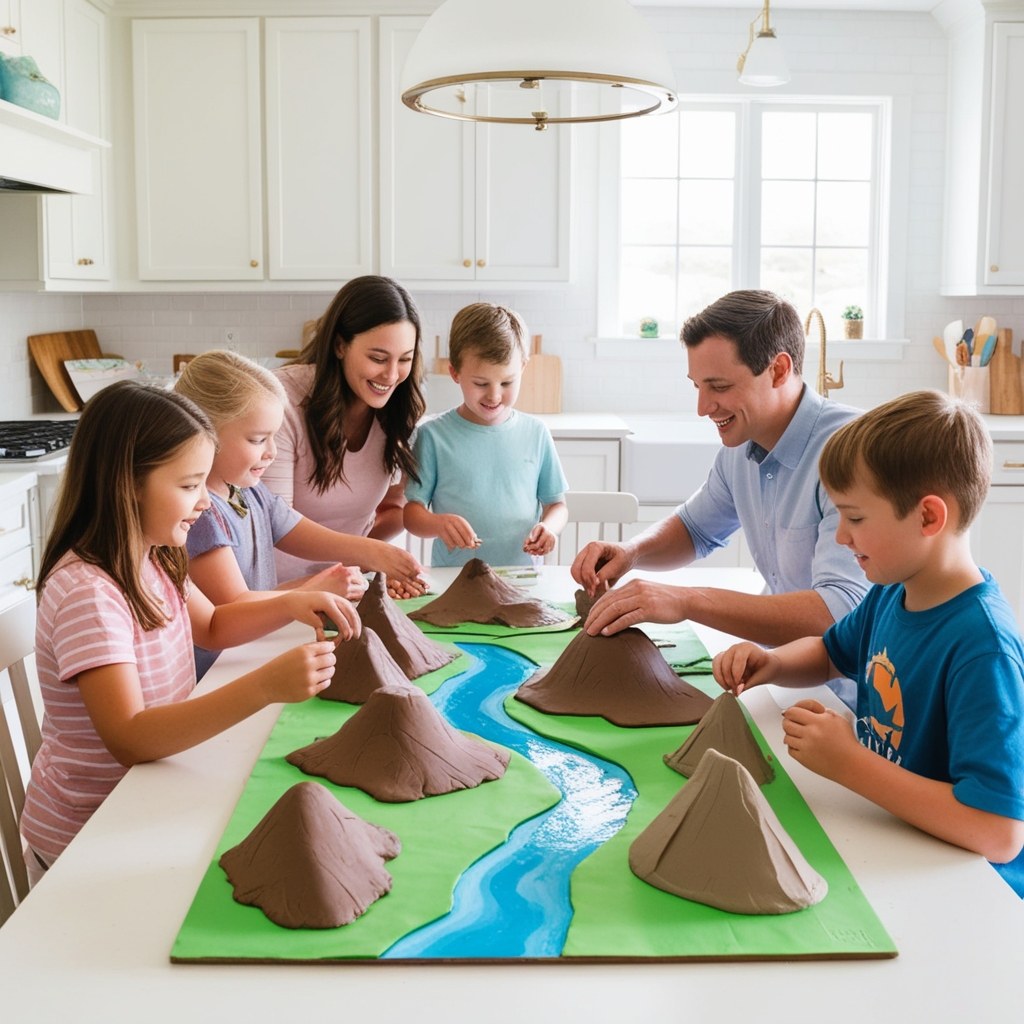
Three-dimensional models bring geography to life in ways that flat maps cannot. Build landform models using clay, papier-mâché, or even edible materials like bread dough or chocolate. These activities help students understand concepts like elevation, slope, and watershed boundaries.
Orienteering and navigation exercises develop practical geographic skills while providing physical activity. Start with simple treasure hunts in your backyard and progress to using compass and GPS technology in local parks or nature areas.
Cultural Immersion Experiences
Transform your home into different geographic regions through immersive cultural experiences. Dedicate days or weeks to exploring specific countries or regions through their food, music, art, and traditions.
Virtual field trips can transport students to places you cannot visit in person. Many museums, national parks, and cultural sites offer online tours and educational resources. The National Park Service provides excellent virtual field trip opportunities.
Connect with people from different cultures through pen pal programs, video calls, or community cultural centers. These personal connections make geography more meaningful and help students develop global awareness.
Science Integration Activities
Geography and science naturally overlap in many areas, providing rich opportunities for integrated learning. Weather and climate studies can include data collection, graphing, and analysis of local weather patterns.
Geology activities like rock and mineral identification connect earth science concepts with physical geography. Students can create rock collections, study local geological formations, or investigate how geological processes shape landscapes.
Environmental science projects help students understand human-environment interactions. Investigate local environmental issues, conduct water quality tests, or study the geographic distribution of plant and animal species in your area.
Integrating Technology in Geography Education
Modern technology offers unprecedented opportunities to enhance homeschool geography lesson plans with interactive tools, real-time data, and global connections. These digital resources can make abstract concepts more concrete and bring distant places into your homeschool.
Digital Mapping and GIS Tools
Geographic Information Systems (GIS) technology allows students to analyze spatial data and create professional-quality maps. Free tools like Google Earth, ArcGIS Online, and QGIS provide powerful capabilities that were once available only to professional geographers.
Google Earth is particularly valuable for homeschoolers because it’s free, user-friendly, and constantly updated. Students can explore any location on Earth, measure distances, examine historical imagery, and even take virtual tours of famous landmarks and natural features.
Online mapping activities can range from simple location exercises to complex data analysis projects. Students might map the distribution of natural disasters, track animal migrations, or analyze demographic patterns in different regions.
Virtual Reality and Immersive Experiences
Virtual reality technology is becoming increasingly accessible and affordable for home use. VR headsets can transport students to distant locations, allowing them to explore the Amazon rainforest, climb Mount Everest, or walk through ancient cities.
Even without specialized VR equipment, 360-degree videos and virtual tours provide immersive experiences. Many museums, national parks, and cultural sites offer virtual tours that allow students to explore places they might never visit in person.
Augmented reality apps can overlay digital information onto the real world, making geography concepts more tangible. Students might use AR apps to visualize topographic features, explore historical sites, or identify constellations.
Online Collaboration and Global Connections
Technology enables homeschooled students to connect with peers around the world, providing authentic opportunities to learn about different cultures and places. Video conferencing tools like Skype or Zoom can facilitate conversations with students in other countries.
Collaborative online projects allow students to work together on geographic investigations regardless of their physical location. Students might participate in global weather monitoring projects, cultural exchange programs, or environmental monitoring initiatives.
Social media platforms and educational networks provide opportunities to share geographic discoveries and learn from others. Many geography teachers and organizations share resources, activities, and real-time updates about geographic events and phenomena.
Cross-Curricular Geography Connections
Geography naturally connects with virtually every other subject area, making it an ideal vehicle for integrated learning. These cross-curricular connections help students see geography as relevant to all aspects of life while reinforcing learning across multiple disciplines.
History and Social Studies Integration
Geography and history are inseparable – understanding where events occurred is essential for understanding why they happened. Historical geography examines how places have changed over time and how geographic factors have influenced historical events.
When studying any historical period, begin with geographic context. Where did events take place? How did climate, landforms, and natural resources influence historical developments? How have political boundaries changed over time?
Migration patterns provide excellent opportunities for history-geography integration. Study the geographic factors that influenced westward expansion in the United States, the routes of ancient trade networks, or the geographic distribution of immigrant communities in your area.
Language Arts and Literature Connections
Literature provides rich opportunities to explore different places and cultures through the eyes of authors and characters. Choose books set in different geographic locations and use them as springboards for geographic investigation.
Students can research the settings of their favorite books, create maps of fictional worlds, or write their own stories set in different geographic locations. These activities develop both literary analysis skills and geographic knowledge.
Poetry and creative writing can capture the essence of places in ways that textbooks cannot. Encourage students to write descriptive pieces about different landscapes, create poems about weather phenomena, or compose travel journals for imaginary journeys.
Mathematics and Data Analysis
Geography provides authentic contexts for mathematics applications. Students can calculate distances between cities, analyze population data, or create graphs showing climate patterns in different regions.
Scale and proportion are fundamental geographic concepts that require mathematical understanding. Students learn to interpret map scales, calculate actual distances from map measurements, and understand the relationship between map size and area representation.
Statistical analysis of geographic data develops both mathematical and geographic literacy. Students might analyze census data, compare economic indicators between countries, or examine trends in natural disaster frequency and intensity.
Assessment and Documentation Strategies
Effective assessment in geography education goes beyond traditional tests and quizzes to include authentic performance tasks that demonstrate real understanding. Your assessment strategies should align with your learning objectives and provide meaningful feedback for both you and your student.
Formative Assessment Techniques
Ongoing formative assessment helps you monitor student progress and adjust instruction as needed. Simple techniques like exit tickets, quick sketches, or brief discussions can provide valuable insights into student understanding.
Geographic thinking maps and graphic organizers help students organize their understanding while providing assessment information. Students might create concept maps showing relationships between geographic concepts or comparison charts examining different regions.
Observation during hands-on activities provides rich assessment data. Watch how students approach map reading tasks, listen to their explanations during discussions, and note their questions and comments during activities.
Authentic Performance Tasks
Performance-based assessments allow students to demonstrate their understanding through real-world applications. These tasks should require students to use geographic knowledge and skills to solve problems or complete meaningful projects.
Portfolio development provides ongoing documentation of student growth and achievement. Students might maintain geography journals, collect and annotate maps, or document their learning through photographs and reflections.
Presentation and communication tasks develop important 21st-century skills while demonstrating geographic understanding. Students might present research findings, lead virtual tours of different places, or create multimedia presentations about geographic topics.
Documentation for Compliance
Many states require homeschooling families to maintain records of educational activities and student progress. Your documentation system should be simple to maintain while providing evidence of comprehensive geographic education.
Learning portfolios can serve dual purposes as both assessment tools and compliance documentation. Include samples of student work, photographs of activities, and brief descriptions of learning experiences.
Consider using digital portfolio platforms that allow easy organization and sharing of student work. Many homeschooling families find that online portfolios are easier to maintain and access than traditional paper-based systems.
For additional support with lesson planning and documentation, explore the resources available in our lesson plan shop, which includes ready-made geography activities and assessment tools.
Essential Resources and Materials
Building a comprehensive geography program doesn’t require expensive materials or specialized equipment. Many effective homeschool geography lesson plans can be implemented with basic supplies and free online resources.
Must-Have Physical Materials
A good atlas is the foundation of any geography program. Choose an age-appropriate atlas with clear maps, current information, and engaging visuals. Consider having both a world atlas and a more detailed atlas of your country or region.
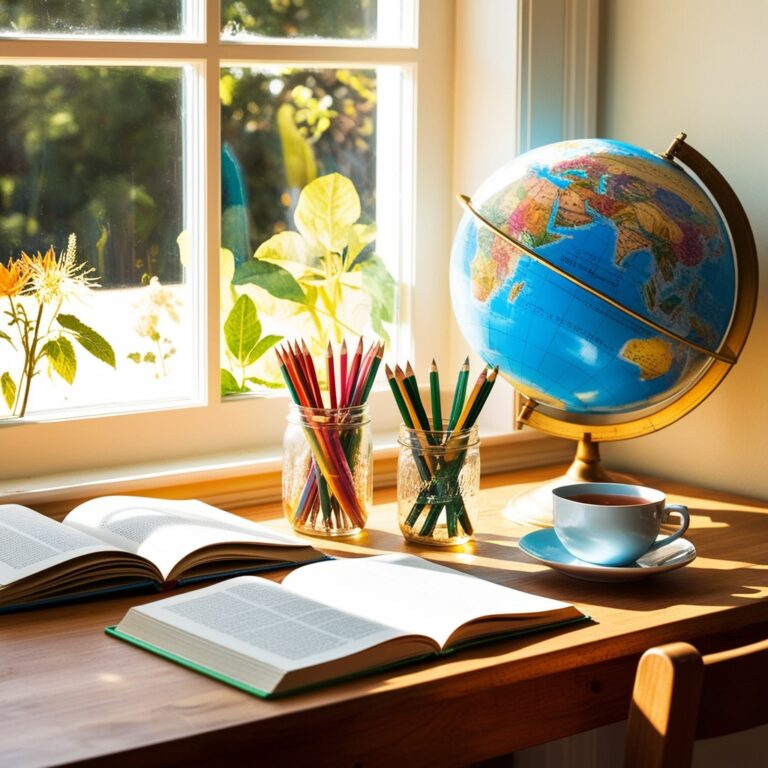
A globe provides a three-dimensional perspective that flat maps cannot offer. While digital globes are available, a physical globe allows for hands-on exploration and helps students understand concepts like great circle routes and time zones.
Basic art supplies support map-making and creative geography projects. Colored pencils, markers, poster board, and craft materials enable students to create their own maps, models, and visual displays.
Digital Resources and Websites
The internet provides access to an incredible wealth of geographic information and resources. Government websites like the U.S. Geological Survey and National Weather Service offer real-time data and educational materials.
Educational websites specifically designed for geography instruction provide lesson plans, activities, and interactive content. The National Geographic Education website offers high-quality resources for all grade levels, including lesson plans, videos, and interactive maps.
Online mapping tools and satellite imagery provide up-to-date views of any location on Earth. These resources are particularly valuable for studying current events, environmental changes, and human impact on landscapes.
Community Resources and Field Trip Opportunities
Your local community offers numerous opportunities for geographic learning. Museums, nature centers, and cultural organizations often provide educational programs and resources for homeschooling families.
Local government offices can provide maps, demographic data, and information about regional geography. Many city planning departments welcome educational visits and can provide insights into urban geography and land use planning.
Natural areas like parks, rivers, and geological formations provide opportunities for hands-on geographic investigation. Even urban environments offer learning opportunities through observation of land use patterns, transportation networks, and cultural landscapes.
Connect with other homeschooling families in your area to organize group field trips and share resources. Many museums and educational sites offer group discounts and special programs for homeschooling groups.
Frequently Asked Questions
How much time should I spend on geography each week?
Most education experts recommend 2-3 hours per week for elementary students and 3-4 hours per week for middle and high school students. However, geography can be integrated throughout your curriculum, so the actual time spent may be higher when you include cross-curricular connections with history, science, and language arts.
What if I don’t feel confident teaching geography myself?
Many homeschooling parents feel uncertain about teaching geography, but remember that you’re learning alongside your child. Start with basic concepts and use high-quality curriculum resources or online programs. Consider joining local homeschool co-ops where families share teaching responsibilities, or explore online geography classes designed for homeschoolers.
Do I need expensive materials to teach geography effectively?
Not at all! Many excellent geography activities can be done with basic materials like paper, pencils, and household items. Free online resources, library books, and community resources can provide most of what you need. Start with essential items like a good atlas and globe, then add materials gradually as your program develops.
How do I make geography interesting for reluctant learners?
Focus on hands-on activities, real-world connections, and topics that interest your child. Use games, cooking activities, virtual field trips, and current events to make geography relevant and engaging. Consider your child’s learning style and interests – a child interested in animals might enjoy studying animal habitats and migration patterns.
Should I follow a specific geography curriculum or create my own?
Both approaches can be effective, depending on your teaching confidence and available time. Commercial curricula provide structure and scope-and-sequence guidance, which can be helpful for new homeschoolers. Creating your own curriculum allows for more flexibility and customization but requires more planning time. Many families use a combination approach, following a basic curriculum while adding their own activities and resources.
How do I assess my child’s geography learning?
Use a variety of assessment methods including portfolios, projects, presentations, and informal observations. Focus on whether your child can apply geographic concepts rather than just memorize facts. Document learning through photos of activities, samples of work, and notes about discussions and discoveries.
What geography topics are most important for different age levels?
Elementary students should focus on basic map skills, local geography, and cultural awareness. Middle school students can handle physical geography concepts, regional studies, and human-environment interactions. High school students are ready for advanced topics like geopolitics, economic geography, and environmental issues. Always build from familiar to unfamiliar concepts.
📚 Recommended Homeschool Resources
As an Amazon Associate, I earn from qualifying purchases. Some links in this article are affiliate links, meaning I may earn a small commission at no extra cost to you.
Conclusion
Creating effective homeschool geography lesson plans is an investment in your child’s understanding of the world and their place within it. Geography education extends far beyond memorizing capitals and boundaries – it develops critical thinking skills, cultural awareness, and spatial literacy that will serve students throughout their lives.
Remember that successful geography instruction doesn’t require expensive materials or extensive teaching experience. The most important elements are curiosity, creativity, and a willingness to explore the world together with your child. Start with your local environment and gradually expand outward, always connecting new concepts to your student’s existing knowledge and interests.
Whether you choose to follow a structured curriculum or create your own learning adventures, the key is consistency and engagement. Use the strategies and resources outlined in this guide to create meaningful learning experiences that will inspire a lifelong love of geography and global awareness.
Take the first step today by exploring one new geography activity with your child. Document the experience, celebrate the learning that occurs, and build upon that success as you develop your comprehensive geography program.
Related Resources
Enhance your homeschool geography program with these additional resources from HomeschoolingExperts.org:
- Explore our comprehensive collection of ready-made lesson plans covering all subject areas and grade levels
- Discover creative activities and ideas to make learning engaging and memorable
- Get expert guidance on scheduling and planning your homeschool year for maximum effectiveness
For personalized support and answers to your specific geography teaching questions, don’t hesitate to contact our team of experienced homeschooling educators.
Loved this post? Grab the free resource above.
Math Adventures: Everyday Numbers — drop your email and we'll send the printable PDF.