Free Sample Lesson Plan
Math Adventures: Everyday Numbers — drop your email and we'll send the printable PDF.
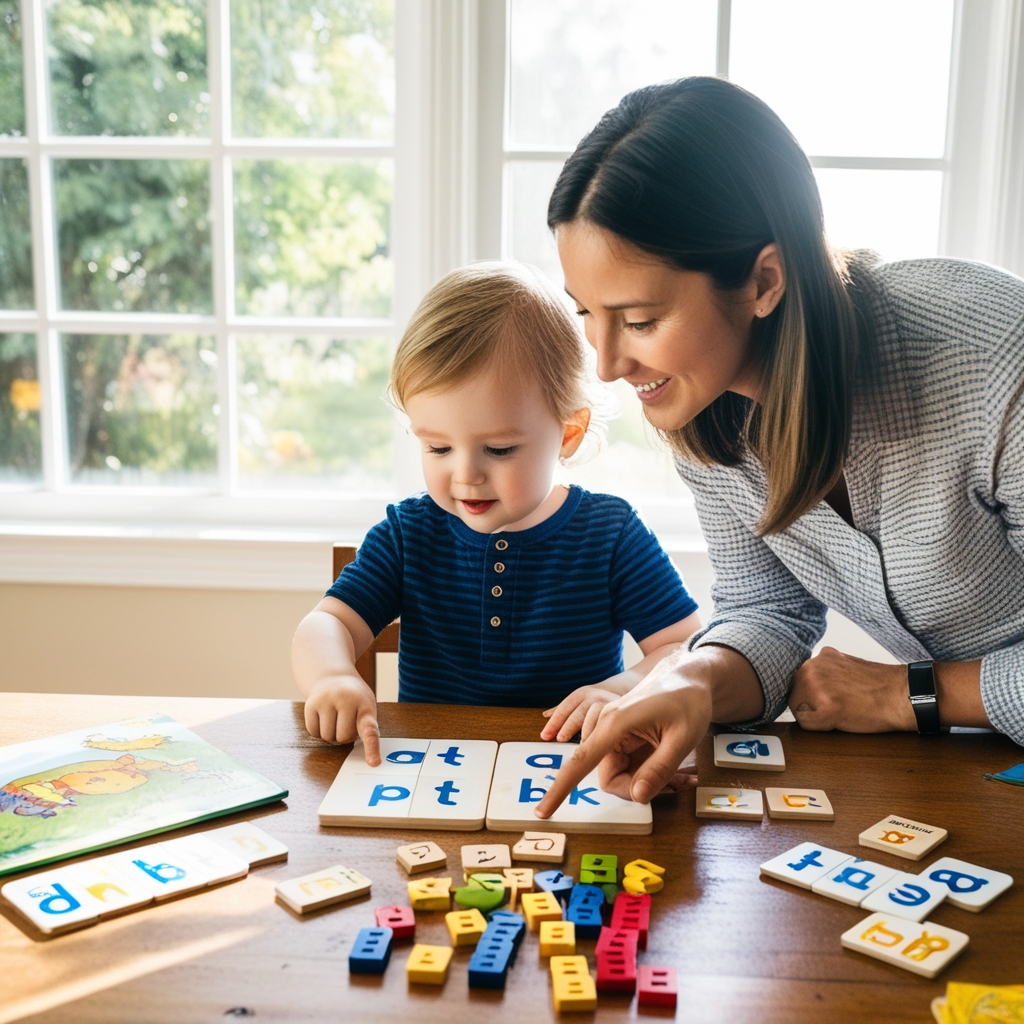
Effective homeschool phonics lesson plans are the cornerstone of building strong reading foundations for children learning at home. As homeschooling parents, creating structured, engaging phonics instruction can feel overwhelming, but with the right approach and resources, you can develop comprehensive lesson plans that make learning to read both fun and effective for your child.
This complete guide will walk you through everything you need to know about designing and implementing successful phonics instruction in your homeschool. From understanding the essential components of phonics education to creating age-appropriate activities and tracking progress, you’ll discover practical strategies that work for families across different learning styles and grade levels.
Key Takeaways
- Structured phonics lesson plans should include five core components: phonemic awareness, letter recognition, sound-symbol relationships, blending, and reading practice
- Effective lessons typically last 15-20 minutes for younger children and can extend to 30 minutes for older elementary students
- Multi-sensory activities significantly improve phonics retention and engagement for homeschooled children
- Regular assessment and progress tracking help identify areas needing additional focus
- Flexibility in pacing allows homeschool families to customize instruction to each child’s unique learning needs
Understanding Phonics Fundamentals for Homeschool Success
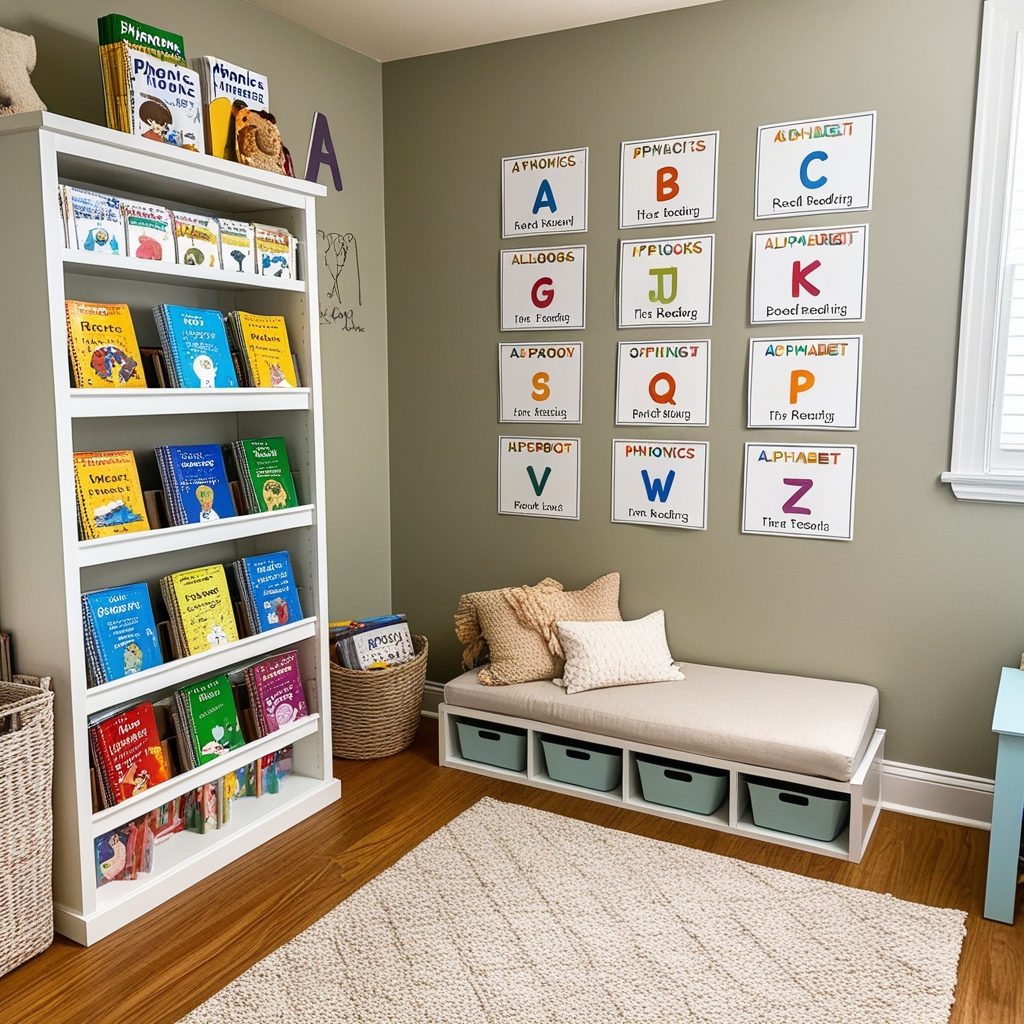
Phonics instruction forms the foundation of reading education, teaching children the relationship between letters and sounds. According to the National Institute of Child Health and Human Development, systematic phonics instruction significantly improves children’s reading and spelling abilities, particularly in kindergarten and first grade.
For homeschooling families, understanding these fundamentals becomes even more critical since you’re serving as both curriculum designer and primary instructor. Research shows that children who receive explicit phonics instruction demonstrate stronger decoding skills and reading comprehension compared to those who learn through whole language approaches alone.
The Science Behind Phonics Learning
Phonics works by helping children understand that written language is a code. Each letter or combination of letters represents specific sounds in spoken language. This systematic approach allows children to decode unfamiliar words independently, building confidence and fluency over time.
The human brain processes phonics instruction through multiple pathways. Visual processing handles letter recognition, auditory processing manages sound identification, and kinesthetic learning reinforces these connections through movement and touch. This multi-pathway approach explains why varied teaching methods prove most effective.
Why Homeschool Phonics Lesson Plans Matter
Structured lesson plans provide consistency and progression that children need to master reading skills. Without proper planning, instruction can become haphazard, leaving gaps in understanding that create reading difficulties later.
Homeschool families have unique advantages in phonics instruction, including one-on-one attention, flexible pacing, and the ability to immediately address individual learning needs. However, these benefits only materialize with thoughtful lesson planning and consistent implementation.
Essential Components of Effective Homeschool Phonics Lesson Plans
Every successful phonics lesson should include five fundamental components that work together to build reading skills systematically. These elements create a comprehensive learning experience that addresses different aspects of literacy development.
Phonemic Awareness Activities
Phonemic awareness involves recognizing and manipulating individual sounds in spoken words. This auditory skill develops before children connect sounds to letters, making it a crucial foundation for all phonics instruction.
Effective phonemic awareness activities include:
- Sound isolation exercises (identifying beginning, middle, and ending sounds)
- Rhyming games and activities
- Sound blending practice (combining individual sounds to form words)
- Sound segmentation (breaking words into individual sounds)
- Sound manipulation (changing one sound to create new words)
Letter Recognition and Formation
Children must recognize letters quickly and accurately before they can connect them to sounds effectively. Letter formation practice reinforces recognition through muscle memory and provides kinesthetic reinforcement.
Include both uppercase and lowercase letters in your instruction, as children encounter both forms in reading materials. Focus on proper letter formation from the beginning to prevent bad habits that become difficult to correct later.
Sound-Symbol Correspondence
This component explicitly teaches the relationship between letters and their corresponding sounds. Start with the most common letter-sound relationships before introducing more complex patterns like digraphs and blends.
Research indicates that introducing 2-3 new letter-sound relationships per week allows adequate time for mastery without overwhelming young learners. Consistent review of previously learned sounds ensures retention and builds automaticity.
Blending and Segmenting Practice
Blending involves combining individual sounds to read words, while segmenting requires breaking words apart to spell them. These complementary skills work together to develop both reading and spelling abilities.
Use manipulatives, visual aids, and kinesthetic activities to make abstract blending concepts concrete for young learners. Many children benefit from physical movements that represent each sound in a word.
Connected Reading Practice
Apply newly learned skills through decodable texts that feature the phonics patterns you’ve taught. This application reinforces learning and builds reading confidence through successful experiences with connected text.
Choose books that contain primarily words your child can decode independently, with minimal sight words. This approach builds confidence and reinforces the value of phonics skills for actual reading.
Creating Age-Appropriate Phonics Lessons by Grade Level
Effective homeschool phonics lesson plans must align with developmental stages and learning capabilities. Understanding what children can reasonably accomplish at different ages helps create realistic expectations and appropriate challenges.
Pre-K and Kindergarten (Ages 4-6)
Young children learn best through play-based activities that engage multiple senses. Lessons should be brief (10-15 minutes) and include plenty of movement, songs, and hands-on activities.
Focus areas for this age group include:
- Letter recognition and formation for uppercase letters
- Beginning sound identification
- Rhyming activities and word play
- Simple sound blending with CVC (consonant-vowel-consonant) words
- Introduction to high-frequency sight words
Keep activities short and varied to maintain attention and engagement. Use manipulatives, games, and movement to make learning enjoyable and memorable.
First Grade (Ages 6-7)
First-grade students can handle more structured lessons lasting 20-25 minutes. They’re ready for systematic phonics instruction that builds reading fluency and independence.
Key instructional areas include:
- Mastery of all single letter sounds
- Introduction to consonant blends and digraphs
- Short and long vowel patterns
- Reading simple sentences and short books
- Basic spelling patterns and word families
Incorporate more reading practice with decodable texts that reinforce the phonics patterns you’re teaching. This application helps children see the practical value of their phonics learning.
Second Grade and Beyond (Ages 7+)
Older elementary students can engage in 25-30 minute lessons that include more complex phonics patterns and advanced reading skills. Focus shifts toward fluency, comprehension, and automatic word recognition.
Advanced phonics instruction covers:
- Complex vowel patterns (diphthongs, r-controlled vowels)
- Multi-syllable word decoding strategies
- Prefixes, suffixes, and root words
- Spelling rules and patterns
- Fluency building through repeated reading
Students at this level benefit from explicit instruction in reading strategies and comprehension skills alongside continued phonics work.
Structuring Your Daily Phonics Lessons
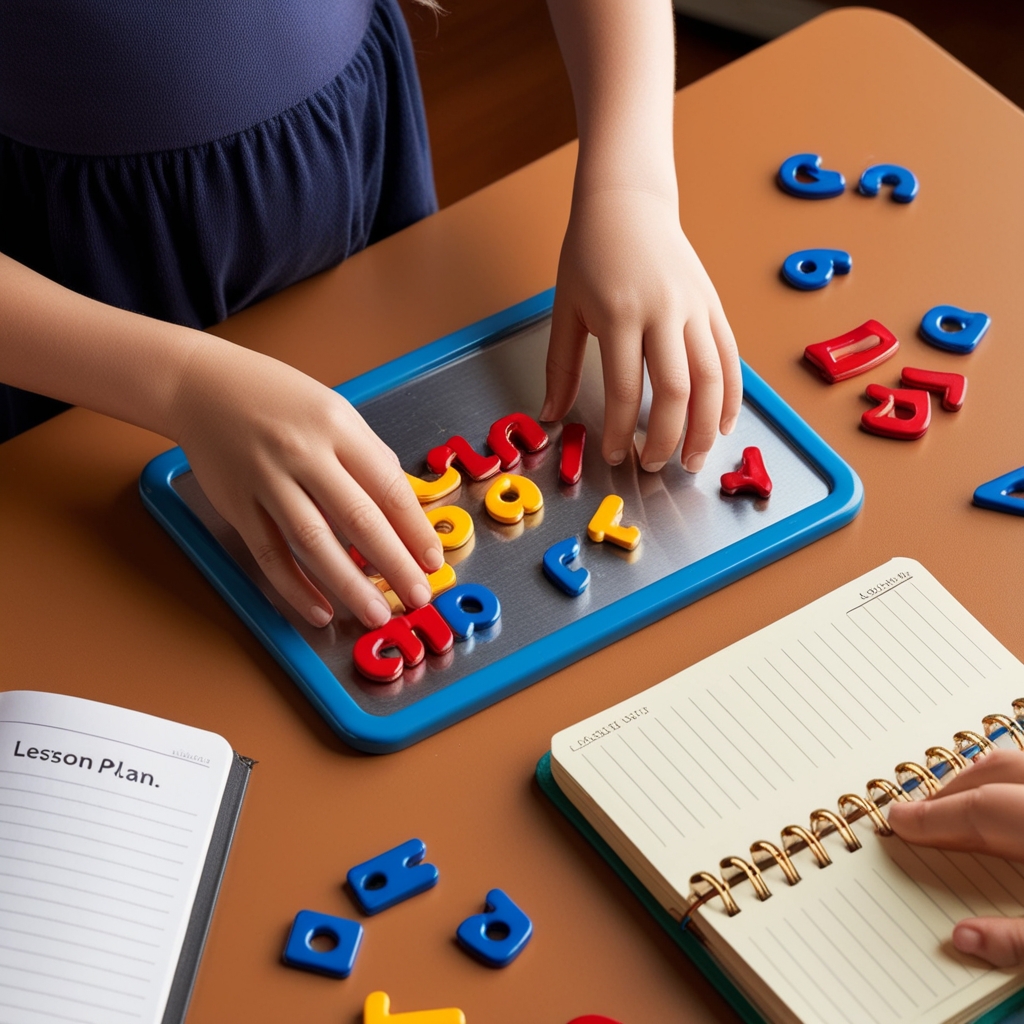
Consistent lesson structure helps children know what to expect and maximizes learning time. A well-organized homeschool phonics lesson plan follows a predictable pattern that builds skills systematically while maintaining engagement.
Warm-Up and Review (3-5 minutes)
Begin each lesson by reviewing previously learned concepts. This review activates prior knowledge and provides necessary practice for skill retention.
Effective warm-up activities include:
- Quick letter sound drills using flashcards
- Singing alphabet or phonics songs
- Reading familiar sight words
- Playing brief phonics games
Keep the pace brisk and engaging to energize your child for the main lesson activities. Use this time to identify any concepts that need additional reinforcement.
New Concept Introduction (5-8 minutes)
Introduce one new phonics concept per lesson to avoid overwhelming your child. Use explicit instruction that clearly explains the new skill and demonstrates its application.
Follow this sequence for new concept introduction:
- Present the new letter, sound, or pattern clearly
- Demonstrate how it sounds in isolation and in words
- Provide several examples for children to observe
- Guide children through initial practice attempts
- Check for understanding before moving forward
Use visual, auditory, and kinesthetic elements to accommodate different learning styles and reinforce the new concept through multiple pathways.
Guided Practice (5-10 minutes)
Provide structured practice opportunities where you guide your child through applying the new skill. This scaffolded approach builds confidence while ensuring correct understanding.
Effective guided practice includes working together on activities like word building, sound blending, or reading simple sentences that feature the new concept. Offer immediate feedback and correction as needed.
Independent Practice (5-8 minutes)
Allow your child to practice the new skill independently while you observe and provide support when necessary. This practice builds confidence and reveals areas that may need additional instruction.
Independent activities might include completing worksheets, playing educational games, or reading decodable books that reinforce the lesson’s focus. Choose activities that your child can complete successfully with minimal assistance.
Application and Closure (2-3 minutes)
End each lesson by connecting the new learning to real reading situations. This application helps children understand the purpose and value of phonics skills.
Close with a brief review of what was learned and preview what’s coming in the next lesson. This closure provides a sense of accomplishment and builds anticipation for continued learning.
Incorporating Multi-Sensory Phonics Activities
Multi-sensory instruction engages visual, auditory, and kinesthetic learning pathways simultaneously, creating stronger neural connections and improving retention. For homeschool families, these activities can transform mundane phonics drills into engaging learning experiences.
Visual Learning Activities
Visual learners benefit from activities that emphasize seeing letters, words, and patterns. These activities help children remember letter shapes and recognize patterns quickly.
Effective visual activities include:
- Color-coding different phonics patterns in words
- Using letter cards and word building mats
- Creating visual word walls and phonics charts
- Playing matching games with letters and pictures
- Using graphic organizers to sort words by patterns
Make visual materials bright, clear, and uncluttered to maximize their effectiveness. Consider your child’s visual processing abilities when designing or selecting materials.
Auditory Learning Strategies
Auditory activities help children distinguish between different sounds and develop phonemic awareness. These activities are particularly important for children who learn best through listening and verbal interaction.
Strong auditory activities include:
- Phonics songs and chants that emphasize sound patterns
- Sound discrimination games and activities
- Rhyming games and word play
- Echo reading and repeated reading activities
- Verbal spelling and sound manipulation exercises
Vary your voice tone, pace, and volume to maintain interest and emphasize important concepts. Use rhythm and repetition to help children remember key information.
Kinesthetic and Tactile Approaches
Movement and touch activities help kinesthetic learners process and remember phonics concepts. These approaches are particularly effective for active children who learn better when their bodies are engaged.
Popular kinesthetic activities include:
- Writing letters in sand, salt, or finger paint
- Using hand motions to represent different sounds
- Building letters with playdough or wikki stix
- Acting out words or sounds through movement
- Using manipulatives for word building activities
These activities work especially well for children who struggle with traditional paper-and-pencil tasks or have difficulty sitting still for extended periods.
Technology Integration
Educational technology can enhance multi-sensory learning by combining visual, auditory, and interactive elements. However, technology should supplement, not replace, hands-on instruction and practice.
Useful technology tools include educational apps that provide phonics practice, interactive whiteboards for group activities, and audio resources for listening practice. Choose tools that align with your instructional goals and your child’s learning needs.
Assessment and Progress Tracking Methods
Regular assessment helps homeschool parents identify student strengths, pinpoint areas needing additional instruction, and adjust lesson plans accordingly. Effective assessment in homeschool phonics lesson plans includes both formal and informal evaluation methods.
Informal Assessment Strategies
Informal assessment occurs naturally during instruction and provides immediate feedback about student understanding. These ongoing assessments help you make real-time adjustments to your teaching.
Effective informal assessments include:
- Observing student responses during guided practice
- Listening to oral reading for accuracy and fluency
- Noting which concepts require repeated instruction
- Monitoring engagement and confidence levels
- Tracking daily progress on specific skills
Keep simple notes about your observations to identify patterns and inform future lesson planning. These informal assessments often provide the most useful information for homeschool instruction.
Formal Assessment Tools
Formal assessments provide structured evaluation of specific skills and help track progress over time. These assessments can guide instructional decisions and document student growth.
Consider using assessments such as:
- Letter recognition and sound identification checklists
- Phonics screening tools and diagnostic assessments
- Reading fluency measures and running records
- Spelling inventories to assess phonics application
- Standardized phonics assessments when appropriate
Administer formal assessments periodically rather than daily to avoid over-testing while still gathering necessary data about student progress.
Progress Tracking Systems
Systematic progress tracking helps you see patterns in your child’s learning and makes it easier to celebrate successes while addressing challenges. Simple tracking systems work best for most homeschool families.
Effective tracking methods include creating skill checklists that you update regularly, maintaining portfolio collections of student work over time, and keeping simple graphs or charts that show progress visually.
For comprehensive lesson planning resources and tracking tools, visit our lesson plan shop where you’ll find professionally designed materials to support your phonics instruction.
Using Assessment Data
Assessment data only becomes valuable when you use it to improve instruction. Regular review of your child’s progress helps identify successful strategies and areas needing modification.
Use assessment information to adjust pacing, modify activities for better engagement, provide additional practice for challenging concepts, and celebrate achievements to maintain motivation.
Overcoming Common Phonics Teaching Challenges
Homeschool parents frequently encounter specific challenges when implementing phonics instruction. Understanding these common issues and having strategies to address them helps maintain progress and reduces frustration for both parent and child.
Maintaining Student Engagement
Young children can quickly lose interest in repetitive phonics drills, making engagement a primary concern for homeschool educators. The key lies in varying activities and making learning feel like play rather than work.
Strategies for maintaining engagement include:
- Rotating between different types of activities within each lesson
- Using games, songs, and movement to make learning fun
- Connecting phonics learning to your child’s interests and hobbies
- Providing choices in activities when possible
- Celebrating small successes to build motivation
Remember that attention spans vary by age and individual child. Adjust lesson length and complexity based on your child’s needs rather than forcing them to fit a predetermined mold.
Addressing Different Learning Paces
Children learn phonics skills at different rates, and homeschool families must balance thorough instruction with appropriate pacing. Some children master concepts quickly while others need extensive practice and repetition.
Flexible pacing strategies include spending additional time on challenging concepts without rushing to keep up with arbitrary timelines, providing enrichment activities for children who master skills quickly, and breaking complex skills into smaller, more manageable steps.
The beauty of homeschooling lies in this flexibility to adapt instruction to your child’s individual needs and learning style.
Managing Multiple Children
Families with multiple children face the challenge of providing appropriate phonics instruction for different ages and ability levels simultaneously. This situation requires creative planning and efficient use of instructional time.
Effective strategies include grouping children with similar skill levels for some activities, using peer tutoring where older children help younger siblings, and planning some individual instruction time for each child’s specific needs.
Consider staggered instruction where children work on independent activities while you provide focused instruction to others. Our scheduling and planning resources offer additional strategies for managing multiple learners.
Dealing with Learning Difficulties
Some children experience specific challenges with phonics learning that require modified approaches and additional patience. Early identification and intervention can prevent these challenges from becoming larger problems.
Signs that may indicate learning difficulties include persistent confusion between similar letters or sounds, difficulty remembering previously learned concepts, or significant struggles with blending sounds together.
When these challenges arise, consider slowing the pace of instruction, using more multi-sensory approaches, providing additional practice opportunities, or consulting with learning specialists when necessary.
Essential Resources and Materials for Phonics Instruction
Successful homeschool phonics lesson plans require appropriate materials and resources that support effective instruction. While elaborate materials aren’t necessary, having the right tools makes teaching easier and learning more engaging.
Basic Materials Every Homeschool Needs
Essential materials for phonics instruction include letter cards or magnetic letters for hands-on word building, a whiteboard or chalkboard for demonstrations and practice, and age-appropriate phonics books and decodable readers.
Additional useful materials include:
- Phonics workbooks or worksheets for independent practice
- Manipulatives like counting bears or blocks for sound segmentation
- Audio resources for listening practice and songs
- Games and activities that reinforce phonics skills
- Assessment tools and tracking sheets
Many of these materials can be created at home or found free online, making phonics instruction accessible regardless of budget constraints.
Curriculum Options and Programs
Numerous phonics curricula are available for homeschool families, ranging from comprehensive programs to supplemental resources. Popular options include systematic programs like All About Reading, Teach Your Child to Read in 100 Easy Lessons, and The Logic of English.
When selecting a curriculum, consider your child’s learning style, your teaching preferences, and your family’s schedule and budget. Some families prefer structured, scripted programs while others want flexibility to create their own lessons.
Research shows that systematic, explicit phonics instruction produces better results than incidental or embedded approaches, regardless of the specific program used.
Free and Low-Cost Resources
Quality phonics instruction doesn’t require expensive materials. Many excellent resources are available free or at low cost to homeschool families.
Valuable free resources include websites like Starfall.com and Reading A-Z, library collections of phonics books and materials, and printable worksheets and games available online.
Local libraries often have extensive collections of phonics materials, educational games, and decodable books that families can borrow. Many libraries also offer homeschool programs and resources specifically designed for home educators.
Creating Your Own Materials
Homeschool families can create many effective phonics materials using simple supplies and creativity. Homemade materials can be customized to your child’s interests and specific learning needs.
Simple DIY materials include letter cards made from index cards, word building mats created with paper and lamination, and phonics games adapted from familiar game formats like bingo or memory matching.
Creating materials together can become a fun family activity that increases your child’s investment in their learning while saving money on commercial products.
Frequently Asked Questions
How long should daily phonics lessons be for homeschool students?
Phonics lessons should typically last 15-20 minutes for kindergarten and first-grade students, and can extend to 25-30 minutes for older elementary children. The key is maintaining engagement and ending before fatigue sets in. Younger children (ages 4-5) may only handle 10-15 minutes of focused phonics instruction, while some older students can sustain attention for longer periods when activities are varied and engaging.
What order should I teach phonics sounds in my homeschool lesson plans?
Start with the most common and useful letter sounds first, typically beginning with continuous sounds like /m/, /s/, /a/, /t/, /r/, and /i/ because they’re easier to blend. Follow with stop sounds like /b/, /p/, /d/, /g/, and /k/. After single letter sounds are secure, introduce consonant blends, digraphs, and then more complex vowel patterns. This sequence allows children to begin reading simple words quickly, building confidence and motivation.
How do I know if my child is ready to move on to the next phonics skill?
Your child is ready to advance when they can demonstrate the current skill accurately and automatically at least 80% of the time across multiple days. Look for quick, confident responses rather than slow, labored attempts. They should be able to apply the skill in both isolation (like identifying letter sounds on flashcards) and in context (like reading words in sentences). If mastery isn’t solid, continue practicing with varied activities before introducing new concepts.
Should I use a phonics curriculum or create my own lesson plans?
Both approaches can be effective, depending on your comfort level and available time. Structured curricula provide systematic scope and sequence, detailed lesson plans, and proven methodologies, making them ideal for new homeschool parents or those wanting comprehensive guidance. Creating your own plans offers maximum flexibility and customization but requires more preparation time and knowledge of phonics instruction principles. Many families successfully combine both approaches, using a curriculum as a foundation while adding personalized activities.
What should I do if my child struggles with phonics despite consistent instruction?
First, slow down the pace and provide more practice with current skills before introducing new concepts. Increase multi-sensory activities and try different teaching approaches to match your child’s learning style. Consider whether the material is developmentally appropriate or if your child needs more foundational skills like phonemic awareness. If struggles persist after trying various approaches, consult with a reading specialist or educational professional to rule out learning differences that might require specialized intervention strategies.
How can I make phonics lessons engaging for reluctant learners?
Transform lessons into games and hands-on activities rather than worksheet-based instruction. Use your child’s interests as themes for phonics activities, incorporate movement and music, and provide choices when possible. Keep lessons short and celebrate small successes frequently. Try activities like phonics scavenger hunts, letter building with playdough, or acting out words. The key is making learning feel like play while still maintaining the systematic instruction that builds reading skills effectively.
When should I introduce sight words alongside phonics instruction?
Introduce high-frequency sight words gradually alongside phonics instruction, starting with the most common words like “the,” “and,” “is,” and “you.” Begin with 2-3 sight words per week once your child has learned several letter sounds and can blend simple CVC words. Focus on words that appear frequently in early reading materials but aren’t easily decodable with current phonics knowledge. Always emphasize that most words follow phonics patterns, with sight words being special exceptions that need memorization.
📚 Recommended Homeschool Resources
As an Amazon Associate, I earn from qualifying purchases. Some links in this article are affiliate links, meaning I may earn a small commission at no extra cost to you.
Conclusion
Creating effective homeschool phonics lesson plans requires understanding child development, systematic instruction principles, and your individual child’s learning needs. The structured approach outlined in this guide provides a foundation for successful phonics instruction while maintaining the flexibility that makes homeschooling so powerful.
Remember that consistency matters more than perfection. Regular, systematic phonics instruction using multi-sensory activities and appropriate pacing will help your child develop strong reading foundations. Be patient with the process, celebrate small victories, and adjust your approach based on your child’s responses and progress.
The investment you make in quality phonics instruction during these early years will pay dividends throughout your child’s educational journey. Strong decoding skills provide the foundation for reading fluency, comprehension, and a lifelong love of learning.
Ready to implement these strategies in your homeschool? Start by assessing your child’s current phonics knowledge, gathering appropriate materials, and planning your first week of lessons using the structure and principles discussed in this guide.
Related Resources
Enhance your homeschool phonics instruction with these additional resources from HomeschoolingExperts.org:
- Explore our comprehensive collection of lesson plans and teaching materials designed specifically for homeschool families
- Learn more about our mission and expertise in homeschool education by visiting our about page
- Get personalized support for your homeschool journey by reaching out through our contact page

Loved this post? Grab the free resource above.
Math Adventures: Everyday Numbers — drop your email and we'll send the printable PDF.