Free Curriculum Comparison Guide
Compare Charlotte Mason, Classical, Montessori, Waldorf, and more in one printable side-by-side guide.
Learning how to homeschool a child with ADHD starts with understanding that traditional, one-size-fits-all lesson plans simply were not built for the way your child’s brain works. The good news is that homeschooling is actually one of the most effective environments for kids with attention-deficit/hyperactivity disorder, because it allows you to tailor pacing, movement, and structure to your child’s unique needs. According to the CDC, approximately 6 in 10 children diagnosed with ADHD also have another behavioral or emotional disorder, which means flexibility and individualized attention are not optional extras, they are essential.
This guide walks you through everything you need to successfully homeschool a child with ADHD, from setting up a distraction-free learning space to choosing curriculum, building schedules, and managing behavior in a way that supports rather than punishes. You will find practical, field-tested strategies used by thousands of homeschooling families, along with links to trusted resources for deeper research.
Whether you are just starting your homeschooling journey or you are pulling your child out of a traditional classroom that was not meeting their needs, this article gives you a clear roadmap. Let us dig in.
Key Takeaways
- Homeschooling a child with ADHD works best when lessons are short, active, and broken into manageable chunks rather than long stretches of seated work.
- A predictable but flexible daily routine reduces anxiety and helps children with ADHD transition between tasks more easily.
- Movement, sensory breaks, and hands-on learning are not distractions, they are legitimate teaching tools for ADHD brains.
- Curriculum choice matters less than delivery style, mastery-based and multisensory approaches tend to outperform rigid, workbook-heavy programs.
- Tracking small wins and adjusting your approach regularly prevents burnout for both you and your child.
Understanding ADHD and How It Affects Home Learning
Before you build a homeschool plan, it helps to understand what is actually happening in your child’s brain. ADHD affects executive function, the mental skills that control planning, working memory, impulse control, and time management.
This is not a matter of willpower or motivation. Children with ADHD often want to focus but struggle with the brain mechanics required to sustain it.
Common Learning Challenges Associated with ADHD
Recognizing these patterns early helps you design lessons that work with your child’s brain instead of against it.
- Difficulty sitting still for long periods of seated instruction
- Trouble following multi-step directions without visual cues
- Losing track of assignments, materials, or time
- Hyperfocus on preferred topics paired with rapid disengagement from others
- Emotional sensitivity to criticism or perceived failure
The Centers for Disease Control and Prevention estimates that roughly 7 million children in the United States have received an ADHD diagnosis, making it one of the most common childhood neurodevelopmental conditions. If you are noticing these traits in your own child, you are far from alone.
Why Homeschooling Often Benefits Children with ADHD
Traditional classrooms are built around group pacing, fixed seating, and lengthy periods of quiet focus. For many children with ADHD, this structure creates constant friction.
Homeschooling removes that friction by allowing you to adjust pacing in real time, incorporate movement freely, and reduce sensory overload. This is one of the primary reasons families choose to homeschool a child with ADHD rather than continue in a conventional classroom setting.
Getting Started: How to Homeschool a Child with ADHD the Right Way
Starting strong matters. A shaky foundation in the first few weeks can lead to frustration for both you and your child.
Step 1: Get a Clear Picture of Your Child’s Strengths and Struggles
Before choosing curriculum, spend one to two weeks simply observing your child. Note when they focus best, what subjects excite them, and what triggers meltdowns or shutdowns.
If your child has a formal diagnosis, request a copy of any psychoeducational evaluation. This document often contains specific accommodation recommendations that translate well into a homeschool setting.
Step 2: Know Your Legal Requirements
Homeschooling regulations vary significantly by state and country, so it is important to research your local requirements before you begin. The Home School Legal Defense Association (HSLDA) maintains an updated, state-by-state breakdown of homeschool laws, testing requirements, and special education provisions that is worth bookmarking.
Step 3: Set Realistic Expectations
Progress with ADHD is rarely linear. Some days your child will breeze through math in fifteen minutes, other days the same lesson may take an hour.
Give yourself permission to measure success in terms of engagement and growth rather than strict daily quotas. This mindset shift alone reduces stress dramatically for families learning how to homeschool a child with ADHD for the first time.
If you are brand new to homeschooling altogether, our getting started guides walk through the basics of setting up your homeschool from scratch.
Designing an ADHD-Friendly Homeschool Environment
Your physical learning space plays a bigger role in attention and focus than most parents realize. A cluttered, noisy, or overly stimulating room can undo even the best lesson plan.
Reduce Visual and Auditory Clutter
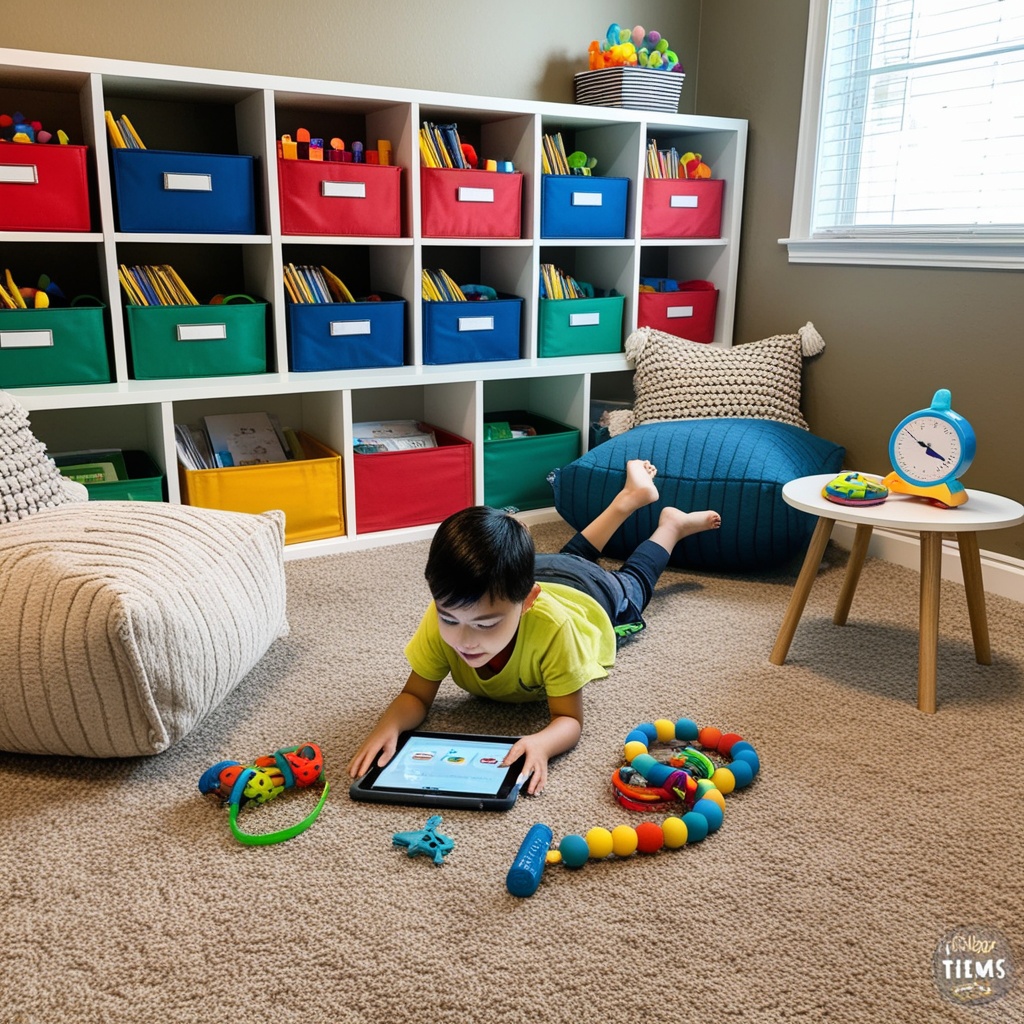
Keep the workspace simple. Store extra supplies in closed bins rather than open shelves, and consider noise-reducing headphones during independent work.
Create Defined Zones
Children with ADHD often benefit from having distinct areas for distinct activities.
- A quiet desk area for focused seated work
- A floor or rug space for reading and discussion
- A movement corner with a mini trampoline, wobble cushion, or resistance band
- A calm-down corner with soft lighting for emotional regulation breaks
Use Visual Supports
Visual schedules, checklists, and timers help compensate for working memory challenges. Many families find that a simple whiteboard with the day’s tasks, checked off one by one, provides enough structure to keep a child oriented without feeling rigid.
Choosing Curriculum and Teaching Methods for ADHD Learners

There is no single “best” curriculum for ADHD, but there are teaching styles that consistently work better than others.
Look for Mastery-Based, Multisensory Programs
Mastery-based curricula allow your child to move at their own pace instead of advancing on a fixed calendar. Multisensory programs incorporate visual, auditory, and kinesthetic elements simultaneously, which helps ADHD brains stay engaged.
Scholastic offers a range of leveled, high-interest readers and hands-on activity guides that pair well with a multisensory approach, particularly for reluctant or easily distracted readers.
Break Lessons Into Micro-Units
Instead of a 45-minute math block, try three 15-minute sessions spread throughout the day. Shorter, more frequent lessons align better with typical ADHD attention spans, which research suggests average somewhere between 10 and 20 minutes for sustained focus tasks in elementary-aged children.
Incorporate Choice Whenever Possible
Offering small choices, such as picking which subject to start with or choosing between two writing prompts, increases buy-in and reduces power struggles.
Explore Ready-Made Lesson Plans
If building custom lessons from scratch feels overwhelming, ready-made resources can save enormous time and mental energy. Our lesson plan shop includes printable, structured options designed with shorter attention spans in mind, and our curriculum methods section compares popular approaches side by side.
Building a Flexible Daily Schedule
Structure and flexibility might sound contradictory, but for ADHD homeschooling, they work best together. A predictable rhythm reduces anxiety, while built-in flexibility prevents power struggles when a lesson needs to end early or run long.
Anchor the Day With a Consistent Rhythm
Rather than a rigid hour-by-hour timetable, try anchoring the day around a repeatable sequence: wake up, morning movement, focused subjects, lunch, hands-on subjects, outdoor time, wrap-up. The order stays consistent even if exact timing shifts daily.
Front-Load the Hardest Subjects
Many children with ADHD, especially those on stimulant medication, have a window of peak focus earlier in the day. Schedule your most demanding subjects, such as math or writing, during that window.
Sample Flexible Schedule
- 8:00 to 8:15 am: Morning movement or stretching
- 8:15 to 8:45 am: Math (focused subject)
- 8:45 to 9:00 am: Movement break
- 9:00 to 9:30 am: Reading or language arts
- 9:30 to 10:00 am: Free play or outdoor time
- 10:00 to 10:30 am: Science or social studies (hands-on)
- 10:30 am onward: Independent projects, art, or electives
For more scheduling frameworks and printable planners, browse our scheduling and planning resources.
Behavior and Emotional Regulation Strategies
Behavior challenges are often the most exhausting part of homeschooling a child with ADHD. Understanding the root cause of a behavior makes it far easier to respond effectively.
Distinguish Between “Won’t” and “Can’t”
A meltdown over a math worksheet is rarely defiance, it is more often a sign that the task exceeds the child’s current capacity for frustration tolerance in that moment. Responding with patience rather than punishment prevents escalation and preserves trust.
Use Positive Reinforcement Systems
Token boards, sticker charts, and simple point systems tied to specific, observable behaviors tend to work better than vague praise. Focus reinforcement on effort and completion rather than perfection.
Teach Self-Regulation Skills Directly
Many children with ADHD have not yet developed the internal language to recognize and manage big emotions. Teaching simple strategies gives them tools they can use independently.
- Naming emotions out loud using a feelings chart
- Practicing deep breathing or counting to ten before responding
- Using a “pause card” the child can hold up when overwhelmed
- Role-playing tricky scenarios during calm moments, not in the heat of a meltdown
The American Academy of Pediatrics, through its HealthyChildren.org resource, offers evidence-based behavior management guidance that pairs well with home-based instruction.
Movement, Sensory Needs, and Brain Breaks
Movement is not a reward for finishing work, for a child with ADHD it is often a prerequisite for being able to do the work at all.
Build Movement Into Every Lesson
Try teaching spelling words while bouncing a ball, practicing math facts while jumping on a trampoline, or reviewing vocabulary while walking around the backyard.
Recognize Sensory Triggers
Some children are under-stimulated and seek sensory input through fidgeting or movement, while others are over-stimulated by noise, textures, or bright lighting. Observing your child’s patterns over a couple weeks will reveal which category they fall into, or whether it shifts by time of day.
Practical Brain Break Ideas
- Five minutes of jumping jacks or a quick dance break between subjects
- A short walk outside to reset attention
- Fidget tools such as putty, spinners, or textured bracelets during listening tasks
- Weighted lap pads for children who benefit from deep pressure input
For more hands-on ideas, check out our collection of activities and ideas tailored for active learners.
Tracking Progress and Adjusting Your Approach Over Time
What works for your child at age seven may not work at age ten. Regularly reassessing your approach keeps your homeschool plan aligned with your child’s evolving needs.
Keep a Simple Progress Log
Rather than tracking every worksheet, note broader trends such as reading fluency, attention span length, and emotional regulation over weeks and months.
Watch for Signs You Need to Adjust
Consider these indicators that your current approach may need tweaking:
- Increased meltdowns or avoidance behavior around specific subjects
- A curriculum that consistently takes far longer than its stated time estimate
- Your child expressing boredom despite apparent mastery of the material
- Growing resistance to sitting down for lessons at all
Reassessing every eight to ten weeks, rather than waiting for an entire school year to pass, allows you to make smaller course corrections before frustration builds.
Align Curriculum to Grade-Level Expectations
While pacing should stay flexible, it helps to periodically check your child’s progress against general grade-level benchmarks so you can identify genuine gaps versus simple pacing differences. Our grade level guides offer a helpful reference point for this comparison.
Frequently Asked Questions
Is homeschooling good for a child with ADHD?
Yes, homeschooling can be highly beneficial for a child with ADHD. It allows for flexible pacing, frequent movement breaks, and a reduction in sensory overload that traditional classrooms often cannot accommodate.
How many hours a day should I homeschool a child with ADHD?
Most children with ADHD do best with two to four hours of focused academic instruction broken into short segments, supplemented by movement and hands-on learning throughout the day. Total time matters less than how it is structured.
What curriculum is best for homeschooling a child with ADHD?
There is no single best curriculum, but mastery-based and multisensory programs tend to work well. Look for materials that allow self-paced progress and incorporate visual, auditory, and hands-on elements rather than relying solely on worksheets.
How do I keep my ADHD child focused during homeschool lessons?
Use short lesson blocks of 10 to 20 minutes, incorporate movement breaks, offer choices within tasks, and reduce visual and auditory clutter in the learning space. Fidget tools and timers can also support sustained attention.
Do I need a special education background to homeschool a child with ADHD?
No formal special education credential is required in most states, though it helps to research your specific state’s homeschool laws. Many parents successfully teach children with ADHD by combining patience, structure, and resources designed for neurodivergent learners.
Should my child with ADHD take medication while homeschooling?
This decision should be made with your child’s pediatrician or psychiatrist, not based solely on homeschooling logistics. Some families find that homeschooling reduces the need for medication by lowering environmental demands, while others continue medication alongside homeschooling for optimal focus.
How do I handle meltdowns during homeschool lessons?
Pause the lesson, help your child move to a calm-down space, and avoid trying to reason through academics until they are regulated. Address the academic task again once your child is calm, and look for patterns to prevent future triggers.
📚 Recommended Homeschool Resources
As an Amazon Associate, I earn from qualifying purchases. Some links in this article are affiliate links, meaning I may earn a small commission at no extra cost to you.
Conclusion
Learning how to homeschool a child with ADHD is less about finding one perfect program and more about building a flexible, responsive system around your child’s individual needs. Short lesson blocks, built-in movement, visual supports, and consistent routines all work together to help ADHD brains thrive rather than struggle against a mismatched environment.
Remember that progress will not always look linear, and that is completely normal. Celebrate small wins, adjust course when something is not working, and give yourself the same grace you extend to your child.
If you would like personalized guidance or have questions about building a homeschool plan around your child’s specific challenges, reach out through our contact page. You can also learn more about our team’s background and approach on our about page.
Related Resources
- Browse structured lesson plans designed for varied attention spans and learning styles
- Compare curriculum methods to find the best fit for your child’s learning profile
- Explore our getting started guides if you are new to homeschooling altogether

Loved this post? Grab the free resource above.
Compare Charlotte Mason, Classical, Montessori, Waldorf, and more in one printable side-by-side guide.