Free Sample Lesson Plan
Math Adventures: Everyday Numbers — drop your email and we'll send the printable PDF.
Creating engaging homeschool history lesson plans for elementary students doesn’t have to feel overwhelming or time-consuming. With the right approach, you can transform historical events into captivating stories that spark curiosity and foster a genuine love for learning about the past. Elementary-aged children thrive on hands-on activities, storytelling, and interactive experiences that make history come alive in their minds.
This comprehensive guide provides you with practical strategies, ready-to-use lesson plan templates, and creative activity ideas specifically designed for homeschooling families. Whether you’re teaching ancient civilizations to your third-grader or exploring American history with your fifth-grader, you’ll discover how to create memorable learning experiences that align with educational standards while maintaining the flexibility that makes homeschooling so effective.
From incorporating living books and timeline activities to designing hands-on projects and field trip opportunities, we’ll explore proven methods that transform abstract historical concepts into tangible learning adventures your children will remember for years to come.
Key Takeaways
- Effective elementary history lesson plans combine storytelling, hands-on activities, and visual learning tools
- Living books and primary sources make historical events more engaging than traditional textbooks
- Timeline activities help children understand chronological relationships between events
- Incorporating multiple learning styles ensures all children can connect with historical content
- Regular assessment through creative projects demonstrates understanding better than traditional tests
Building Strong Foundations for Elementary History Education
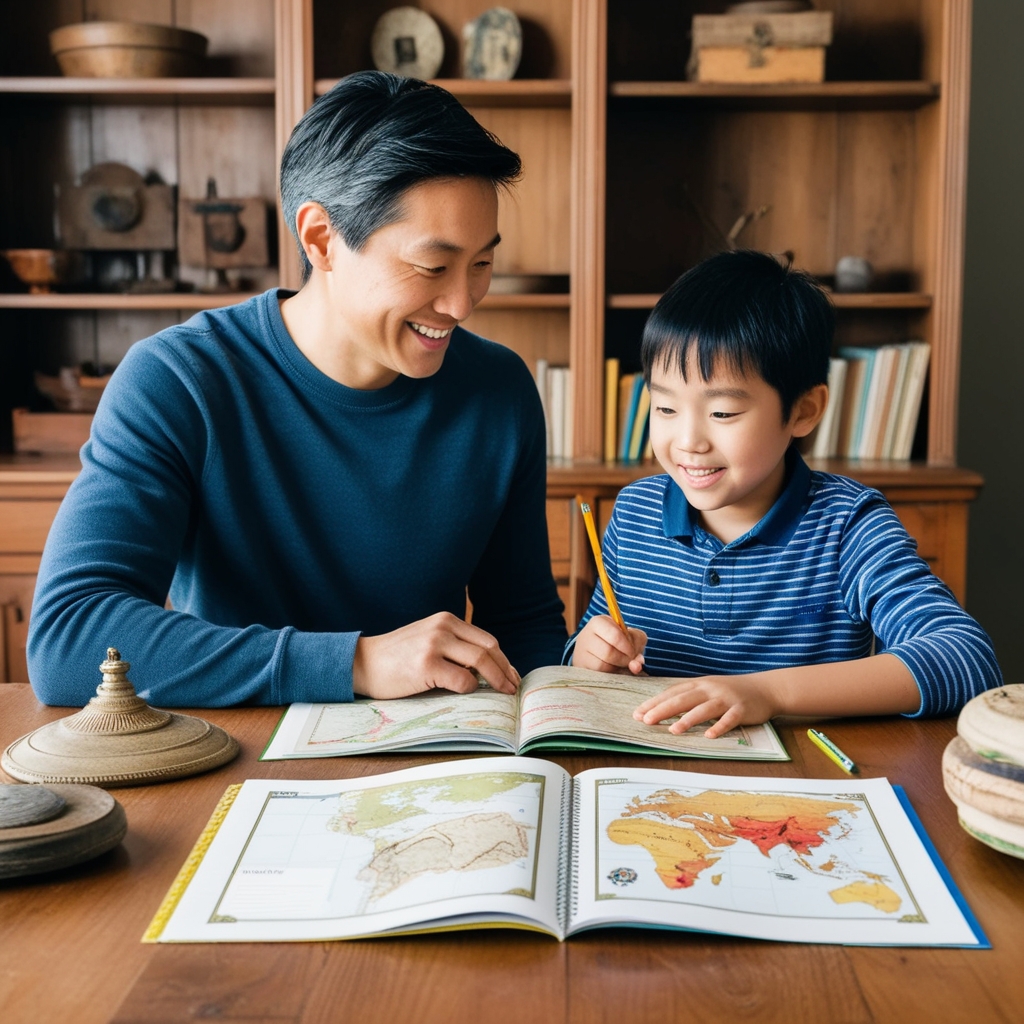
Establishing a solid foundation for history education begins with understanding how elementary-aged children learn best. Research from the U.S. Department of Education shows that children ages 6-11 learn most effectively through concrete experiences rather than abstract concepts.
Young learners need to see, touch, and experience historical concepts to truly understand them. This means moving beyond memorizing dates and names to creating immersive learning experiences that help children connect with people and events from the past.
Understanding Your Child’s Learning Style
Before diving into specific lesson plans, identify your child’s primary learning style. Visual learners benefit from maps, timelines, and historical artwork. Auditory learners thrive with storytelling, historical songs, and documentary videos. Kinesthetic learners need hands-on activities, role-playing, and building projects.
Most children benefit from a multi-sensory approach that incorporates elements from all learning styles. This is where homeschooling shines, as you can customize each lesson to match your child’s unique needs and interests.
Creating a Historical Mindset
Help your children develop historical thinking skills by encouraging them to ask questions like “What was life like for children during this time period?” or “How did this event change people’s daily lives?” These questions foster empathy and critical thinking skills that extend far beyond history lessons.
Encourage your children to make connections between past and present events. When studying the invention of the printing press, discuss how it relates to modern internet communication. These connections help children understand that history is not just a collection of isolated events but a continuous story that affects their lives today.
Essential Components of Effective Homeschool History Lesson Plans Elementary
Well-structured lesson plans provide the framework for successful learning experiences while maintaining the flexibility that homeschooling families value. Each lesson should include specific elements that work together to create comprehensive understanding.
Opening Hook and Introduction
Start each lesson with an engaging hook that captures your child’s attention immediately. This might be a mysterious artifact, an intriguing question, or a dramatic story opening. For example, when introducing ancient Egypt, you might begin with “Imagine waking up 4,000 years ago to the sound of workers building a massive pyramid outside your window.”
The introduction should clearly state what your child will learn and why it matters. Connect the lesson to their existing knowledge and preview the activities you’ll complete together.
Core Content Delivery
Present historical information through multiple formats to accommodate different learning preferences. Combine storytelling with visual aids, primary source documents, and interactive discussions. Keep content segments short (10-15 minutes) for younger elementary students and slightly longer (20-25 minutes) for older elementary children.
Use age-appropriate vocabulary while gradually introducing historical terms. Create a history vocabulary journal where children can record new words along with simple definitions and illustrations.
Interactive Activities and Practice
Immediately following content delivery, engage children in activities that reinforce learning. These might include timeline creation, map work, role-playing scenarios, or creative projects. The key is active participation rather than passive listening.
For comprehensive lesson plan templates and activity ideas, explore our lesson plan shop where you’ll find ready-to-use materials designed specifically for homeschooling families.
Assessment and Reflection
End each lesson with a brief assessment activity that helps you gauge understanding. This doesn’t need to be a formal test. Instead, try having your child retell the story in their own words, draw a picture showing what they learned, or answer a few thoughtful questions.
Include reflection time where children can share what surprised them, what they’d like to learn more about, or how the lesson connects to their own lives.
Age-Appropriate History Topics by Elementary Grade Level
Selecting appropriate historical content for each grade level ensures children can understand and engage with the material while building foundational knowledge for future learning.
Kindergarten and First Grade (Ages 5-7)
Focus on personal and family history, community helpers throughout time, and simple stories about famous historical figures. Children this age benefit from learning about how daily life has changed over time, such as comparing modern homes to log cabins or discussing how people traveled before cars were invented.
Key topics include:
- Family traditions and heritage
- Community helpers past and present
- Simple biographies of historical figures
- How transportation has changed
- Holiday traditions and their origins
Second and Third Grade (Ages 7-9)
Expand to include American symbols and landmarks, Native American cultures, and early explorers. Children can handle more complex stories and begin understanding cause-and-effect relationships in historical events.
Recommended topics:
- Native American tribes and their diverse cultures
- Early European explorers and their journeys
- Colonial life and the first Thanksgiving
- American symbols and their meanings
- Simple geography and map skills
Fourth and Fifth Grade (Ages 9-11)
Introduce more comprehensive historical periods including ancient civilizations, the American Revolution, westward expansion, and the Civil War. Students can analyze primary sources and understand multiple perspectives on historical events.
Advanced elementary topics:
- Ancient civilizations (Egypt, Greece, Rome)
- American Revolution and founding of the nation
- Westward expansion and pioneer life
- Civil War causes, events, and consequences
- Industrial Revolution and its impact
Proven Teaching Methods for Elementary History
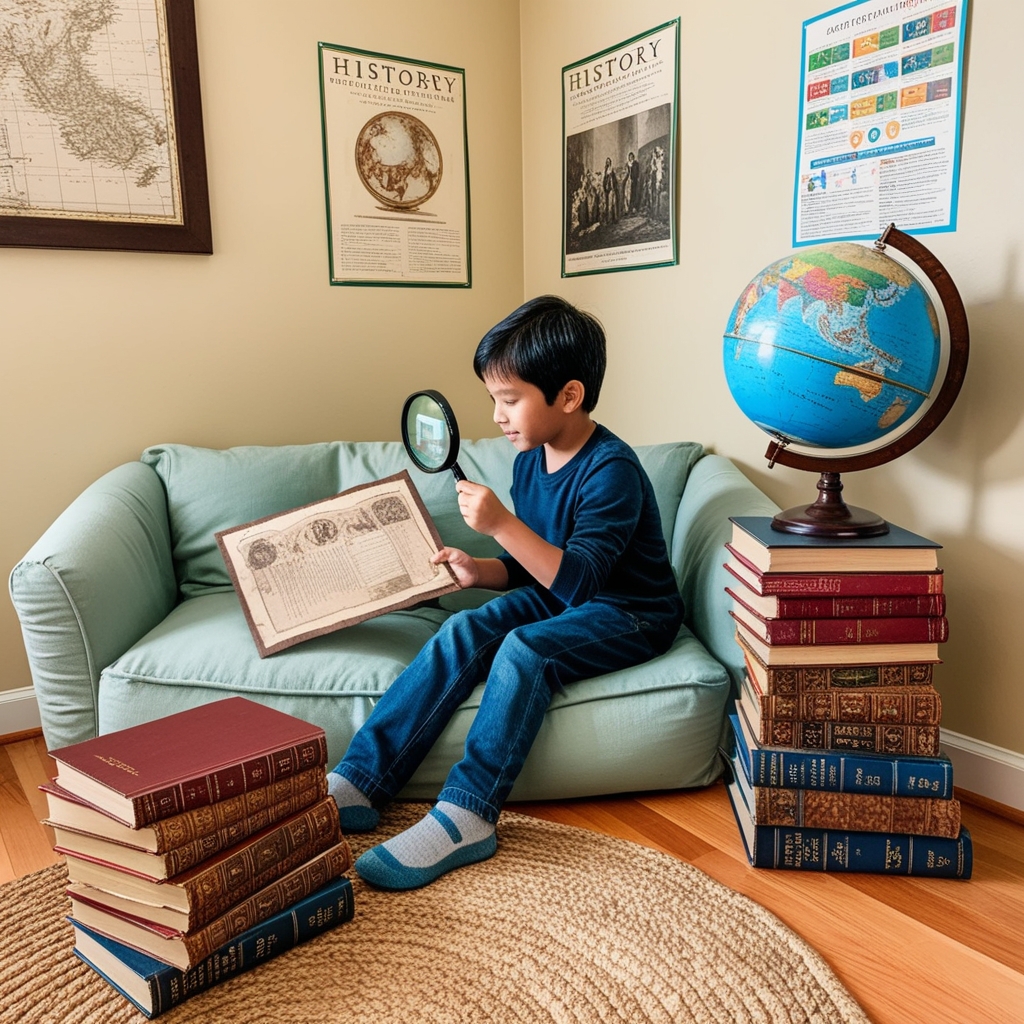
Effective history instruction for elementary students requires varied teaching methods that bring the past to life and make abstract concepts concrete and understandable.
The Living Books Approach
Living books are well-written narratives that make historical periods and figures come alive through engaging storytelling. Unlike dry textbooks, these books feature rich language, compelling characters, and vivid descriptions that help children form mental pictures of historical events.
Choose biographies, historical fiction, and narrative non-fiction books written by authors who respect children’s intelligence while making content accessible. Books like “The Courage of Sarah Noble” or “If You Lived in Colonial Times” provide excellent starting points for deeper historical exploration.
Timeline and Chronology Work
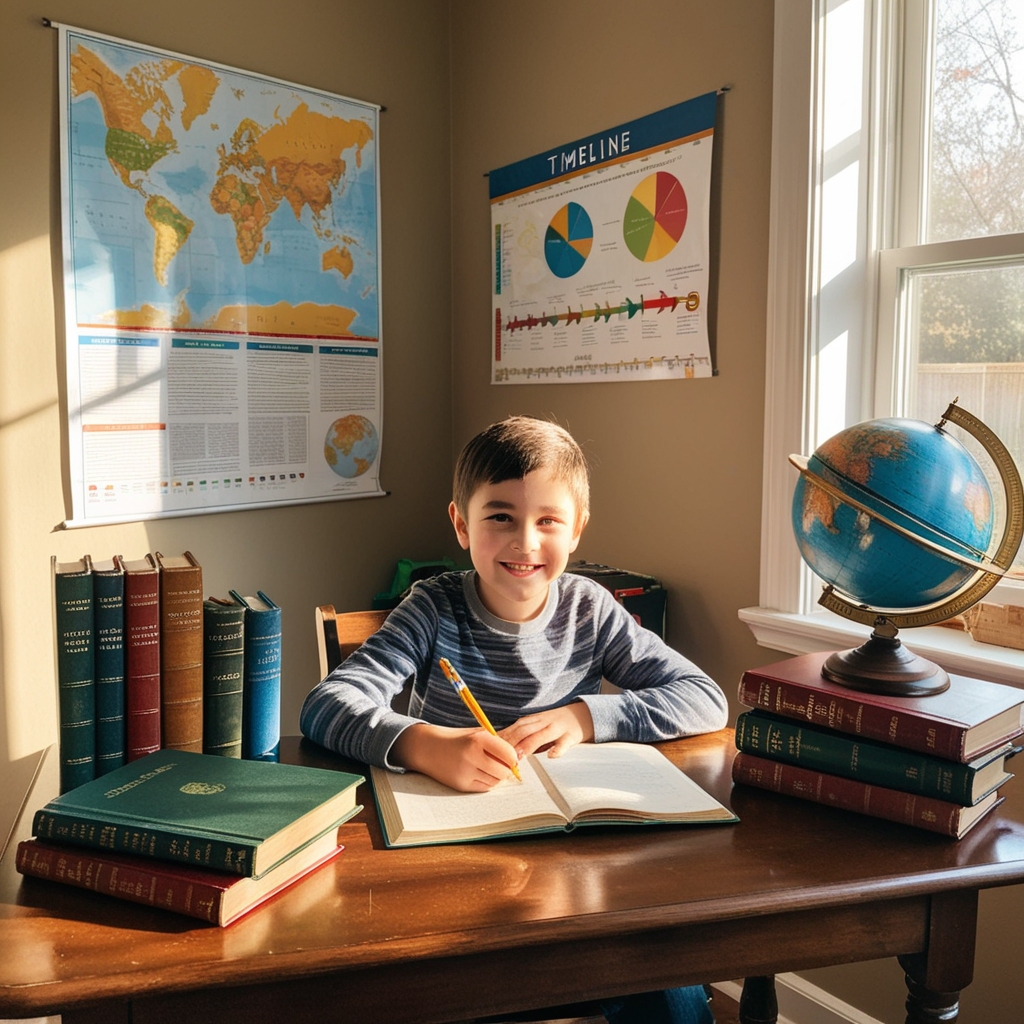
Help children understand when events occurred in relation to each other through hands-on timeline activities. Create a large wall timeline where children can add events, people, and inventions as they learn about them throughout the year.
Use different colored cards or markers for different types of events (wars in red, inventions in blue, famous births in green). This visual organization helps children see patterns and connections across historical periods.
Primary Source Integration
Introduce age-appropriate primary sources to help children connect directly with people from the past. These might include diary entries, letters, photographs, or historical artifacts. The Library of Congress Teaching with Primary Sources program offers excellent resources specifically designed for elementary educators.
When examining primary sources, guide children to observe carefully, ask questions, and make inferences about daily life during different historical periods.
Storytelling and Narration
Develop your storytelling skills to bring historical events to life through dramatic narration. Use different voices for historical characters, incorporate sound effects, and encourage children to visualize scenes as you describe them.
After hearing historical stories, have children practice narration by retelling events in their own words. This technique, popularized by Charlotte Mason, helps children internalize information and develop communication skills simultaneously.
Creative Hands-On Activities and Projects
Hands-on activities transform abstract historical concepts into memorable learning experiences that engage multiple senses and learning styles.
Historical Cooking and Food Activities
Explore different time periods through food preparation and tasting experiences. Make hardtack when studying Civil War soldiers, prepare Native American fry bread, or bake colonial-era johnnycakes. These activities provide sensory connections to historical periods while teaching practical skills.
Research what foods were available during different time periods and discuss how geography and climate influenced diet. Create a historical cookbook with your children featuring recipes from various eras you’ve studied.
Craft and Art Projects
Engage children in creating historically-inspired crafts that reinforce learning while developing fine motor skills. Make Egyptian papyrus, weave colonial-style baskets, or create Native American dreamcatchers while learning about the cultural significance of each item.
Art projects might include:
- Cave painting replicas using natural pigments
- Medieval illuminated manuscripts
- Colonial-era candle making
- Pioneer quilting squares
- Civil War era photography techniques
Drama and Role-Playing
Encourage children to step into historical roles through drama activities. Act out the Boston Tea Party, hold a medieval feast, or recreate a one-room schoolhouse experience. These immersive activities help children understand different perspectives and develop empathy for people from different time periods.
Create simple costumes using household items and encourage children to research how people from their chosen time period would have spoken, moved, and interacted with others.
Building and Construction Projects
Kinesthetic learners especially benefit from building projects that demonstrate historical concepts. Construct a Roman aqueduct using cardboard and test its functionality, build a model of a colonial home, or create a replica of a covered wagon.
These projects teach engineering concepts while reinforcing historical content and can be displayed as proud accomplishments of learning.
Essential Resources and Materials
Having the right resources readily available makes history lesson planning more efficient and lessons more engaging for both parent and child.
Books and Literature
Build a collection of high-quality historical fiction, biographies, and reference books appropriate for elementary ages. Focus on books that tell compelling stories while maintaining historical accuracy.
Essential book categories include:
- Picture book biographies of historical figures
- Historical fiction series like “Magic Tree House” or “American Girl”
- Reference books with maps, timelines, and photographs
- Primary source collections adapted for children
- Cultural and geographical exploration books
Digital and Online Resources
Supplement physical materials with carefully selected digital resources. Educational websites like Scholastic offer interactive activities, virtual field trips, and downloadable resources specifically designed for elementary learners.
Use documentary videos, virtual museum tours, and historical websites to provide visual context for lessons. Always preview digital content to ensure age-appropriateness and historical accuracy.
Manipulatives and Visual Aids
Collect maps, globes, historical artifacts or replicas, and timeline materials. Many items can be found inexpensively at thrift stores, garage sales, or created as family projects.
Useful manipulatives include:
- World and historical maps
- Timeline strips and cards
- Historical costume pieces or props
- Replica artifacts or museum gift shop items
- Historical music recordings
Field Trip and Community Resources
Identify local museums, historical sites, and community resources that can enhance your history curriculum. Many locations offer special programs for homeschool families or reduced admission rates for educational visits.
Create relationships with local historical societies, reenactment groups, and museum educators who can provide expert knowledge and authentic experiences for your children.
Assessment Strategies That Work
Effective assessment in homeschool history goes beyond traditional testing to include creative demonstrations of understanding that align with how children naturally learn and express knowledge.
Portfolio-Based Assessment
Create history portfolios where children collect their best work throughout the year. Include written narrations, artwork, photographs of projects, and reflective writing pieces that demonstrate growth and understanding over time.
Portfolio contents might include:
- Timeline entries with illustrations
- Character analysis of historical figures
- Creative writing pieces from historical perspectives
- Maps and geographical work
- Research projects and reports
Project-Based Demonstrations
Allow children to demonstrate learning through creative projects that showcase their understanding of historical concepts. These might include museum exhibits, dramatic presentations, or multimedia projects that combine research with creative expression.
Project options can be tailored to individual interests and strengths while still meeting educational objectives. A child interested in art might create a historical comic book, while a budding engineer might design and build historical structures.
Ongoing Observation and Documentation
Keep detailed records of children’s questions, comments, and insights during lessons. These observations often provide more valuable assessment information than formal tests, revealing depth of understanding and genuine interest in historical topics.
Document breakthrough moments when children make connections between different historical events or relate past events to current situations. These instances demonstrate higher-level thinking skills that are the true goals of historical education.
Practical Planning and Scheduling Tips
Successful homeschool history lesson plans elementary require thoughtful planning that balances educational goals with family life and individual learning needs.
Long-Term Curriculum Planning
Plan your history curriculum in large chunks, typically covering 2-4 major historical periods or themes per year. This allows for deep exploration rather than superficial coverage of many topics.
Consider following a cyclical approach where children encounter the same historical periods multiple times at increasing levels of complexity as they mature. This spiral method reinforces learning while building more sophisticated understanding over time.
For additional guidance on curriculum planning and scheduling strategies, visit our scheduling and planning resources.
Weekly and Daily Scheduling
Dedicate 30-45 minutes daily to history instruction for elementary students, adjusting based on attention spans and interest levels. Some families prefer longer sessions 2-3 times per week, while others benefit from shorter daily exposure.
Build flexibility into your schedule to allow for extended exploration when children show particular interest in a topic. Some of the most meaningful learning happens when you can follow a child’s curiosity beyond the planned lesson.
Integration with Other Subjects
Look for natural connections between history and other subject areas. Read historical fiction during language arts time, explore historical geography during map work, and incorporate historical themes into art and music lessons.
This integrated approach reinforces learning while making efficient use of instructional time. Children begin to see connections between subject areas and understand how knowledge builds upon itself.
Record Keeping and Documentation
Maintain simple but thorough records of topics covered, books read, and activities completed. This documentation helps with legal compliance in states that require record keeping and provides valuable information for planning future lessons.
Include photographs of projects, copies of significant written work, and notes about field trips or special learning experiences. These records become treasured family memories while serving important educational documentation purposes.
Frequently Asked Questions
How much time should I spend on history lessons with elementary students?
Plan for 30-45 minutes of focused history instruction daily, or 60-90 minutes three times per week. Younger children (K-2) may need shorter sessions of 20-30 minutes, while older elementary students (3-5) can handle longer periods. The key is maintaining engagement rather than adhering to rigid time schedules.
What if my child finds history boring or difficult?
Try changing your approach by incorporating more hands-on activities, storytelling, or topics that connect to your child’s interests. Some children respond better to historical fiction than textbooks, while others need more visual or kinesthetic activities. Consider taking a break and returning to history with a completely different method or time period.
Should I follow chronological order or jump around to different time periods?
Both approaches work well for elementary students. Chronological order helps children understand the flow of history, while topic-based learning allows you to follow interests and make connections across time periods. Many successful homeschool families use a combination approach, covering major periods chronologically while exploring specific interests in depth.
How do I assess my child’s understanding without traditional tests?
Use narration, where children retell what they’ve learned in their own words. Create portfolios of their work, observe their questions and comments during lessons, and have them complete creative projects that demonstrate understanding. These methods provide more meaningful assessment than traditional testing for elementary-aged children.
What are the most important history topics for elementary students?
Focus on topics that help children understand their cultural heritage and develop historical thinking skills. American history, ancient civilizations, and world cultures provide excellent foundations. The specific topics matter less than helping children learn to think historically and develop curiosity about the past.
How can I make ancient history relevant to modern elementary students?
Draw connections between ancient and modern life by comparing daily activities, technologies, and challenges. Discuss how ancient inventions led to modern conveniences, explore how ancient stories relate to contemporary themes, and help children see that people throughout history shared similar hopes, fears, and dreams.
Do I need expensive curriculum or can I create my own lesson plans?
You can successfully teach elementary history using library books, free online resources, and simple materials. While commercial curricula can save time, they’re not necessary for effective instruction. Focus on good books, engaging activities, and your enthusiasm for learning together rather than expensive materials.
History & Geography Picks
As an Amazon Associate, HomeschoolingExperts earns from qualifying purchases. Some links in this article are affiliate links, meaning we may earn a small commission at no extra cost to you.
Conclusion
Creating effective homeschool history lesson plans for elementary students centers on making the past come alive through engaging stories, hands-on activities, and meaningful connections to children’s lives. By focusing on quality literature, interactive experiences, and flexible scheduling, you can foster a genuine love for history that will serve your children throughout their educational journey.
Remember that the goal isn’t to cover every historical event but to develop historical thinking skills, cultural awareness, and curiosity about the past. Your enthusiasm and creativity matter more than perfect lesson plans or expensive materials.
Start with one time period that interests your family, gather some good books and simple materials, and begin exploring history together. As you gain confidence and discover what works best for your children, you can expand and refine your approach.
Ready to begin planning your history curriculum? Contact us for personalized guidance, or explore our extensive collection of educational resources to support your homeschooling journey.
Related Resources
Enhance your homeschool history curriculum with these additional resources:
- Complete Lesson Plan Collection – Browse hundreds of ready-to-use lesson plans across all subjects and grade levels
- Grade Level Planning Guides – Comprehensive guides for planning curriculum by elementary grade level
- Creative Learning Activities – Discover innovative ways to make learning engaging and memorable for your children
Loved this post? Grab the free resource above.
Math Adventures: Everyday Numbers — drop your email and we'll send the printable PDF.