Free Sample Lesson Plan
Math Adventures: Everyday Numbers — drop your email and we'll send the printable PDF.
Engaging homeschool STEM activities and lesson plans provide the foundation for developing critical thinking, problem-solving skills, and scientific literacy in your children. As homeschooling parents, we have the unique opportunity to create hands-on learning experiences that spark curiosity and foster a genuine love for science, technology, engineering, and mathematics right in our own homes.
The beauty of homeschool STEM education lies in its flexibility and adaptability to your child’s learning style, interests, and pace. Whether you’re working with elementary-aged children who love messy experiments or teenagers ready for advanced robotics projects, the right combination of structured lessons and exploratory activities can transform abstract concepts into tangible understanding.
This comprehensive guide will equip you with practical, tested STEM activities, detailed lesson plan frameworks, and expert strategies to make science and math come alive in your homeschool. From simple kitchen chemistry experiments to complex engineering challenges, you’ll discover how to create an engaging STEM learning environment that builds confidence and competence in these essential subjects.
Key Takeaways
- Hands-on STEM activities increase retention rates by up to 90% compared to traditional textbook learning
- Age-appropriate lesson plans should balance structured learning with open-ended exploration
- Common household materials can create engaging experiments that teach fundamental scientific principles
- Integration across subjects helps students see real-world connections and applications
- Regular assessment through project portfolios tracks progress more effectively than traditional testing
Benefits of Homeschool STEM Education

Homeschool STEM activities offer unprecedented advantages over traditional classroom settings, allowing for personalized learning experiences that cater to individual strengths and interests. Research from the U.S. Department of Education shows that students engaged in hands-on STEM learning demonstrate 23% higher achievement scores compared to those using textbook-only approaches.
Personalized Learning Pace and Style
One of the most significant advantages of homeschool STEM education is the ability to adapt to your child’s unique learning rhythm. Visual learners can spend extra time with diagrams and models, while kinesthetic learners can engage in extended hands-on experimentation.
This individualized approach means struggling students can take additional time to master concepts without feeling rushed, while advanced learners can dive deeper into complex topics that fascinate them. The result is more thorough understanding and genuine enthusiasm for STEM subjects.
Real-World Application and Relevance
Homeschool STEM lesson plans can seamlessly integrate real-world applications that make learning immediately relevant. When studying physics, you might examine the engineering behind your local bridge. Chemistry lessons can explore the science behind cooking and baking processes happening in your kitchen.
This contextual learning helps students understand why STEM knowledge matters and how it applies to their daily lives. Studies indicate that students who see clear connections between academic content and real-world applications show 40% higher engagement levels.
Fostering Innovation and Creativity
The flexibility of homeschooling allows for extended project time and creative exploration that traditional schedules often can’t accommodate. Students can pursue engineering challenges for days or weeks, iterating and improving their designs without being constrained by rigid class periods.
This freedom to explore and fail safely builds resilience and innovative thinking skills that are crucial for future STEM careers. Many homeschooled students report higher confidence in tackling complex problems and thinking creatively about solutions.
Elementary STEM Activities and Experiments
Elementary-aged children naturally possess curiosity and wonder about the world around them, making this the perfect time to introduce foundational STEM concepts through engaging, hands-on activities. These formative years set the stage for future scientific thinking and mathematical reasoning.
Kitchen Chemistry Adventures
The kitchen serves as an excellent laboratory for introducing basic chemistry concepts to young learners. Simple reactions using household ingredients can demonstrate fundamental scientific principles while keeping children engaged and excited about learning.
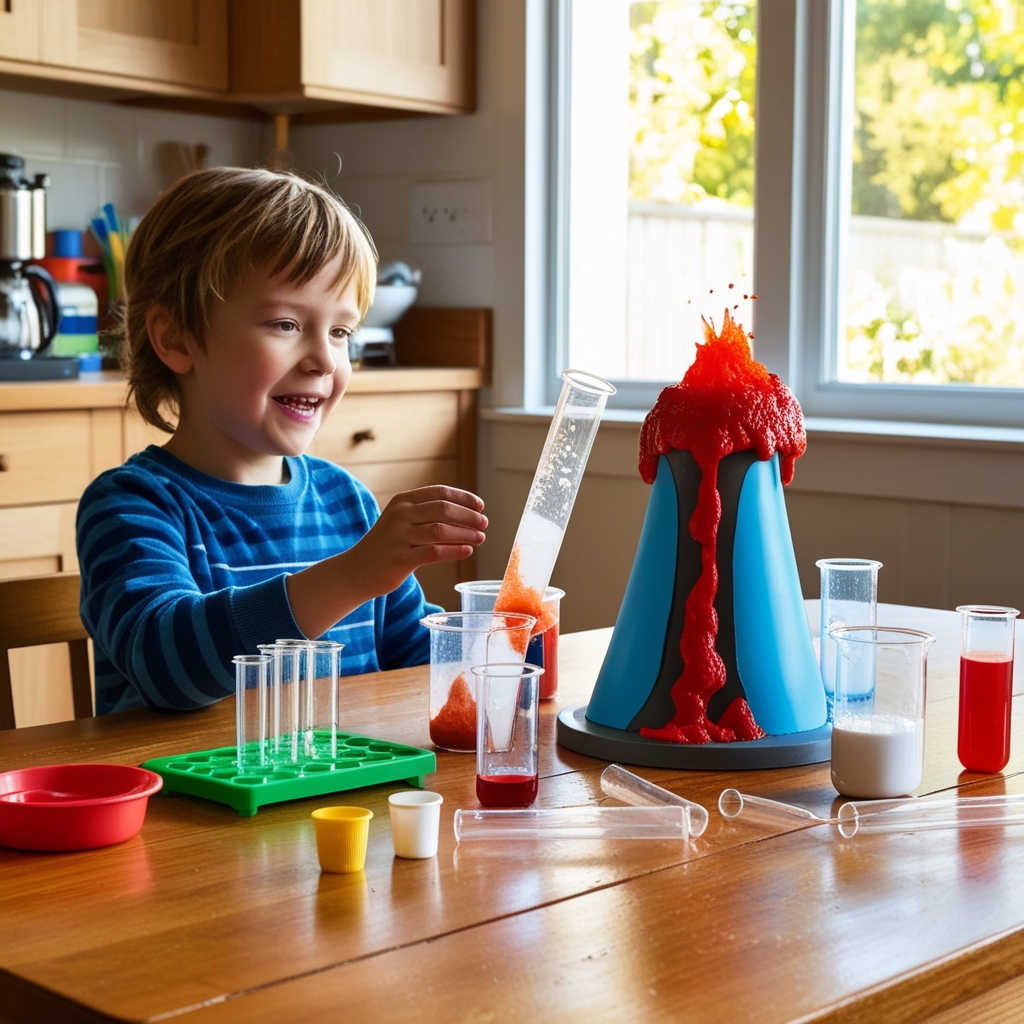
Try creating volcano eruptions using baking soda and vinegar to teach acid-base reactions. This classic experiment can be enhanced by varying proportions, adding food coloring, or discussing the chemical equation involved. Children love the dramatic fizzing action while absorbing important lessons about chemical changes.
Crystallization experiments using salt, sugar, or Epsom salts provide opportunities to discuss solutions, saturation, and molecular structures. These activities can extend over several days, teaching patience and observation skills while revealing the beauty of scientific processes.
Engineering Design Challenges
Elementary engineering activities should focus on the design process while being age-appropriate and achievable. Simple challenges using everyday materials can introduce concepts like structural stability, force, and problem-solving methodology.
- Marshmallow and toothpick tower building challenges teach structural engineering principles
- Paper airplane design competitions explore aerodynamics and variables testing
- Egg drop protection challenges introduce concepts of force, impact, and material properties
- Bridge building with popsicle sticks demonstrates load distribution and architectural design
These projects work best when children are encouraged to iterate and improve their designs, learning that failure is part of the engineering process rather than something to avoid.
Nature-Based Science Exploration
Outdoor environments provide rich opportunities for biological and earth science learning. Regular nature walks can become structured scientific expeditions with proper preparation and follow-up activities.
Create field journals for recording observations about weather patterns, plant growth cycles, animal behaviors, and seasonal changes. These ongoing records become valuable data sources for identifying patterns and making predictions about natural phenomena.
Gardening projects offer hands-on lessons in plant biology, soil science, and environmental factors affecting growth. Children can design controlled experiments testing variables like sunlight exposure, water amounts, or soil types while learning scientific methodology.
Middle School STEM Projects and Challenges
Middle school represents a crucial transition period where students can handle more complex homeschool STEM activities while still maintaining enthusiasm for hands-on learning. This age group benefits from projects that challenge their growing analytical abilities while providing clear connections to real-world applications.
Advanced Engineering Projects
Middle school students can tackle multi-step engineering challenges that require planning, research, and sophisticated problem-solving. These projects should introduce formal engineering design processes while maintaining engaging, hands-on elements.
Robotics projects using platforms like LEGO Mindstorms or Arduino microcontrollers provide excellent introductions to programming, sensors, and automated systems. Students can design robots to navigate mazes, sort objects by color, or respond to environmental conditions.
Renewable energy projects allow exploration of environmental science while learning about electrical circuits and energy conversion. Building solar ovens, wind turbines, or hydroelectric generators provides tangible experience with sustainable technology concepts.
Data Collection and Analysis Projects
This age group can begin conducting legitimate scientific research projects that involve hypothesis formation, controlled experiments, and statistical analysis of results. These skills form the foundation for high school and college-level scientific thinking.
Weather monitoring projects can extend over months, collecting data about temperature, precipitation, barometric pressure, and wind patterns. Students learn to use scientific instruments while building understanding of meteorological concepts and climate patterns.
Water quality testing in local streams, ponds, or even tap water provides opportunities to learn chemistry concepts while engaging with environmental science. Testing pH, dissolved oxygen, and pollutant levels connects chemistry knowledge with real-world environmental concerns.
Technology Integration Projects
Middle school students can begin exploring more sophisticated technology tools while learning fundamental computer science concepts. These projects should balance screen time with hands-on building and creating.
3D design and printing projects allow students to solve real problems while learning spatial reasoning and design software. They might design prosthetic hands, organizational tools, or replacement parts for household items.
App development using visual programming languages like Scratch or MIT App Inventor introduces computational thinking concepts without requiring advanced coding skills. Students can create educational games, productivity tools, or creative storytelling applications.
Advanced High School STEM Coursework
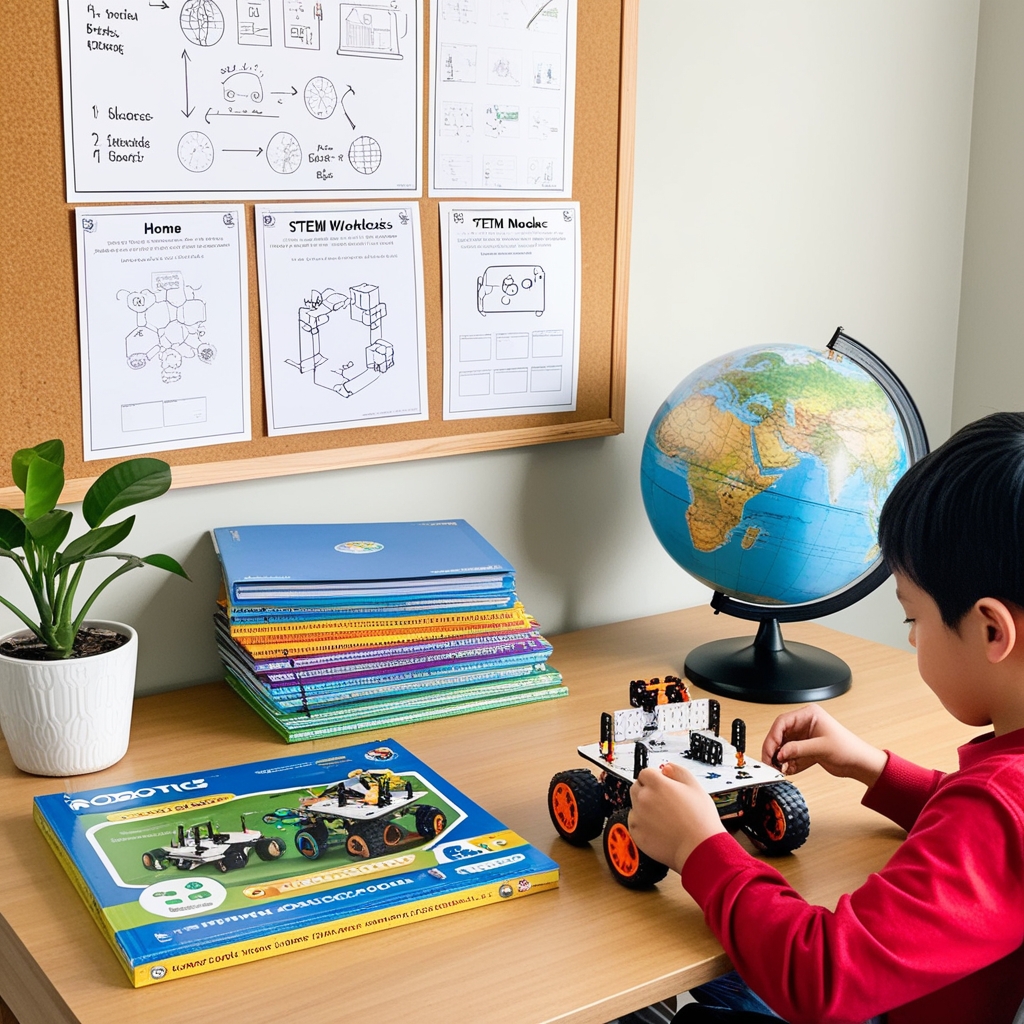
High school homeschool STEM activities should prepare students for college-level work while allowing deep exploration of personal interests and potential career paths. Advanced projects require significant independent work and can result in impressive portfolio pieces for college applications.
Independent Research Projects
High school students can conduct original research projects that contribute meaningful knowledge to their chosen fields. These extended investigations teach research methodology, data analysis, and scientific communication skills essential for college success.
Encourage students to identify problems in their communities or areas of personal interest that can be addressed through scientific investigation. Projects might examine local environmental issues, test innovative solutions to everyday problems, or explore cutting-edge scientific concepts.
Participation in science fairs, research competitions, or collaboration with local universities can provide authentic audiences for student work and valuable networking opportunities. Many homeschooled students have won national recognition for their independent research projects.
Advanced Laboratory Techniques
High school students need exposure to sophisticated laboratory equipment and techniques to prepare for college-level science courses. While home laboratories have limitations, creative solutions can provide meaningful hands-on experience with advanced concepts.
Microscopy projects using digital microscopes can explore cellular biology, materials science, or forensic analysis. Students can document their observations and create detailed scientific reports following professional standards.
Spectroscopy experiments using smartphone apps or affordable spectrometers can introduce concepts from analytical chemistry and physics. These tools allow analysis of light sources, chemical compositions, and material properties.
Internships and Mentorship Opportunities
Real-world experience through internships, job shadowing, or mentorship relationships provides invaluable exposure to STEM careers while building professional networks. Many organizations welcome motivated homeschool students for these opportunities.
Local hospitals, engineering firms, research laboratories, and technology companies often offer programs specifically designed for high school students. These experiences provide insights into daily work life while building resume credentials for college applications.
Virtual internships and online mentorship programs have expanded opportunities for students in rural areas or those with transportation limitations. Many professional organizations now offer remote learning experiences that provide authentic career exposure.
Creating Effective STEM Lesson Plans
Well-structured homeschool STEM lesson plans provide the framework for meaningful learning while maintaining flexibility for student interests and unexpected discoveries. Effective planning balances preparation with spontaneity, ensuring learning objectives are met while preserving the joy of discovery.
Essential Components of STEM Lesson Plans
Every effective STEM lesson should begin with clear learning objectives that specify what students will know and be able to do by the end of the activity. These objectives should be measurable and age-appropriate while connecting to broader educational standards.
Materials lists should be comprehensive and realistic, considering both budget constraints and availability. Include alternatives for hard-to-find items and suggestions for reusing materials across multiple lessons to maximize value.
Safety considerations must be explicitly addressed, especially for experiments involving chemicals, heat, or sharp tools. Create clear safety protocols and ensure students understand proper procedures before beginning any hands-on activities.
The 5E Instructional Model
The 5E model provides an excellent framework for structuring STEM lessons that promote deep understanding through active engagement. This approach moves students through five distinct phases that build upon each other naturally.
Engage: Begin lessons with activities that capture student interest and reveal prior knowledge. This might involve demonstrations, thought-provoking questions, or brief challenges that highlight the lesson’s relevance.
Explore: Provide hands-on activities that allow students to investigate concepts before formal instruction. This phase encourages discovery and helps students construct their own understanding through direct experience.
Explain: Introduce formal vocabulary and concepts after students have had concrete experiences. This approach makes abstract ideas more meaningful because students can connect them to their recent observations and activities.
Elaborate: Extend learning through additional applications, more complex problems, or connections to other subjects. This phase deepens understanding and shows how concepts apply in various contexts.
Evaluate: Assess student understanding through both formal and informal methods. This might include project presentations, written reflections, or performance on practical challenges.
Adapting Plans for Different Learning Styles
Effective STEM lesson plans accommodate various learning preferences while ensuring all students master essential concepts. Visual learners benefit from diagrams, charts, and graphic organizers that help them see relationships between ideas.
Kinesthetic learners need movement and manipulation opportunities built into every lesson. Even abstract mathematical concepts can be taught through physical activities, building exercises, or role-playing scenarios.
Auditory learners benefit from discussion opportunities, verbal explanations, and chances to teach concepts to others. Include regular opportunities for students to articulate their thinking and reasoning processes.
For comprehensive lesson plan resources and templates, visit our lesson plan shop where you’ll find professionally designed materials for all grade levels and subjects.
Hands-On Science Experiments for Every Age
Hands-on experimentation forms the heart of effective STEM education, transforming abstract concepts into concrete understanding through direct manipulation and observation. The key to successful homeschool STEM activities lies in selecting age-appropriate experiments that challenge students while remaining achievable and safe.
Physics Experiments Using Household Items
Physics concepts become accessible when demonstrated through familiar objects and situations. Simple machines can be explored using bottle openers, scissors, and wheelbarrows to demonstrate levers, while pulleys can be constructed using rope and fixed points around the house.
Density experiments using various liquids and objects provide visual demonstrations of this fundamental concept. Layer honey, corn syrup, dish soap, water, and oil in a clear container, then drop in objects of different densities to observe where they settle.
Sound wave experiments using rubber bands, glasses filled with different water levels, or homemade string telephones make acoustic principles tangible. Students can explore pitch, volume, and sound transmission while having fun with musical creation.
Chemistry Reactions and Observations
Safe chemistry experiments using kitchen ingredients can demonstrate fundamental chemical principles without requiring specialized equipment or dangerous materials. These activities build understanding of chemical changes, reactions, and molecular behavior.
Indicator experiments using red cabbage juice can reveal pH levels of various household substances. The dramatic color changes when testing lemon juice, baking soda solutions, and soap provide visual evidence of acid-base chemistry.
Crystallization projects allow observation of molecular structures and solution chemistry. Grow crystals using table salt, Epsom salts, or sugar solutions while discussing saturation, nucleation, and crystal lattice structures.
Polymer science becomes accessible through slime-making activities that demonstrate cross-linking, viscosity, and non-Newtonian fluid behavior. Students can experiment with different ratios and additives while learning about material properties.
Biology and Life Science Investigations
Living systems provide endless opportunities for observation, experimentation, and discovery. Biology experiments should emphasize the scientific method while fostering appreciation for the complexity and beauty of life processes.
Microscopy investigations using pond water, cheek cells, or plant tissues reveal the microscopic world while teaching proper laboratory techniques. Students can document their observations through detailed drawings and scientific descriptions.
Plant physiology experiments can explore photosynthesis, transpiration, and growth responses. Test the effects of different light colors on plant growth, or observe how plants respond to gravity and light direction through tropism experiments.
Enzyme activity demonstrations using catalase from potatoes or liver tissue show how biological catalysts function. These experiments can explore the effects of temperature, pH, and concentration on enzyme effectiveness.
Integrating Mathematics into STEM Learning
Mathematics serves as the language of science and engineering, making integration across STEM subjects essential for deep understanding. Effective homeschool STEM activities demonstrate mathematical applications in real-world contexts, showing students why mathematical skills matter beyond abstract problem-solving.
Data Analysis and Statistics Projects
Real data collection and analysis projects make statistics meaningful while teaching important research skills. Students can gather data about family habits, local weather patterns, or community issues while learning to organize, analyze, and present their findings.
Sports statistics provide engaging contexts for learning about averages, percentages, and probability. Students can track their favorite teams’ performance while calculating batting averages, shooting percentages, or win-loss ratios.
Survey projects allow students to design questionnaires, collect responses, and analyze results using graphs and statistical measures. These projects teach research methodology while providing practice with data visualization and interpretation.
Geometry in Engineering and Design
Geometric principles become relevant when applied to architectural design, engineering challenges, and artistic projects. Students can explore angles, area, volume, and spatial relationships through hands-on construction activities.
Scale modeling projects require proportional reasoning and geometric calculations while producing tangible results. Students might create scale models of their homes, design dream houses, or build replicas of famous structures.
Tessellation art projects combine mathematical concepts with creative expression. Students explore geometric transformations, symmetry, and pattern recognition while creating beautiful mathematical art.
Algebraic Thinking in Problem Solving
Algebraic concepts can be introduced through pattern recognition, function exploration, and problem-solving activities that don’t require formal equation manipulation. These approaches build algebraic thinking skills naturally.
Growth pattern investigations using plants, populations, or savings accounts introduce exponential and linear functions through real-world contexts. Students can collect data, create graphs, and make predictions about future values.
Optimization problems challenge students to find the best solutions under given constraints. These might involve designing containers with maximum volume, finding the most efficient routes, or determining optimal pricing strategies for imaginary businesses.
Technology Tools and Digital Resources
Modern technology offers unprecedented opportunities for enhancing homeschool STEM activities through simulation, visualization, and access to professional-grade tools. The key lies in selecting technologies that enhance rather than replace hands-on learning experiences.
Virtual Laboratories and Simulations
Virtual laboratory environments allow students to conduct experiments that would be impossible, dangerous, or expensive in home settings. These tools provide valuable supplementary experiences while teaching proper laboratory procedures and scientific thinking.
PhET Interactive Simulations from the University of Colorado offers free, research-based simulations for physics, chemistry, biology, and mathematics. Students can manipulate variables and observe results in real-time while exploring complex scientific concepts.
Labster provides virtual laboratory experiences that simulate real research environments. While some content requires subscriptions, many basic simulations are available free and provide excellent preparation for college-level laboratory work.
Programming and Computational Thinking
Computer programming skills have become essential for many STEM careers, making coding education an important component of comprehensive STEM preparation. Age-appropriate programming tools can introduce computational thinking concepts without overwhelming beginners.
Scratch programming language allows students to create interactive stories, games, and animations while learning fundamental programming concepts. The visual, block-based interface makes programming accessible to elementary and middle school students.
Python programming provides a gentle introduction to text-based coding that’s widely used in scientific research and data analysis. Students can start with simple programs and gradually progress to more complex applications involving data visualization and mathematical modeling.
Digital Fabrication and Maker Tools
Access to digital fabrication tools like 3D printers, laser cutters, and CNC machines has revolutionized hands-on learning possibilities. While these tools require investment, many communities offer maker spaces or libraries with public access to such equipment.
3D design software like Tinkercad or Fusion 360 allows students to create digital models that can be printed as physical objects. These tools teach spatial reasoning, design thinking, and problem-solving while producing tangible results.
Microcontroller platforms like Arduino or Raspberry Pi enable students to create interactive electronic projects that respond to sensors and control actuators. These tools bridge programming and electronics while enabling creation of sophisticated automation projects.
Assessment and Progress Tracking Methods
Effective assessment in homeschool STEM activities goes beyond traditional testing to include portfolio development, project presentations, and authentic performance evaluations. These approaches provide more comprehensive pictures of student understanding while building skills needed for future academic and career success.
Portfolio-Based Assessment
Student portfolios document learning progress over time while providing opportunities for reflection and self-assessment. STEM portfolios should include project documentation, experimental results, design iterations, and written reflections about learning experiences.
Digital portfolios using platforms like Google Sites or Seesaw allow students to include photos, videos, and interactive elements that showcase their work effectively. These platforms also facilitate sharing with extended family members or potential college admissions counselors.
Regular portfolio conferences between parents and students provide opportunities for goal setting, progress review, and celebration of achievements. These conversations help students develop metacognitive skills while maintaining motivation for continued learning.
Project-Based Performance Assessment
Real-world projects provide authentic contexts for assessing student understanding while building practical skills needed for future success. These assessments should evaluate both final products and the processes students use to achieve their results.
Engineering design challenges can be assessed using rubrics that evaluate problem identification, solution development, prototype construction, testing procedures, and design iteration. These assessments mirror real-world engineering practices while providing clear expectations for student work.
Scientific investigation projects should be evaluated based on hypothesis formation, experimental design, data collection and analysis, conclusion drawing, and communication of results. These criteria align with professional scientific practices while being appropriate for student developmental levels.
Peer Review and Collaboration
Opportunities for peer review and collaborative work help students develop communication skills while learning from each other’s perspectives and approaches. These experiences mirror professional STEM work environments while building social learning skills.
Science fair presentations provide authentic audiences for student work while building public speaking and scientific communication skills. Even informal family presentations can serve this purpose when formal science fairs aren’t accessible.
Online collaboration with other homeschool families or students from around the world can provide peer interaction opportunities while building digital citizenship skills. Platforms like ePals or collaborative science projects through organizations like NASA provide structured interaction opportunities.
For additional resources on tracking student progress and creating comprehensive assessment portfolios, explore our scheduling and planning guides that include detailed assessment strategies for all subject areas.
Frequently Asked Questions
What supplies do I need to get started with homeschool STEM activities?
Start with basic household items like baking soda, vinegar, food coloring, measuring cups, and simple tools. Most effective STEM activities use common materials you likely already have. As you progress, consider investing in a basic microscope, digital scale, and simple electronics kit. The key is starting with what you have rather than waiting for perfect equipment.
How do I ensure my homeschool STEM activities meet educational standards?
Focus on the Next Generation Science Standards (NGSS) which emphasize hands-on learning and real-world applications. Each activity should address specific learning objectives related to scientific practices, crosscutting concepts, and disciplinary core ideas. Document student learning through portfolios and projects that demonstrate mastery of key concepts rather than relying solely on traditional tests.
What if I don’t have a strong background in science or math myself?
You don’t need to be an expert to facilitate excellent STEM learning. Focus on learning alongside your children, asking good questions, and encouraging exploration. Many resources provide step-by-step instructions and background information. Consider joining homeschool co-ops where parents with different expertise can share teaching responsibilities.
How can I make STEM activities engaging for reluctant learners?
Connect STEM concepts to your child’s existing interests and hobbies. A child interested in cooking might explore chemistry through baking, while a sports enthusiast might study physics through athletic performance. Keep activities hands-on, allow for creativity and personal expression, and celebrate discoveries rather than focusing on right or wrong answers.
Are there safety concerns with home STEM experiments?
Safety should always be the top priority. Stick to age-appropriate activities using household materials, always supervise experiments, and establish clear safety rules. Avoid activities involving dangerous chemicals, high temperatures, or sharp tools unless you have proper safety equipment and training. When in doubt, choose safer alternatives that teach the same concepts.
How do I document and assess learning from hands-on STEM activities?
Use multiple assessment methods including photo documentation, student journals, project portfolios, and presentation opportunities. Focus on process as much as final results, encouraging students to document their thinking, observations, and problem-solving approaches. Regular reflection discussions help students articulate their learning and make connections between activities.
Can STEM activities be adapted for multiple grade levels simultaneously?
Absolutely. Many STEM activities can be differentiated by adjusting complexity, expectations, and roles. Younger children might focus on observation and simple measurements while older students analyze data and draw conclusions. Encourage peer teaching and collaboration, which benefits both younger and older students while building communication skills.
📚 Recommended Homeschool Resources
As an Amazon Associate, I earn from qualifying purchases. Some links in this article are affiliate links, meaning I may earn a small commission at no extra cost to you.
Conclusion
Implementing engaging homeschool STEM activities and lesson plans transforms abstract concepts into concrete understanding while building essential skills for future academic and career success. The flexibility of homeschooling allows for personalized approaches that honor individual learning styles, interests, and developmental readiness while maintaining high educational standards.
Remember that effective STEM education is not about having perfect equipment or expert knowledge in every subject area. Instead, it’s about fostering curiosity, encouraging exploration, and providing opportunities for hands-on discovery that make learning meaningful and memorable. The activities and strategies outlined in this guide provide a solid foundation for creating rich STEM learning experiences using readily available materials and resources.
Start where you are with what you have, and gradually build your confidence and resource collection over time. Focus on the joy of discovery and the satisfaction of solving real problems rather than worrying about covering every possible topic. Your enthusiasm and willingness to learn alongside your children will inspire their own love of STEM subjects more than any expensive curriculum or equipment ever could.
The investment you make in quality STEM education today will pay dividends throughout your children’s academic careers and beyond. By providing hands-on learning experiences, encouraging critical thinking, and connecting learning to real-world applications, you’re preparing your children for success in an increasingly technology-driven world while nurturing their natural curiosity and creativity.
Ready to dive deeper into homeschool planning and implementation? Visit our about page to learn more about our educational philosophy and approach, or contact us with specific questions about implementing STEM education in your homeschool.
Related Resources
Expand your homeschool STEM knowledge with these additional resources from HomeschoolingExperts.org:
- Complete Lesson Plan Library – Access hundreds of ready-to-use lesson plans across all subjects and grade levels
- Creative Activity Ideas – Discover engaging hands-on activities that make learning fun and memorable
- Curriculum and Teaching Methods – Explore different educational approaches and find the perfect fit for your family’s learning style

Loved this post? Grab the free resource above.
Math Adventures: Everyday Numbers — drop your email and we'll send the printable PDF.