Free Printable Homeschool Year Planner
Plan your whole school year on one page — weekly, monthly, and yearly templates included.
Block scheduling for homeschool represents a revolutionary approach to organizing your family’s educational journey, offering focused learning periods that can dramatically improve retention and reduce daily stress. Unlike traditional hourly subject rotations, this method dedicates extended time blocks to fewer subjects each day, allowing for deeper exploration and more meaningful learning experiences.
Many homeschooling families struggle with the constant switching between subjects that characterizes conventional scheduling methods. This fragmented approach often leads to surface-level learning and increased preparation time. Block scheduling addresses these challenges by creating immersive learning environments where students can fully engage with material without frequent interruptions.
In this comprehensive guide, we’ll explore how to implement effective block scheduling strategies that work for different learning styles, family sizes, and educational goals. You’ll discover practical frameworks, real-world examples, and expert tips to transform your homeschool routine into a more productive and enjoyable experience.
Key Takeaways
- Block scheduling reduces daily subject switching, allowing for deeper learning and better retention
- Different block formats work for different families: daily blocks, alternating days, or weekly rotations
- Successful implementation requires careful planning, flexibility, and gradual transitions
- This method particularly benefits kinesthetic learners and families with multiple children
- Block scheduling can reduce preparation time and create more focused learning environments
What is Block Scheduling for Homeschool?
Block scheduling for homeschool is an educational time management system that allocates extended periods—typically 60 to 180 minutes—to individual subjects or integrated learning themes. Instead of studying six subjects for 30 minutes each, students might focus on two or three subjects for longer durations.
This approach mirrors the block scheduling systems used in many high schools and universities, where students attend fewer classes per day but for longer periods. The concept has gained significant traction in homeschooling communities, particularly among families seeking more flexibility and depth in their educational approach.
Core Principles of Block Scheduling
The foundation of effective block scheduling rests on several key principles. First, sustained focus allows students to move beyond surface-level understanding into deeper comprehension and application of concepts.
Second, reduced transitions minimize the mental energy lost when switching between subjects. Research from the U.S. Department of Education indicates that frequent task-switching can reduce productivity by up to 25%.
Third, integrated learning opportunities emerge naturally when subjects have adequate time for project-based activities, experiments, and creative applications. This holistic approach aligns with how children naturally learn and process information.
How Block Scheduling Differs from Traditional Methods
Traditional homeschool schedules often mirror conventional classroom structures, with 30-45 minute periods for each subject. While this approach provides comprehensive daily coverage, it can feel rushed and fragmented.
Block scheduling prioritizes depth over breadth in daily planning. Students might study mathematics and science on Monday, Wednesday, and Friday, while focusing on language arts and social studies on Tuesday and Thursday. This rhythm creates natural review cycles and allows for more thorough exploration of complex topics.
The flexibility inherent in block scheduling also accommodates real-world learning opportunities, field trips, and project completion without the pressure of covering every subject daily.
Benefits of Block Scheduling
The advantages of implementing block scheduling extend far beyond simple time management. Families consistently report improved learning outcomes, reduced stress, and greater satisfaction with their homeschooling experience.
Enhanced Learning and Retention
Extended learning periods allow students to reach what educators call “flow state”—a condition of deep focus and engagement. When children aren’t constantly watching the clock or anticipating subject changes, they can immerse themselves fully in learning activities.
This sustained engagement leads to better retention rates. According to educational research, students retain approximately 70% more information when learning occurs in focused blocks rather than fragmented periods. The brain has adequate time to form strong neural connections and move information from short-term to long-term memory.
Additionally, block scheduling naturally incorporates spaced repetition. When students return to a subject after a day or two, they must recall and reconnect with previous learning, strengthening memory pathways.
Reduced Preparation and Transition Time
Parents often underestimate the cumulative time lost in daily subject transitions. Gathering materials, refocusing attention, and reviewing previous lessons can consume 10-15 minutes per subject change.
Block scheduling dramatically reduces these transition periods. Instead of preparing for six subjects daily, parents might prepare for two or three. This efficiency gain creates more time for actual instruction and learning activities.
The reduced preparation burden is particularly beneficial for families with multiple children or parents who work outside the home. Less daily setup means more energy for quality instruction and meaningful interactions.
Flexibility for Real-World Learning
One of homeschooling’s greatest advantages is the ability to pursue spontaneous learning opportunities. Block scheduling enhances this flexibility by creating natural spaces for extended activities.
When a science experiment captures a child’s imagination, there’s time to explore deeper questions and conduct additional investigations. Literature discussions can evolve into creative writing projects or historical research without disrupting the entire day’s schedule.
Field trips become more meaningful when they align with focused learning blocks. A museum visit during a history block can include pre-trip preparation, the experience itself, and post-visit reflection and projects.
Better Accommodation of Different Learning Styles
Block scheduling particularly benefits kinesthetic learners who need time to engage in hands-on activities. Traditional short periods rarely allow for the setup, execution, and cleanup required for meaningful manipulative work or experiments.
Visual learners benefit from extended time to create detailed projects, mind maps, and artistic representations of their learning. Auditory learners can engage in lengthy discussions, oral presentations, and music integration without time pressure.
Even students who struggle with attention challenges often perform better in block schedules. While it might seem counterintuitive, many children find it easier to focus for longer periods on fewer subjects than to constantly shift mental gears.
Types of Block Schedules
Successful block scheduling implementation requires choosing the right format for your family’s unique needs and circumstances. Several proven models offer different advantages and work better for specific situations.
Daily Block Schedule
The daily block schedule divides each day into 2-4 extended learning periods, with each block lasting 60-120 minutes. This format provides the most consistent routine and works well for families who prefer daily exposure to core subjects.
A typical daily block might include a morning mathematics and science block (90 minutes), followed by a break, then a language arts and social studies block (90 minutes). Afternoon time could be reserved for arts, physical education, or independent reading.
This approach works particularly well for younger children who benefit from routine and for families with children close in age who can share some learning activities. It also maintains enough structure for parents who are transitioning from traditional scheduling methods.
Alternating Day Block Schedule
The alternating day format dedicates entire days or large portions of days to specific subject areas. Monday might focus on mathematics and science, Tuesday on language arts and history, with Wednesday returning to math and science.
This schedule allows for even deeper subject immersion and works exceptionally well for project-based learning. Students can begin complex investigations, continue them without interruption, and reach satisfying completion points.
Many families using this approach report that children begin to anticipate and prepare mentally for upcoming subject days. This anticipation creates natural motivation and helps students organize their thinking around major learning themes.
Weekly Block Rotation
Some families take block scheduling to its logical extreme by dedicating entire weeks to specific subjects or integrated themes. This intensive approach works particularly well for unit studies and seasonal learning.
A weekly block might involve spending one week deeply exploring ancient civilizations, integrating history, geography, literature, art, and writing around this central theme. The following week might focus on a science unit, incorporating mathematics, research skills, and technical writing.
This method requires careful annual planning but can create incredibly rich learning experiences. It works best for self-directed older students and families who prioritize mastery over coverage.
Hybrid Block Approaches
Many successful homeschooling families develop hybrid systems that combine elements from different block scheduling methods. They might use daily blocks for core subjects while implementing weekly blocks for enrichment areas.
Another popular hybrid approach maintains daily blocks for mathematics and language arts while using alternating day blocks for science and social studies. This combination ensures consistent skill development in foundational areas while allowing deeper exploration in content subjects.
The key to successful hybrid scheduling lies in maintaining simplicity and consistency. Overly complex systems can become difficult to manage and may defeat the purpose of streamlined block scheduling.
How to Implement Block Scheduling
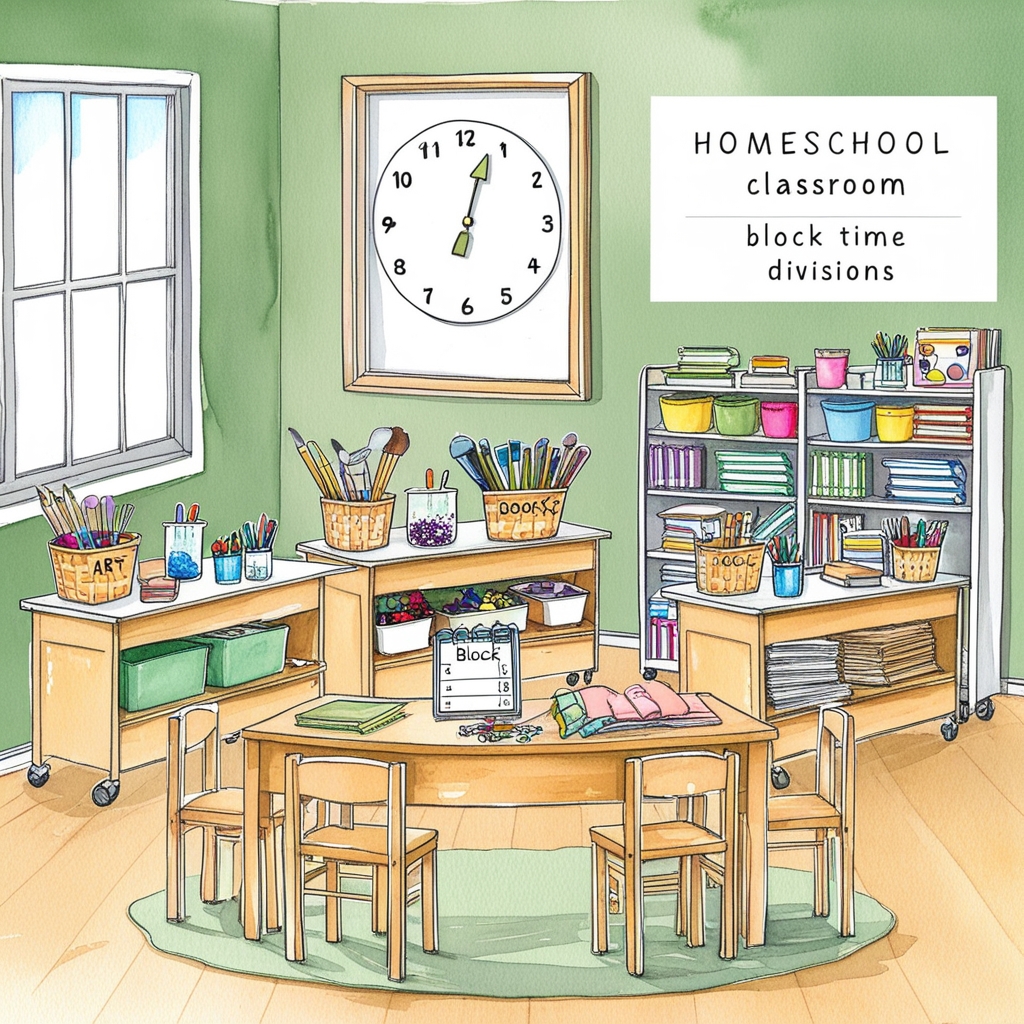
Transitioning to block scheduling for homeschool requires thoughtful planning and gradual implementation. Rushing into dramatic schedule changes can create confusion and resistance from both parents and students.
Assessing Your Current Situation
Begin by analyzing your existing homeschool routine and identifying areas where block scheduling might provide the greatest benefits. Track your current schedule for one week, noting transition times, preparation periods, and moments when learning feels rushed or incomplete.
Consider your children’s attention spans, learning preferences, and energy patterns throughout the day. Some children focus best in the morning, while others hit their stride in the afternoon. Block scheduling should work with these natural rhythms rather than against them.
Evaluate your curriculum materials and teaching resources. Some programs lend themselves naturally to block scheduling, while others may require modification or supplementation to work effectively in extended time periods.
Creating Your First Block Schedule
Start with a simple daily block format, focusing on just two or three subject areas. Choose subjects that naturally complement each other or that your children find most challenging.
Plan blocks of 60-90 minutes initially, including built-in breaks every 20-30 minutes for younger children. These breaks don’t mean changing subjects—they might involve stretching, discussing concepts, or switching between different activities within the same subject area.
Design each block to include multiple activity types. A mathematics block might begin with review games, move to new concept introduction, include hands-on practice, and end with problem-solving challenges. This variety maintains engagement while staying within the subject focus.
Our lesson plan shop offers block-schedule-friendly templates that can help you organize these extended learning periods effectively.
Gradual Transition Strategies
Implement block scheduling gradually over several weeks. Begin by combining two related subjects into a single morning block while maintaining your regular schedule for other subjects.
Monitor how your children respond to the extended focus time. Some may need shorter initial blocks with more frequent breaks, while others might surprise you by requesting longer exploration periods.
Adjust block lengths and content based on real experience rather than theoretical planning. What works on paper doesn’t always translate perfectly to real family dynamics and individual learning needs.
Prepare children for the transition by explaining the benefits and involving them in schedule planning. When students understand the reasoning behind block scheduling and have input into its structure, they’re more likely to embrace the change enthusiastically.
Essential Planning Components
Successful block scheduling requires more detailed lesson planning than traditional methods. Each block should include clear learning objectives, multiple activities, assessment opportunities, and natural stopping points.
Prepare backup activities for blocks that move more quickly than anticipated, and develop extension options for subjects that capture particular interest. Flexibility within structure is the hallmark of effective block scheduling.
Create visual schedules and timers to help children understand block structure and timing. Many families find that countdown timers reduce anxiety about extended learning periods and help students pace themselves through activities.
Consider how block scheduling will affect your family’s daily rhythm beyond academics. Meal times, chores, and free play need to integrate smoothly with your new learning blocks.
Subject-Specific Block Strategies
Different academic subjects benefit from unique approaches within block scheduling frameworks. Understanding how to optimize each subject area ensures maximum effectiveness and student engagement.
Mathematics Block Strategies
Mathematics blocks work exceptionally well because they allow time for concept development, practice, and application without feeling rushed. A typical math block might begin with mental math warm-ups, progress to new concept exploration using manipulatives, include guided practice, and conclude with problem-solving challenges.
The extended time allows for multiple representation methods—students can explore concepts through visual models, hands-on activities, and abstract symbols within the same session. This multi-modal approach strengthens understanding and accommodates different learning preferences.
Consider incorporating real-world applications and cross-curricular connections. A mathematics block might include cooking activities that reinforce fractions, building projects that apply geometry, or data collection and analysis related to science experiments.
For families with multiple children, mathematics blocks can include peer teaching opportunities where older students help younger ones, reinforcing concepts for both learners.
Language Arts Block Optimization
Language arts naturally lends itself to block scheduling because reading, writing, speaking, and listening skills integrate seamlessly in extended periods. A language arts block might begin with shared reading, move to vocabulary exploration, include writing activities, and end with oral presentation or discussion.
The sustained time allows for complete writing processes—brainstorming, drafting, revising, and editing—within single sessions. Students can reach satisfying completion points rather than constantly stopping mid-thought.
Literature discussions can develop naturally without time pressure. Students can read longer passages, engage in meaningful analysis, and make connections to their own experiences and other texts.
Consider thematic approaches that connect reading selections to writing assignments and speaking activities. This integration creates coherent learning experiences rather than fragmented skill practice.
Science Block Implementation
Science education benefits tremendously from block scheduling because experiments, observations, and investigations require extended time periods. A science block can include hypothesis formation, experimental design, data collection, analysis, and conclusion drawing in single sessions.
The longer periods accommodate the setup and cleanup time that science activities require. Students can engage in meaningful laboratory work without feeling rushed or having to stop before reaching natural conclusion points.
Nature studies and outdoor observations work particularly well in science blocks. Students can spend extended time outdoors, make detailed observations, and record findings without worrying about other subject obligations.
Consider integrating mathematics skills naturally within science blocks through measurement, data analysis, and graphing activities. This integration reinforces both subject areas while demonstrating real-world connections.
History and Social Studies Blocks
History and social studies blocks allow for immersive experiences that bring past events and cultures to life. Students can engage in role-playing activities, conduct research projects, and create presentations without time constraints.
Document analysis and primary source exploration require sustained attention that block scheduling provides. Students can carefully examine historical documents, discuss their significance, and connect them to broader historical patterns.
Geography skills integrate naturally with history blocks through map work, cultural studies, and exploration of how physical environments influenced historical events.
Consider incorporating art, music, and literature from historical periods to create rich, multi-sensory learning experiences. These connections help students understand history as lived experience rather than isolated facts.
Common Challenges and Solutions
While block scheduling offers numerous benefits, families often encounter predictable challenges during implementation. Understanding these common obstacles and proven solutions can help ensure successful adoption of this educational approach.
Attention Span Concerns
Many parents worry that their children cannot maintain focus for extended periods, particularly younger students or those with attention challenges. However, block scheduling often improves attention by reducing the number of daily transitions and allowing students to reach deeper engagement levels.
The key lies in structuring blocks with variety and natural breaks. Instead of expecting 90 minutes of silent seatwork, effective blocks include multiple activity types, movement breaks, and opportunities for different kinds of engagement with the material.
For children with shorter attention spans, begin with 45-60 minute blocks and gradually increase duration as students adapt to the format. Include physical movement, hands-on activities, and discussion periods to maintain engagement.
Remember that attention spans often increase when children are genuinely interested and engaged. Block scheduling’s depth and variety can actually improve focus by allowing students to become absorbed in meaningful learning activities.
Curriculum Adaptation Issues
Some curricula are designed for traditional scheduling and may not translate directly to block formats. Textbook chapters might be too short for extended blocks, or daily lesson plans might not provide enough material for longer periods.
Solve this challenge by combining multiple short lessons, adding enrichment activities, or supplementing with hands-on projects and real-world applications. Many families find that block scheduling actually improves their curriculum by forcing them to move beyond textbook-only instruction.
Look for opportunities to integrate subjects naturally. A history lesson might include related literature reading, map work, and creative writing activities, extending the learning without artificial padding.
Consider switching to curricula specifically designed for flexible scheduling, or supplement existing materials with project-based learning resources. Our curriculum methods section offers guidance on selecting and adapting educational materials for various scheduling approaches.
Scheduling Logistics
Coordinating block schedules with family life, extracurricular activities, and multiple children’s needs can feel overwhelming initially. The key is starting simple and building complexity gradually.
Begin with core subjects and maintain flexible scheduling for enrichment activities. As the family adapts to block scheduling rhythms, you can incorporate more subjects and activities into the structured format.
For families with children of different ages, consider having some shared blocks for subjects like history or science, while maintaining separate blocks for skill-based subjects like mathematics and language arts.
Build buffer time into your schedule for unexpected extensions or early completions. Block scheduling should feel flexible and responsive rather than rigid and constraining.
Perfectionism and Planning Pressure
Some parents feel pressure to fill every minute of extended blocks with meaningful activities, leading to over-planning and exhaustion. Remember that block scheduling aims to improve learning quality, not necessarily quantity.
Include time for reflection, discussion, and even appropriate “downtime” within blocks. Students need processing time to internalize new concepts and make connections.
Start with simple block structures and add complexity as you gain experience. It’s better to have successful simple blocks than overwhelming complex ones that create stress for the entire family.
Focus on one or two subjects initially rather than trying to convert your entire schedule immediately. Gradual implementation leads to more sustainable long-term success.
Block Scheduling for Different Ages
Effective block scheduling adapts to developmental stages and learning characteristics of different age groups. Understanding these variations ensures that your scheduling approach supports rather than hinders your children’s natural learning patterns.
Elementary Ages (K-5)
Younger children benefit from shorter blocks (45-75 minutes) with more frequent breaks and activity changes within subjects. Their natural energy and curiosity work well with hands-on, multisensory approaches that block scheduling accommodates.
Elementary blocks should include movement, manipulatives, games, and creative activities. A mathematics block might include counting songs, physical number activities, manipulative work, and math games—all focused on the same concepts but engaging different senses and energy levels.
Story time naturally extends into language arts blocks, where reading aloud leads to discussion, vocabulary exploration, creative dramatics, and related writing activities. These integrated experiences feel natural and enjoyable rather than forced.
Consider seasonal and thematic approaches that capture young children’s imagination. A fall science block might explore leaves, trees, weather, and harvests through observation, experiments, measurement, and creative projects.
For guidance on age-appropriate scheduling and activities, explore our grade level guides that offer specific suggestions for different developmental stages.
Middle School Adaptations (6-8)
Middle school students can handle longer blocks (60-120 minutes) and benefit from increased independence and choice within structured frameworks. This age group often thrives with project-based learning that block scheduling supports.
Pre-teens appreciate having input into their schedules and learning activities. Involve them in planning blocks and choosing between different activity options within subject areas.
Middle schoolers can handle more complex integrated projects that span multiple days or weeks. A history block might evolve into a research project that includes library work, interviews, writing, and presentation preparation.
This age group benefits from clear expectations and rubrics for block activities. They want to understand what constitutes success and how their time will be used productively.
Consider allowing some choice in block order or timing, giving middle schoolers appropriate control over their learning environment while maintaining necessary structure.
High School Implementation (9-12)
High school students can work effectively in extended blocks (90-180 minutes) and often prefer the depth and focus this approach provides. They can engage in college-level research projects, laboratory work, and independent studies that require sustained attention.
Older students benefit from semester-long or quarterly block rotations that allow deep exploration of subjects. They might spend a semester focusing intensively on biology and mathematics, followed by a semester emphasizing literature and history.
High schoolers can take more responsibility for planning and executing their block activities. Provide frameworks and expectations, but allow them to develop specific approaches and timelines.
Consider incorporating internships, volunteer work, or part-time employment into block schedules. Real-world experiences become valuable learning opportunities when integrated thoughtfully with academic study.
Prepare high school students for college and career expectations by gradually increasing independence and self-direction within block scheduling frameworks.
Mixed-Age Family Strategies
Families with children of different ages can use block scheduling effectively by creating some shared learning experiences while maintaining age-appropriate individual work.
History and science blocks often work well for mixed-age groups, with different expectations and activities for different developmental levels within the same general topic.
Older children can serve as teaching assistants or mentors during certain blocks, reinforcing their own learning while helping younger siblings.
Consider having some family blocks and some individual blocks throughout the week. This combination provides both collaborative learning opportunities and focused skill development time.
Use block scheduling to accommodate different energy patterns and attention spans within the same family. Younger children might have morning blocks while older students work independently, then switch for afternoon activities.
Tools and Resources
Successful block scheduling implementation benefits from appropriate tools and resources that support planning, execution, and evaluation of extended learning periods.
Planning and Organization Tools
Digital planning tools can help families organize and track block schedules effectively. Simple spreadsheet programs allow for easy schedule creation, modification, and sharing among family members.
Calendar applications with color-coding features help visualize block schedules and identify potential conflicts or gaps. Many families find that shared digital calendars keep everyone informed about upcoming learning focuses and activities.
Traditional paper planners still work well for many families, particularly those who prefer visual, tactile planning methods. Large wall calendars can display weekly or monthly block schedules for easy family reference.
Timer applications and devices help manage block periods and transitions. Visual countdown timers can reduce anxiety about time limits while helping students pace themselves through activities.
Curriculum and Learning Resources
Project-based learning resources align naturally with block scheduling approaches. Look for curricula that emphasize investigation, creation, and real-world application rather than just textbook completion.
Online educational resources provide flexibility for extending or supplementing block activities. Educational videos, virtual field trips, and interactive simulations can enhance learning without requiring additional preparation time.
Library resources become more valuable in block scheduling, as students have time for extended reading, research, and exploration. Develop relationships with local librarians who can suggest resources for upcoming learning blocks.
Community resources such as museums, nature centers, and cultural organizations offer field trip opportunities that align well with focused learning blocks.
Assessment and Documentation Tools
Portfolio systems work well for documenting learning that occurs in block formats. Students can compile projects, reflections, and demonstrations of learning over extended periods.
Digital documentation tools allow families to capture learning through photos, videos, and audio recordings. These records help track progress and provide evidence of educational experiences.
Learning journals encourage students to reflect on their block learning experiences and identify areas of interest or confusion. Regular reflection improves metacognition and learning effectiveness.
Simple rubrics help evaluate learning outcomes from block activities. Focus on depth of understanding, application ability, and engagement rather than just content coverage.
Technology Integration
Educational technology can enhance block learning when used purposefully rather than as time-filling activities. Look for programs and applications that support deep learning and creation rather than just consumption.
Presentation software allows students to create and share learning outcomes from block activities. These presentations can serve as assessment tools and celebration of learning achievements.
Research tools and databases provide resources for extended investigation projects that block scheduling accommodates. Teach students to evaluate sources and synthesize information from multiple resources.
Creative software for video production, graphic design, or music composition can provide outlets for demonstrating learning in engaging formats that require extended time periods to complete effectively.
Frequently Asked Questions
How long should each block be for different ages?
Block length varies by age and subject. Elementary students (K-5) typically work well with 45-75 minute blocks, middle schoolers (6-8) can handle 60-120 minutes, and high school students (9-12) often thrive with 90-180 minute blocks. Start shorter and gradually increase duration as students adapt to the format.
Can block scheduling work with traditional curricula?
Yes, most traditional curricula can be adapted for block scheduling. You may need to combine multiple short lessons, add enrichment activities, or supplement with hands-on projects. Many families find this adaptation actually improves their curriculum by encouraging more varied and engaging instruction methods.
What if my child has attention difficulties?
Children with attention challenges often perform better in block schedules than traditional formats. The key is structuring blocks with variety, movement, and natural breaks. Include multiple activity types within each block and allow for physical movement and hands-on learning. Many parents report improved focus when children aren’t constantly switching subjects.
How do I handle subjects that seem too short for blocks?
Combine related subjects or add enrichment activities to create meaningful block periods. For example, expand a short math lesson by adding hands-on practice, real-world applications, math games, or connections to science or art. Look for natural integration opportunities rather than artificial time-filling activities.
Should I cover every subject every day with block scheduling?
No, block scheduling typically involves covering fewer subjects per day for longer periods. You might alternate subjects on different days or dedicate specific days to certain subject combinations. This approach allows for deeper learning and reduces daily preparation time while ensuring all subjects receive adequate attention over the week.
How do I transition from traditional scheduling to blocks?
Implement block scheduling gradually over several weeks. Start by combining two related subjects into one morning block while maintaining your regular schedule for other subjects. Monitor how your children respond and adjust block lengths and content based on real experience rather than theoretical planning.
What if we finish a block early or need more time?
Build flexibility into your block planning with backup activities for early completion and natural extension opportunities for subjects that capture particular interest. Have additional enrichment activities prepared, and don’t feel pressured to fill every minute. Sometimes early completion indicates efficient learning rather than inadequate planning.
Planners Homeschool Moms Swear By
As an Amazon Associate, HomeschoolingExperts earns from qualifying purchases. Some links in this article are affiliate links, meaning we may earn a small commission at no extra cost to you.
Conclusion
Block scheduling for homeschool offers a powerful alternative to traditional fragmented learning approaches, providing families with opportunities for deeper engagement, reduced stress, and more meaningful educational experiences. By implementing extended learning periods thoughtfully and gradually, you can create an environment where students thrive academically while developing stronger focus and learning skills.
The key to successful block scheduling lies in understanding your family’s unique needs, starting with simple implementations, and remaining flexible as you discover what works best for your children’s learning styles and your family’s rhythm. Remember that the goal is not perfection but rather creating sustainable, enjoyable learning experiences that support long-term educational success.
Whether you choose daily blocks, alternating day schedules, or hybrid approaches, the principles of sustained focus, reduced transitions, and integrated learning will enhance your homeschooling journey. Take time to experiment with different formats and don’t hesitate to modify your approach as your children grow and your family’s needs evolve.
Ready to transform your homeschool schedule? Start by implementing one simple block this week and experience the difference that focused, uninterrupted learning time can make for your family’s educational success.
Related Resources
Explore these additional resources to support your homeschooling journey:
- Scheduling and Planning Resources – Comprehensive guides for organizing your homeschool year
- Educational Activities and Ideas – Creative learning activities perfect for extended block periods
- About HomeschoolingExperts.org – Learn more about our mission to support homeschooling families

Loved this post? Grab the free resource above.
Plan your whole school year on one page — weekly, monthly, and yearly templates included.